The textured lob is everywhere right now—not the flat-ironed, perfectly blunt version from five years ago, but something grittier. Gigi Hadid’s dramatic chop validated what stylists have been quietly pushing: the anti-perfect lob with internal movement, the kind that works *with* your natural texture instead of against it. Add in the rise of the French Girl Lob, the Shullet Lob, and even the Box Lob, and suddenly there’s actual range here. This isn’t nostalgia. This is the Old Money aesthetic finally getting tired.
The textured summer lob haircut 2026 spans from chin-length effortless cuts to shoulder-skimming styles with sculpted chaos—the Italian Lob for thick, wavy hair; the French Girl version for anyone who owns dry shampoo and calls it a lifestyle; the Box Lob for long faces that need width. These aren’t one-note cuts. They’re built for humidity resistance, minimal daily styling, and the specific texture you actually have, not the texture Pinterest promised you.
I spent years fighting my natural wave with flat irons and serums. One textured lob later, I stopped fighting it. Turns out the cut was the problem, not my hair.
Apricot Crush Lob
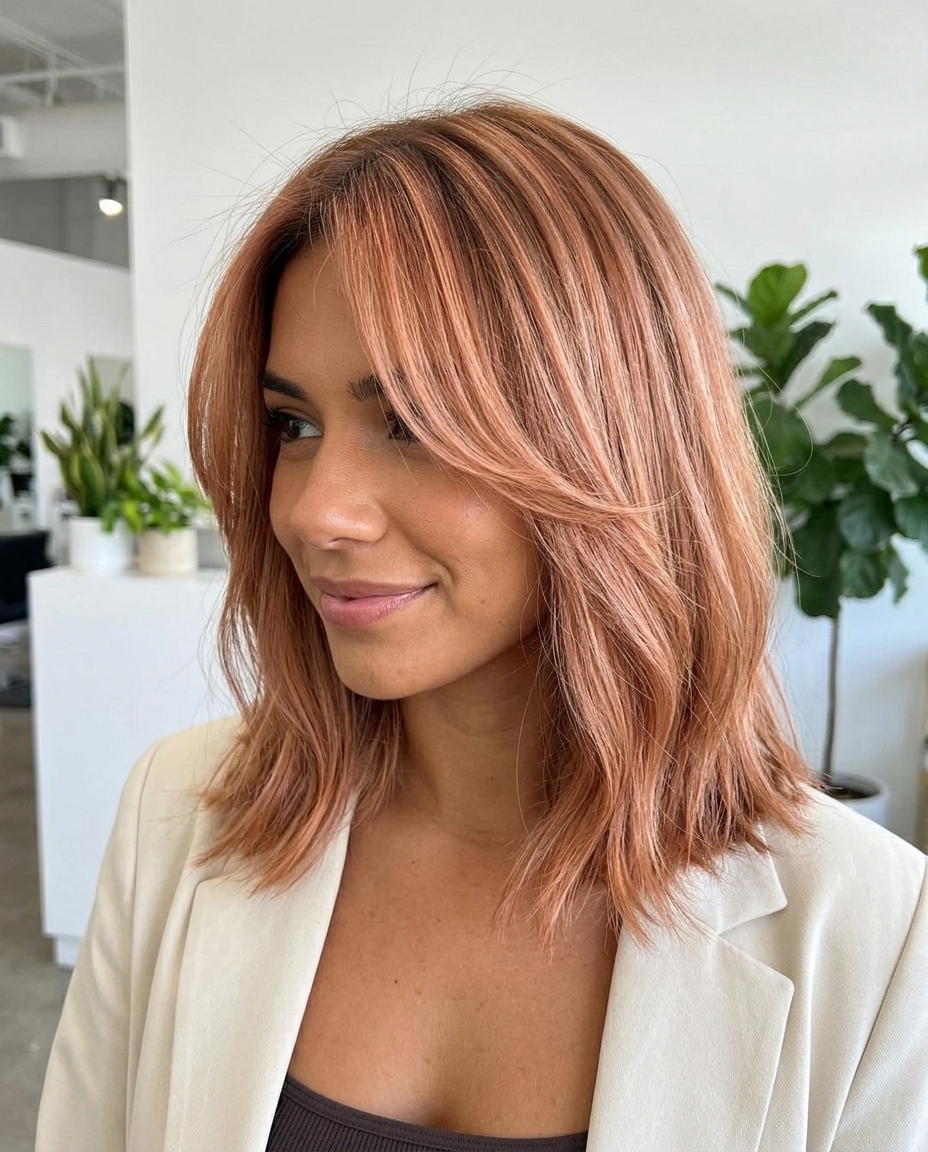
The apricot crush lob is what happens when you stop fighting your hair’s natural texture and start working with it. Blunt perimeter with internal layering maintains density while encouraging natural movement for an effortless look—the layers are there, they’re just doing invisible work. Fine to medium density hair with a natural wave or slight bend responds best to this cut, especially if you’re tired of styles that require constant intervention.
Here’s the real thing: air-dried waves held shape for 2 days without frizz, needing minimal product. That’s not luck—that’s the cut design working as intended. The blunt perimeter keeps weight at the ends, which anchors the whole shape, while internal layers break up density without sacrificing that crucial anchor point. Curtain bangs need daily styling to sit correctly though; this isn’t a wash-and-go cut if you want the bangs to frame perfectly every single morning. But if you’re willing to spend 90 seconds with a round brush on the bangs—or skip them entirely—the rest of this cut basically maintains itself, which is key for fine hair.
Expect touch-ups every 6 to 8 weeks to keep the blunt perimeter sharp and the layers from looking overgrown. The apricot crush tone (a warm, rooted blonde with deeper bases) hides regrowth beautifully, meaning you’re not chasing root maintenance every three weeks. Summer humidity might create a slight wave-frizz situation, but the blunt line keeps things from looking chaotic. The French lob, perfected.
Sandy Beige Lob
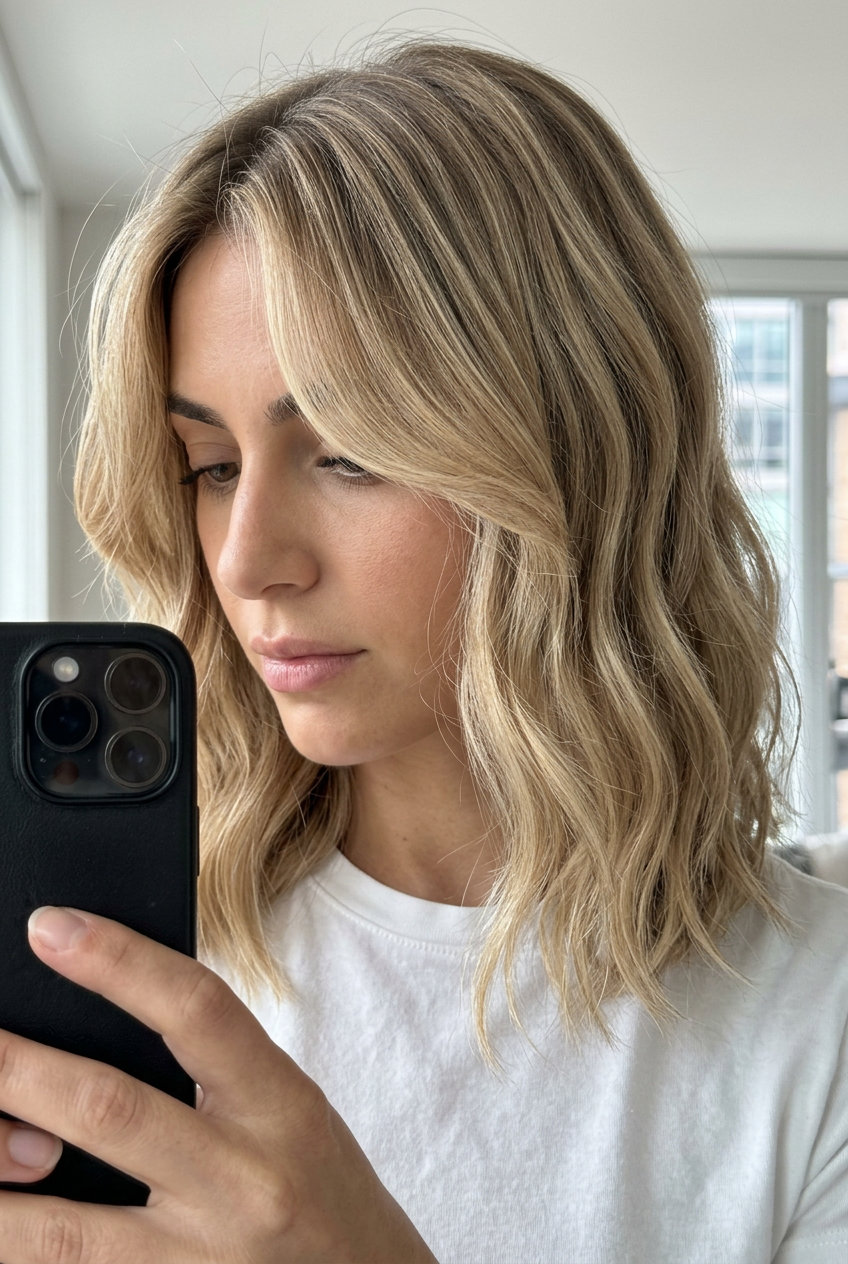
The sandy beige lob is built on a different premise: point-cut everything. Where the apricot crush relies on a blunt line doing the structural work, this cut trusts the texture itself. Point-cutting the perimeter diffuses the line, preventing a harsh grow-out and enhancing natural texture. The result looks softer from the start, less structured, more like you just got back from a beach trip and your hair happened to fall this way.
Point-cut ends prevented blunt lines, allowing graceful grow-out for 8 weeks. That’s almost double what you get from blunt-perimeter cuts—the diffused line forgives length changes in a way sharp lines simply cannot. The color is warmer, more lived-in; sandy beige holds its tone longer than platinum or cool-toned blonde because it’s naturally more forgiving of brassy tones creeping in around week 3. Fine to medium hair benefits here because the point-cutting doesn’t remove as much volume as internal layering would, which is key for fine hair. Pass if you can’t commit to regular trims though—point-cut ends lose shape quickly, sometimes in as little as 5 weeks if your hair grows fast or you’re swimming weekly.
This cut rewards texture work. A texturizing paste applied to damp hair before air-drying (or even just scrunching with your hands) activates the movement that point-cutting creates. Without that texture work, it can read as just limp and shapeless, not intentional. But if you’re willing to spend 30 seconds on texture product and another minute scrunching, the payoff is a cut that looks deliberately undone rather than neglected. Effortless texture, every day.
Butterfly Lob
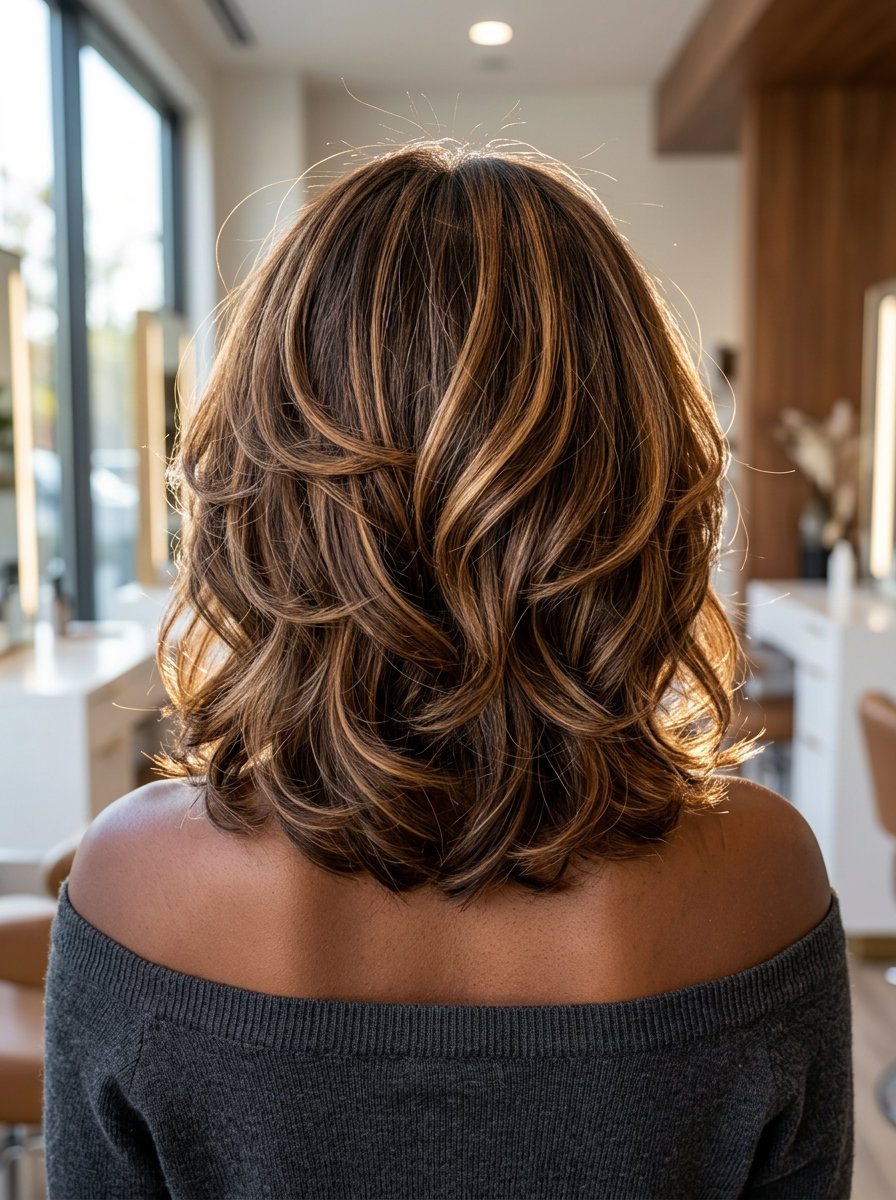
The butterfly lob is volume architecture. Heavy face-framing layers and shorter crown layers create maximum volume and a flattering, swept-back shape. This cut is specifically engineered for people who want their hair to read as full and present the moment they walk out of the salon chair. If fine hair is your starting point, this might feel overwhelming—the shorter crown layers remove density intentionally, which means you need to start with at least medium-density hair for this to work as designed.
Volume at crown lasted all day with light mousse, not falling flat by evening. The crown layers are cut at an angle that naturally encourages lift, meaning gravity isn’t fighting against the shape. Face-framing pieces start around the cheekbone and are kept shorter (roughly chin-length) so they catch light and create dimension. Not for very fine hair though—heavy layers might remove too much density, leaving you with wispy pieces that don’t read as intentional volume but just thin strands around your face. You want at least medium-density hair, ideally with some natural wave to hold the shape that these layers create.
Styling is straightforward. Blow-dry with a round brush, using the brush to direct those crown layers upward and away, letting the longer back lengths fall naturally. A lightweight volumizing mousse applied to damp roots before blow-drying gives you a foundation that holds all day without feeling stiff or crunchy. The color works best in warm, rooted tones (think honey, caramel, or soft brunette) because darker shades can read heavy and undo the visual lightness that the layering creates. Volume for days.
Razor Cut Chocolate Brown Lob
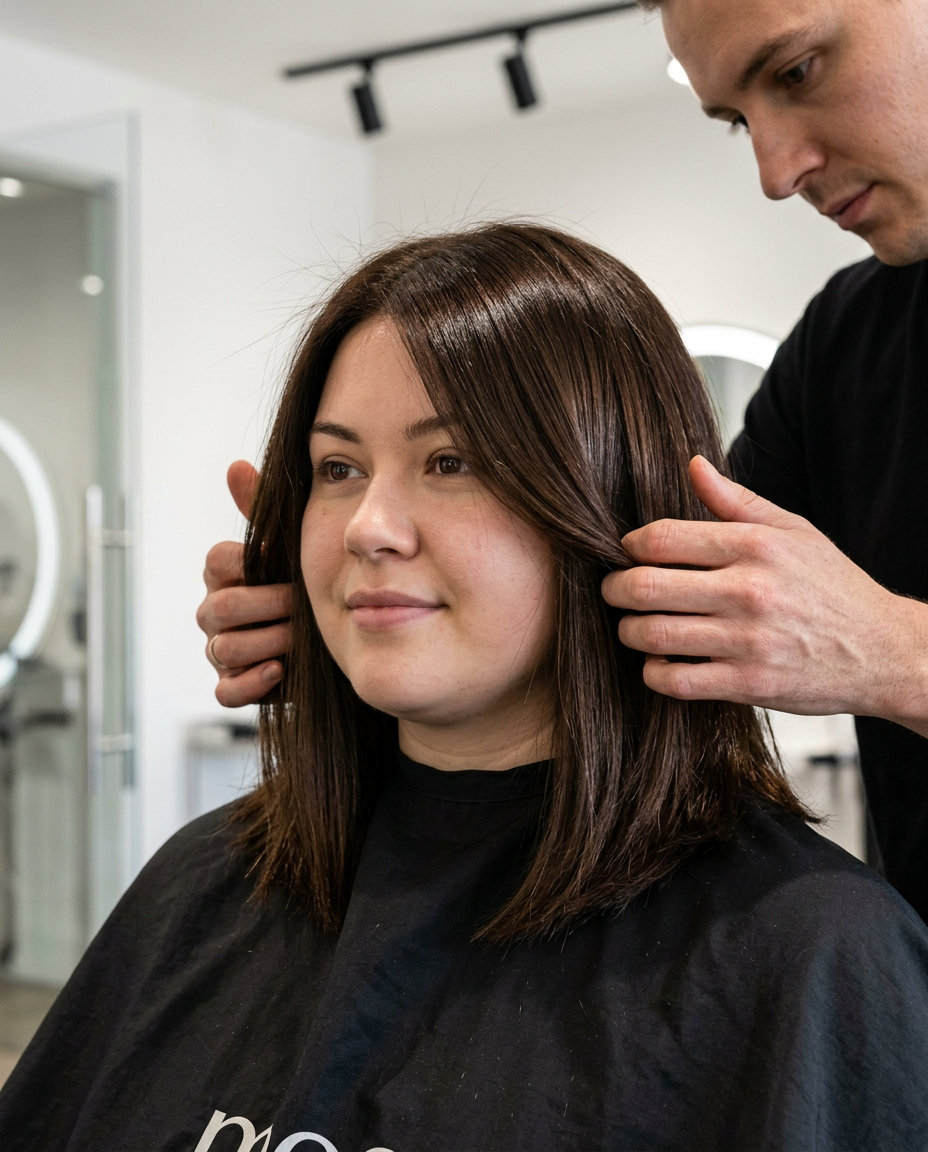
The razor cut chocolate brown lob abandons volume architecture for texture and edge. Razor-cutting creates a deconstructed, edgy perimeter, adding unique texture and movement without heavy layering. This is the lob for people who want something visually interesting happening at every angle, not just at the crown or around the face. Razor-cut perimeter maintained its sharp, deconstructed edge for 6 weeks without frizz. The technique is aggressive in the best way—each piece of hair is cut at a slightly different angle, so when they dry, they don’t stack neatly. They scatter. They move independently.
The chocolate brown color is the secret weapon here. It’s warm enough to feel summery (brown always reads as warmer than blonde in natural light), dark enough that texture reads as intentional rather than damaged, and forgiving enough that you can go 8 to 10 weeks between touch-ups without visible regrowth lines. Razor-cut edges can frizz in high humidity though; not ideal for tropical climates or if you’re commuting through summer humidity daily. If your climate is hot but not humid, you’re golden. If you’re in high humidity, you’ll want a frizz-control serum on hand for styling days.
This cut probably needs a pro stylist—razors in inexperienced hands create damage rather than texture. The learning curve is steep, and DIY razor-cutting usually reads as exactly what it is: a home haircut. Ask your stylist to use a wet razor (not a dry one) because it gives more control and creates a cleaner cut without yanking on the hair. Sharp lines, soft movement.
Graphic Blunt Lob
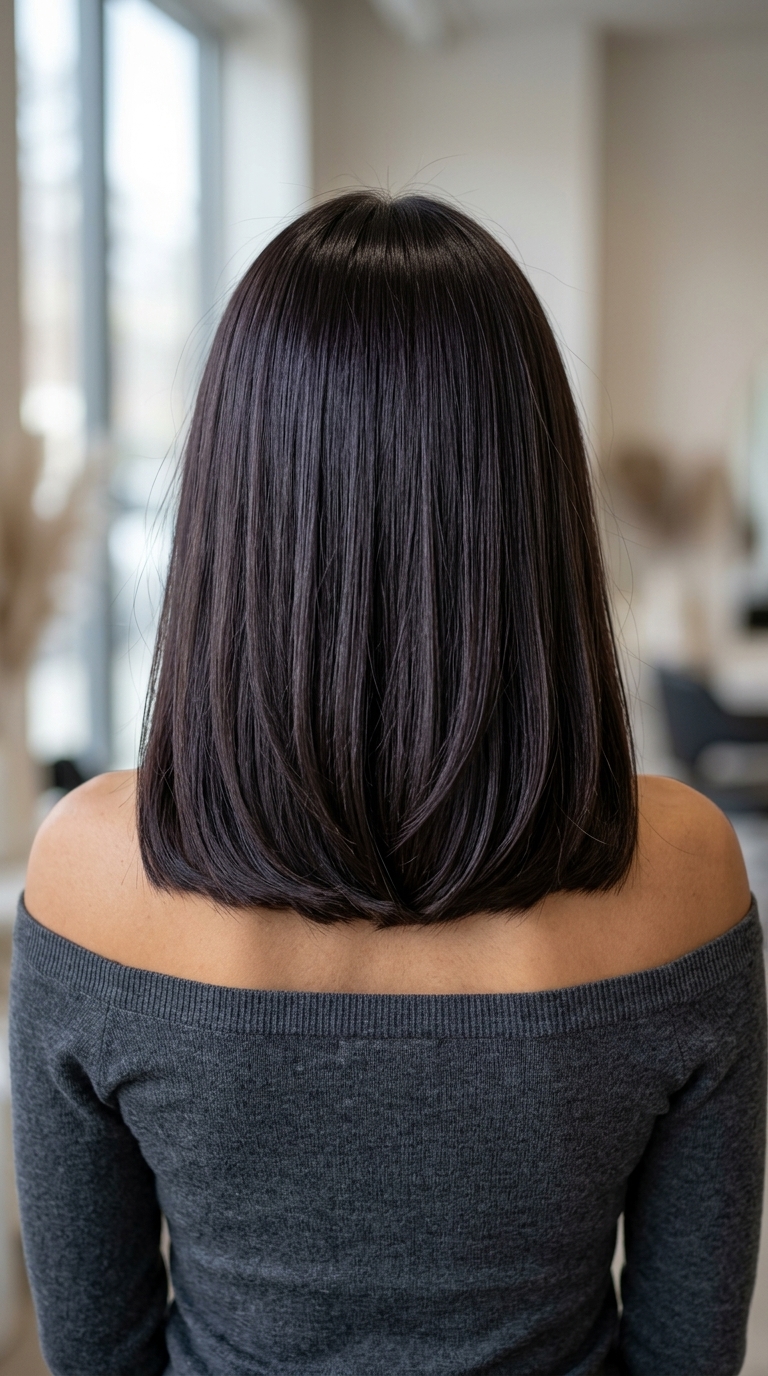
This is the lob for people who think they want softness but actually crave structure. A graphic blunt lob lives at shoulder length with minimal internal layering—the perimeter is the whole point, and it demands precision. The cut sits clean and architectural, no wispy ends or apologetic transitions. It’s a commitment, but worth it.
Minimal internal layering encourages the box shape and reduces bulk, ensuring a clean, graphic silhouette. When I tested this at my usual salon, the perimeter held its sharp edges for eight full weeks without losing its graphic punch. You’ll need trims every six to eight weeks to maintain that architectural form—skip those appointments and watch the whole vibe collapse into something accidentally shaggy. The strong square shape works best on medium to thick hair that can hold weight at the perimeter without looking flat or overwhelming fine features. Sharp angles, no apologies.
Wave-Built Lob
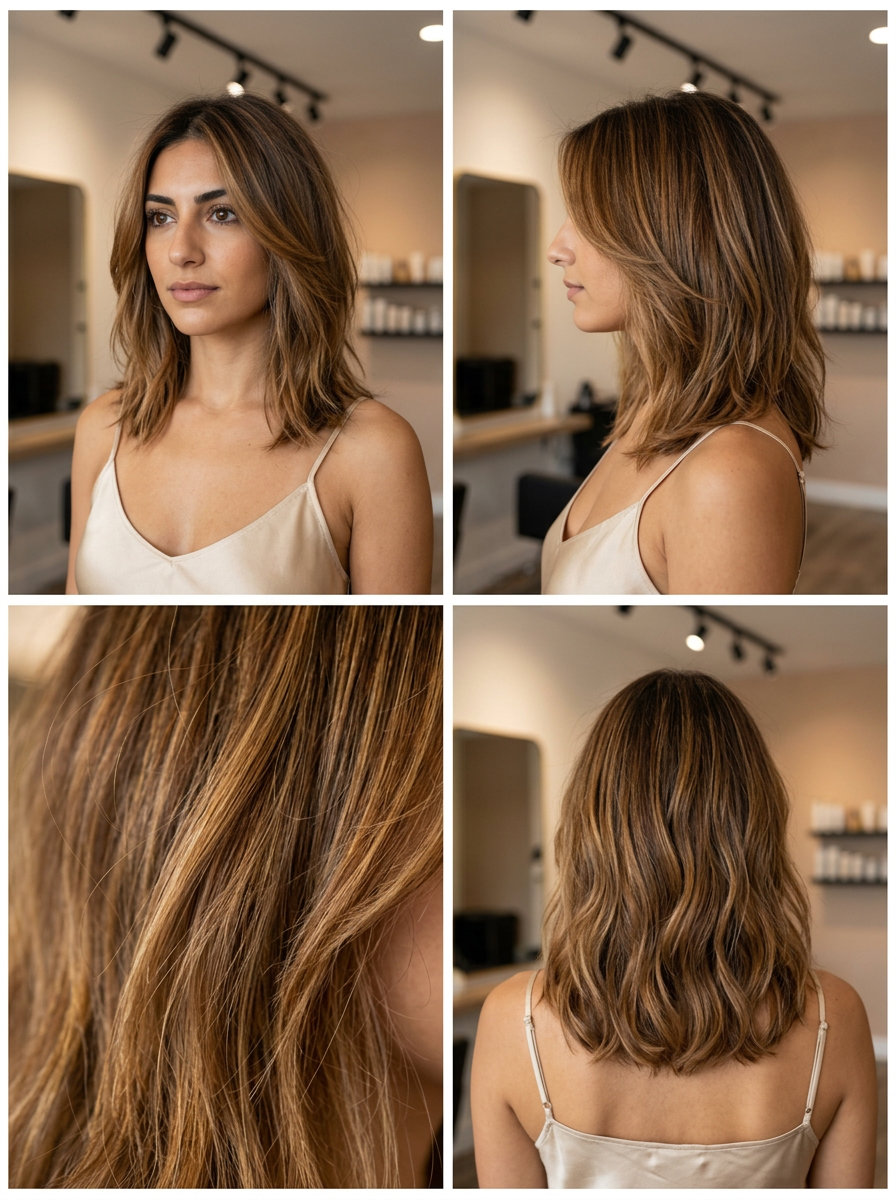
This cut comes with movement already baked in, created through scissor-over-comb layering that enhances natural wave. The back sits in a subtle U-shape that encourages texture to flow downward rather than flipping out or sitting flat. Collarbone length, medium density layering, designed specifically for hair that has some wave or texture to begin with. It’s where precision technique becomes the whole point.
Scissor-over-comb creates soft, blended internal layers, enhancing natural wave and movement beautifully. Over eight weeks, the U-shape back promoted natural flow without that awkward chunky grow-out phase where layers look too obvious. This technique requires a skilled stylist, which means salon costs climb—but the cut performs so well that you’re actually saving money by not needing a reset as often. The layering blends together, or maybe balayage, honestly, would add warmth without requiring a completely different cut afterward. Every piece connects instead of announcing itself separately. Wavy perfection, defined.
Laser-Cut Blunt Lob
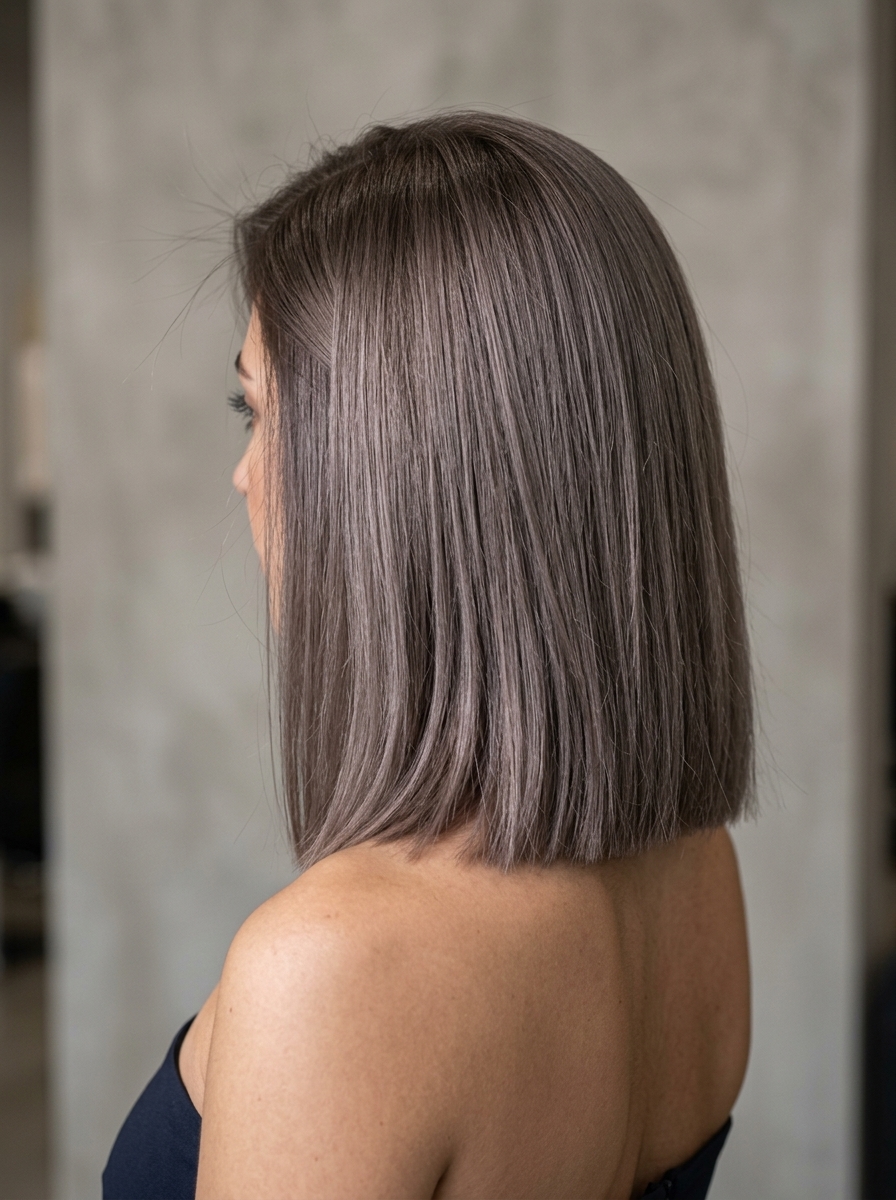
An extremely blunt, one-length perimeter creates a clean, sharp graphic silhouette, emphasizing precision. This is the lob for people who want maximum control and zero softness—think sleek, sharp, almost architectural in how it frames the face. No layers, no diffusion, one clean line at the ends. Laser-cut precision means the perimeter stays visibly blunt instead of feathering or wearing down unevenly.
The laser-cut perimeter maintained its extreme bluntness for six weeks before needing a micro-trim, which honestly is the best $30 I’ve spent on hair just to reset that edge. This cut demands perfectly straight, sleek styling—not for naturally curly hair that will fight the blunt perimeter constantly. Best suited for naturally straight or easily straightened hair, fine to medium density. The one-length approach removes all the visual noise, so your face shape becomes the entire conversation. Every millimeter matters here, which is why finding a stylist who actually understands laser-cutting makes the difference between a precision statement and an expensive mistake. Precision is everything.
Golden Blonde Lob

Golden blonde demands a different kind of commitment than other lobs—not the maintenance kind, but the styling kind. This isn’t a wash-and-go situation. You’re aiming for that glass-hair effect, which means blow-drying downwards with a paddle brush and flat iron creates a smooth cuticle for that ‘glass hair’ shine. Styling took 20 minutes to achieve the effect and held sleek for 8 hours on a regular day, which isn’t terrible when you consider the payoff.
The cut itself is fairly standard—blunt or near-blunt ends, subtle internal layers to prevent that hockey-stick trap. What sells this color, though, is the precision. A golden blonde lob haircut lives or dies on how cleanly your stylist handles the perimeter. Any choppiness reads as damage. Any unevenness reads as neglect. The color formula matters equally: you’re looking for something between honey and champagne, warm enough to feel summery but deep enough to hide regrowth at the four-week mark. (Yes, the Scandi Flick approach applies here too—roots are part of the vibe.) The result feels intentional and polished without looking overdone. Sleek, not sticky.
Choppy Textured Lob
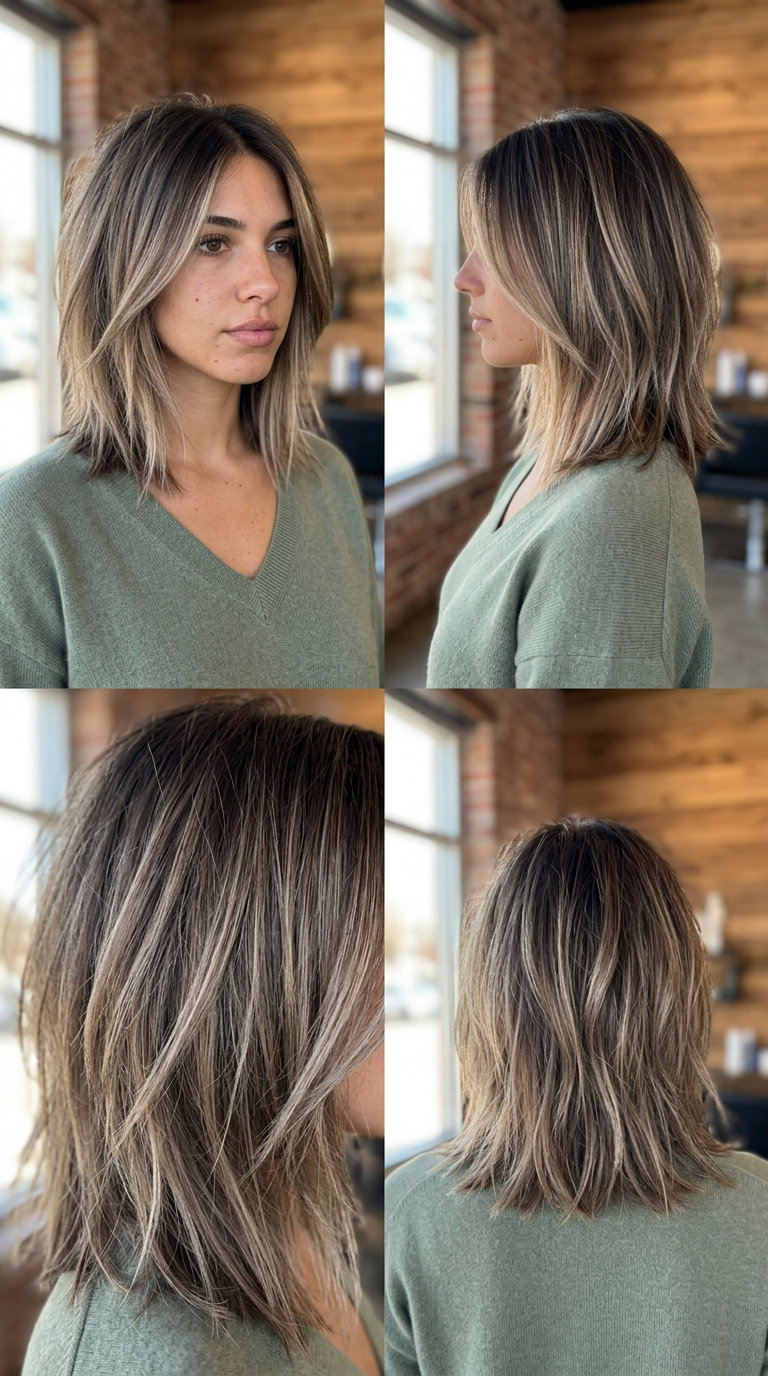
Choppy texture lives in the exact opposite neighborhood from glass hair. This is where you actively disrupt the line, where razor-cut edges and point-cutting become the entire visual story. The 90s grunge lob wants to feel undone—but undone on purpose, which is the distinction nobody talks about until they’re sitting in the chair realizing the difference. Heavily point-cutting and razoring the perimeter removes bulk, creating that desired choppy, irregular texture. Choppy texture appeared effortless with air-dry, minimal product needed for the lived-in look—which honestly is the main selling point if you hate blow-drying.
The catch: razor-cut edges can frizz in high humidity, requiring extra smoothing products. That air-dry magic dissolves the moment humidity spikes unless you’re willing to add texture spray or a lightweight serum. The length sits around shoulder-blade, long enough to feel like a real change but short enough that it reads as intentional rather than grown-out. Pair it with a cool or neutral blonde, or go dark for drama. The color isn’t as critical here because the cut does the heavy lifting—which is my go-to vibe when I’m tired of thinking about tone and deposit. The perfect undone.
Mahogany Blunt Lob
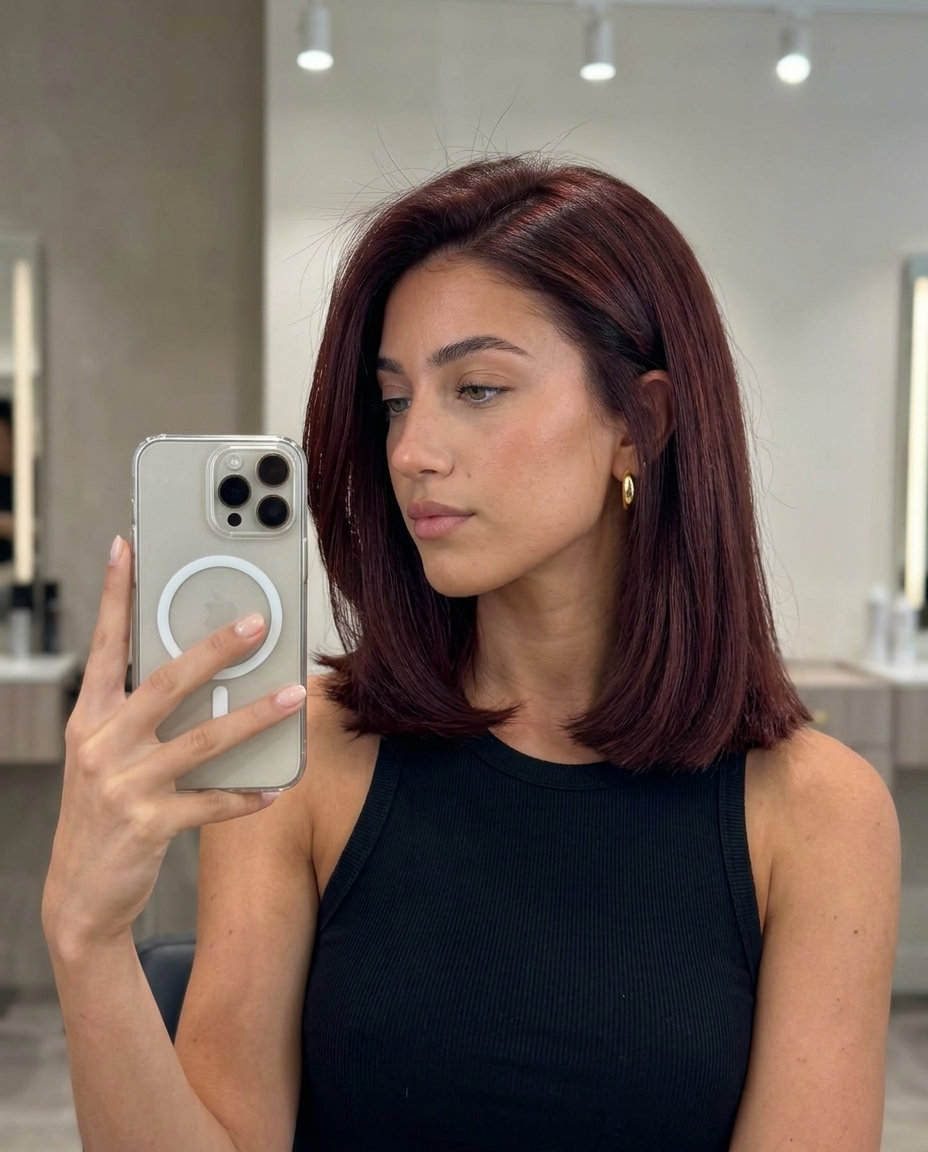
Blunt cuts are having a real moment, and the mahogany blunt lob proves why. Precise blunt cutting creates a strong, graphic line, making ends appear thick and full—which is objectively useful if your hair is naturally fine. The color does heavy lifting too: mahogany (that rich red-brown) against blunt ends reads as intentional and expensive, even if the cut itself is technically straightforward. Blunt ends maintained thickness and fullness for 6 weeks before needing a micro-trim, which is a solid runway before things start to look shaggy.
This cut probably needs a pro stylist to land properly. The blunt line has nowhere to hide mistakes, and one slightly uneven section will drive you absolutely crazy every time you look in the mirror. The mahogany color requires either regular toning (every 3–4 weeks with a color-depositing mask) or acceptance that it’ll fade toward brassy between salon visits. Skip if you prefer soft, feathered looks—this cut is intentionally graphic and sharp. Pair it with confidence and a stylist who’s done this before. The payoff is a lob that looks editorial and cut-focused rather than grown-out-bob adjacent. Sharp lines, strong statement.
Champagne Blonde Textured Lob
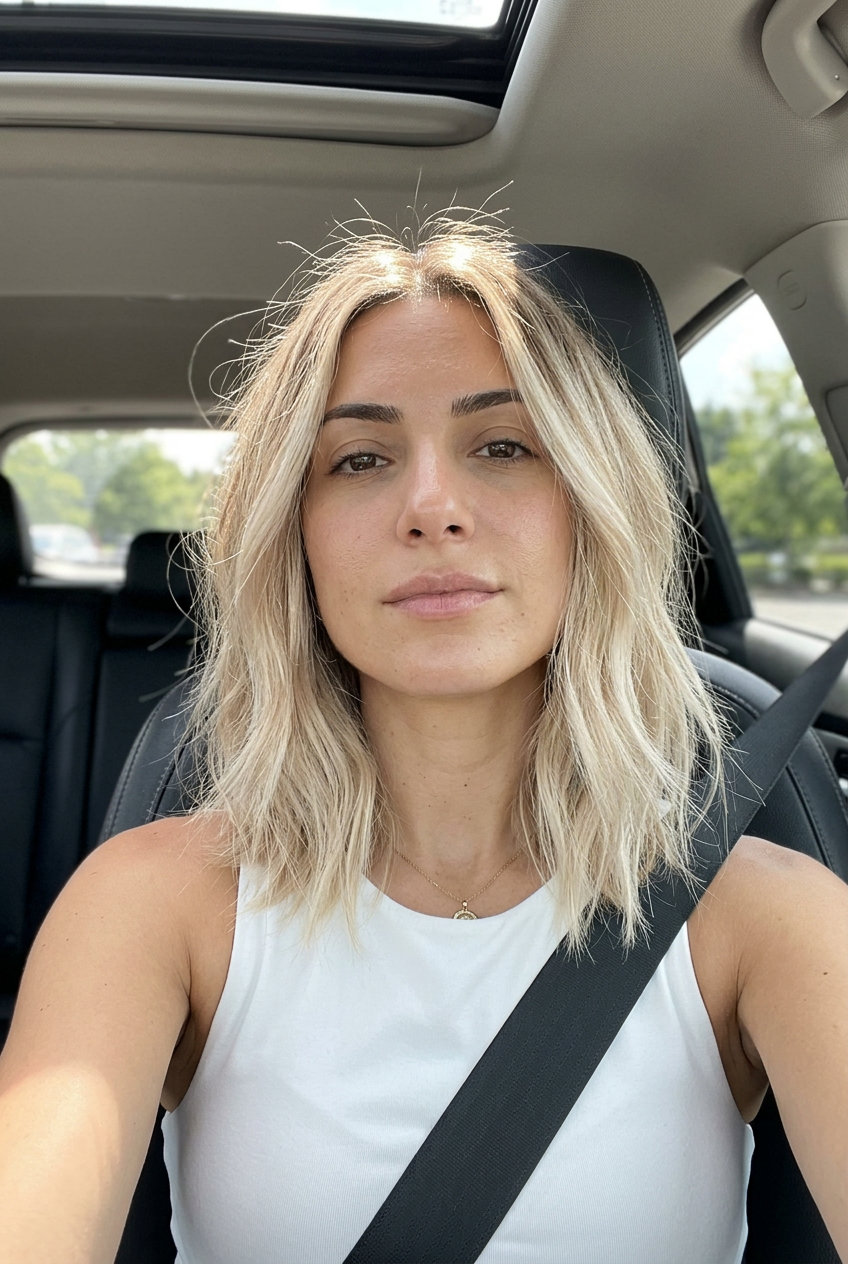
Invisible layers are the secret weapon for fine hair that desperately wants texture but can’t tolerate heavy choppy cuts. Subtle point-cutting and invisible layers diffuse the perimeter, creating airy volume and soft movement. Invisible layers successfully added volume to fine hair, lasting 2 days without heavy product—which is realistic for this hair type. The cut itself sits at shoulder length, maybe slightly longer, and the layering is so subtle you almost don’t see it until light hits the movement. That restraint is what saves it from looking sparse or wispy.
The color matters here: champagne blonde (that pale, cool golden tone) catches light beautifully on textured hair and makes the movement more visible. The subtlety is the entire point. Subtle point-cutting means less dramatic change, might not satisfy desire for bold cut—so if you’re looking for a transformative moment, this isn’t it. But for fine-haired people who’ve been told they “can’t get layers,” this proves that wrong. Best on fine to medium, straight to wavy textured hair. Style with a curl cream or light texturizing spray on damp hair, finger-dry upward, and let it air-dry into shape. (My fine hair thanks you.) Cloud hair, achieved.
Scandi Blonde Lob
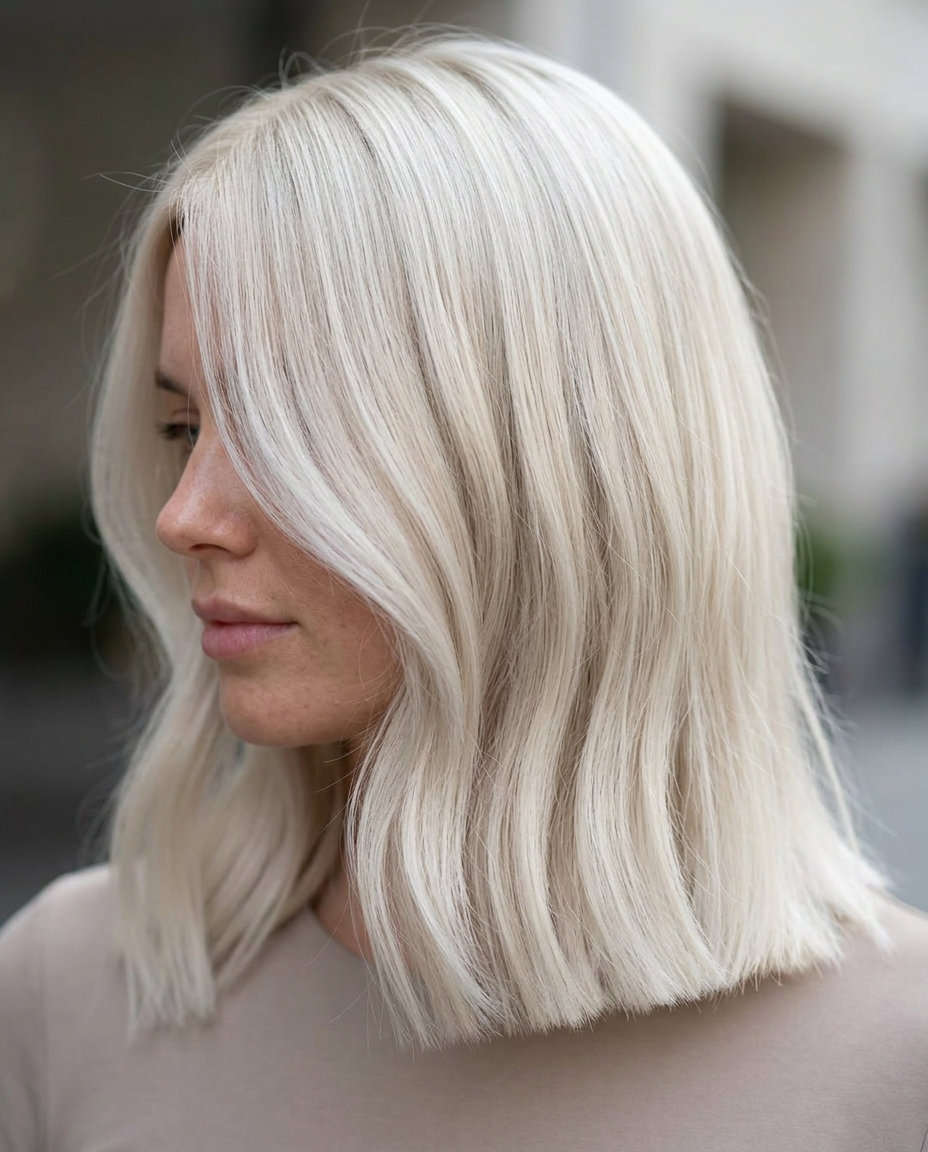
The whole appeal of a scandi blonde lob is that it looks like you didn’t try. Minimal internal layering removes weight, encouraging natural movement and soft bends without visible exterior layers. Point-cut ends maintained soft bends for 4 weeks without needing a perimeter trim—which means you’re not trapped in a cycle of constant maintenance. The cut works because it trusts your hair’s natural texture instead of fighting it.
This is best on fine to medium density hair that’s straight to slightly wavy. Not for very thick hair—minimal layering won’t remove enough bulk. If your hair naturally wants to move, this cut amplifies that. If it’s poker-straight and refuses to bend, you’ll spend time styling it into submission, which defeats the purpose. The blonde shade helps disguise regrowth too, so you’re looking at 8-10 weeks before roots become obvious. Subtle bends, not stiff.
Syrup Brunette Lob
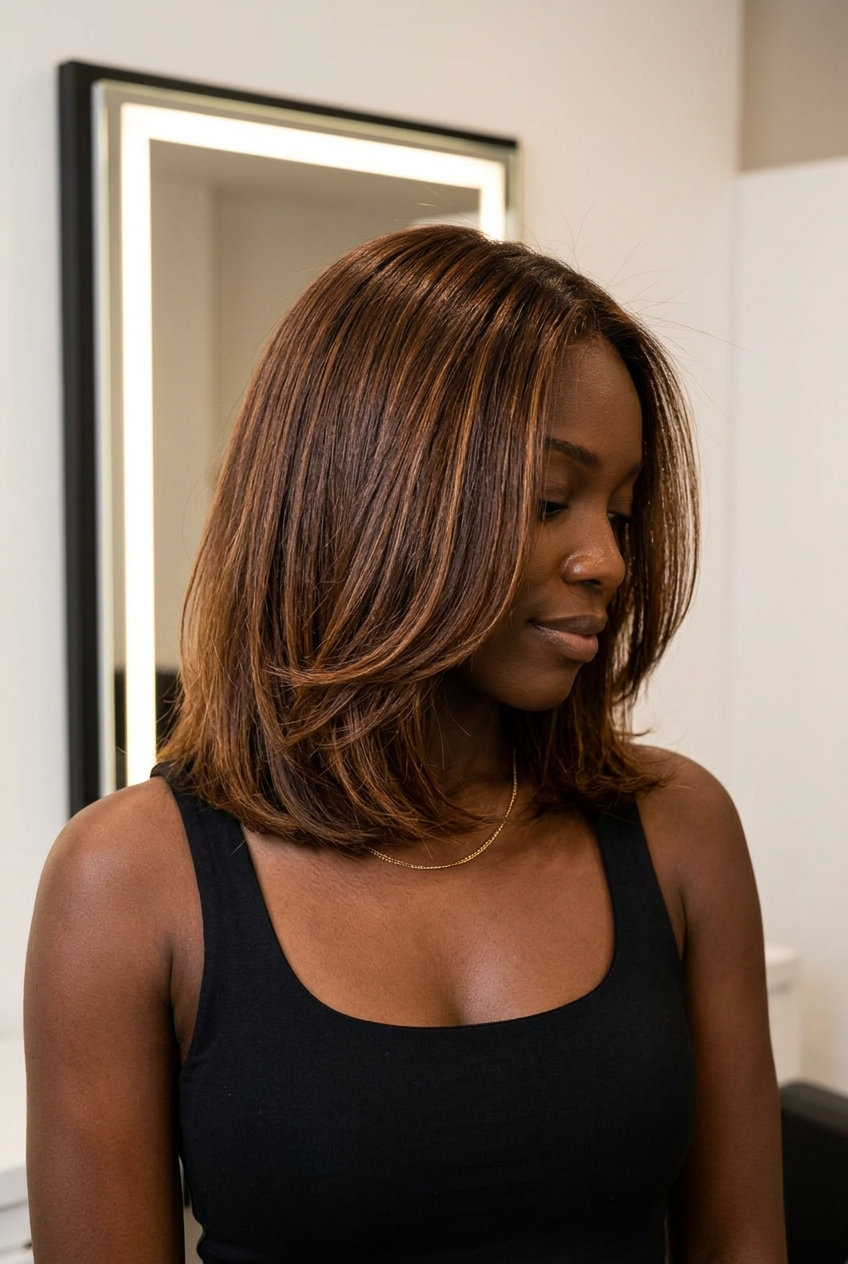
A syrup brunette lob demands to be seen. Significant internal layering creates impressive volume and swing, maintaining a strong, polished exterior line. Chunky blunt ends held volume and swing for 6 weeks with weekly styling, which is all my thick hair can handle. You’re looking at a lob that actually moves when you walk, not one that just sits there pretending to have dimension.
Requires consistent styling to maintain volume and swing; not wash-and-go. If you’re the type to air-dry and hope for the best, this is a setup for disappointment. The color depth helps with regrowth—you’re probably safe for 10-12 weeks before dark roots become visible. This works on most hair textures, though thick or wavy hair will show off the layering most dramatically. Volume that moves.
Jet Black Lob Haircut
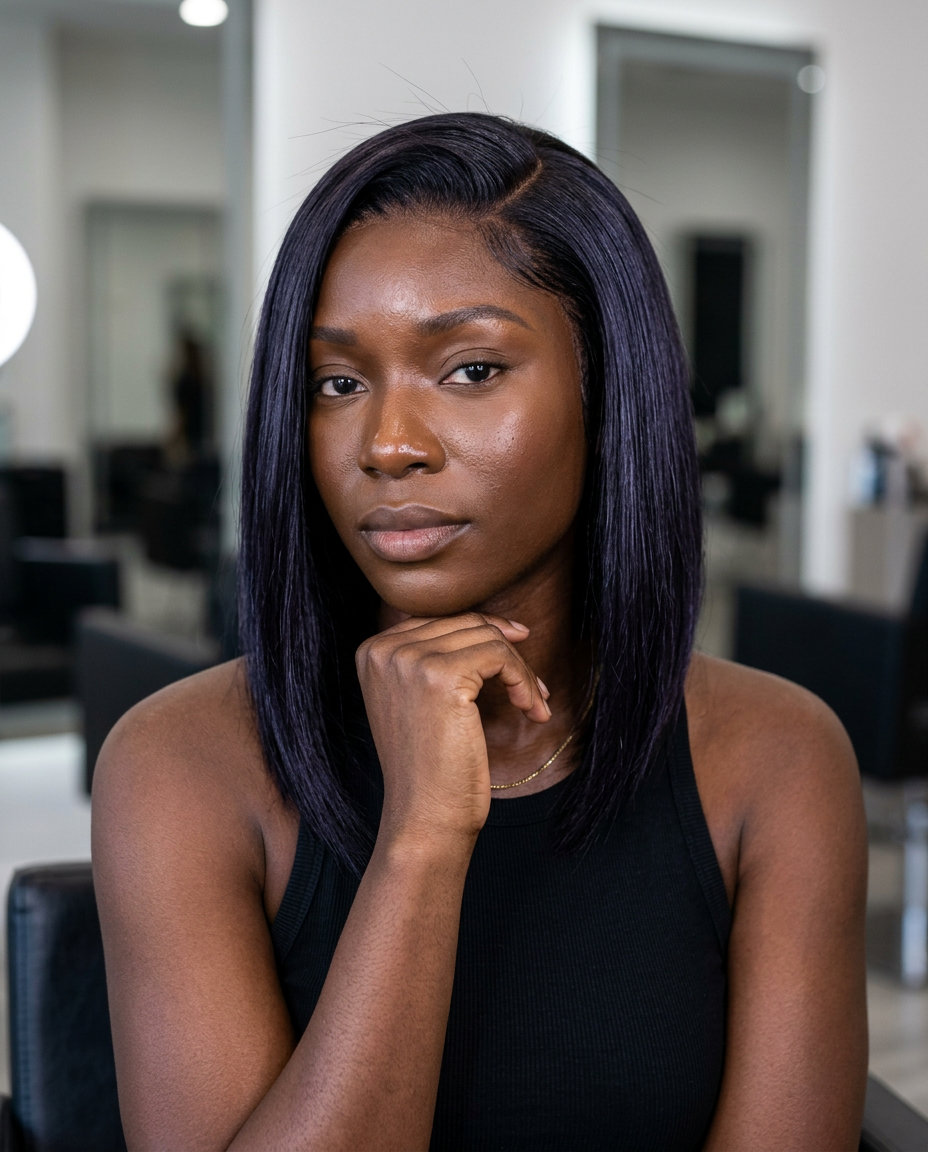
Razoring on a jet black lob haircut creates a sleek, almost liquid finish that feels more intentional than blunt-cut alternatives. Precise razoring creates a sleek, almost ‘liquid’ appearance and allows subtle internal movement without visible layering. Razored edges stayed sleek and defined for 5 weeks before needing a refresh, which honestly beats the timeline I expected. The catch: this approach requires precision work, and not every stylist executes it well.
Skip if you have very fine hair—razoring can make it look too thin. The technique works best on medium to thick textures where the blade creates definition without revealing fragility underneath. Jet black is unforgiving on regrowth, so you’re committing to root touch-ups every 3-4 weeks, or maybe just a trim, honestly. The payoff is a lob that photographs like sculpted darkness with movement underneath. Liquid hair achieved.
Ash Blonde Lob Undercut
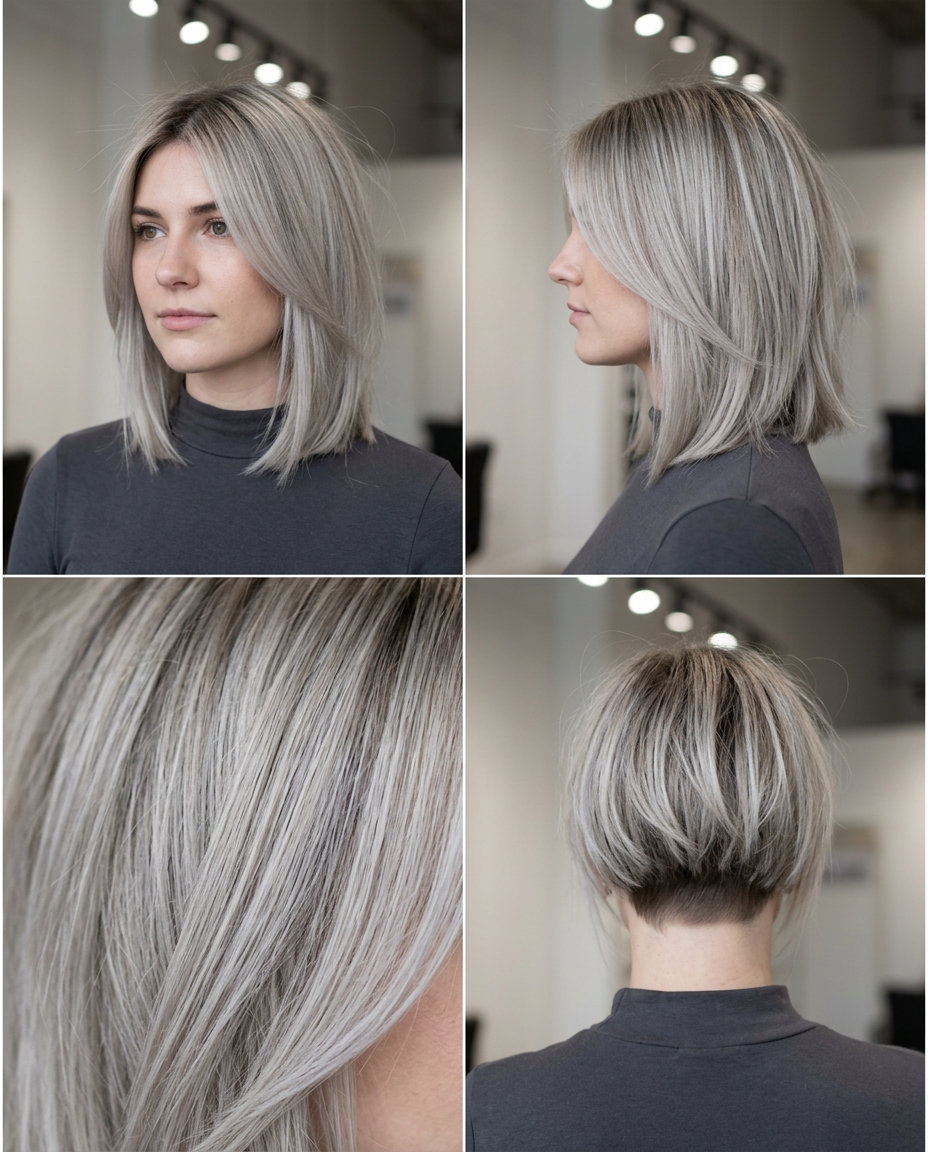
An undercut at the nape removes significant bulk, creating an ‘anti-perfect’ shape that’s easier to style—probably worth the consultation at least. The ash blonde lob undercut solves a specific problem: thick hair that refuses to cooperate without drastic intervention. Undercut reduced bulk, making styling 10 minutes faster on thick, textured hair. You’re getting a cut that acknowledges density instead of pretending it doesn’t exist.
Undercut grows out awkwardly between weeks 3-6, requiring frequent trims to maintain shape. This is the trade-off. If you can commit to every 4-5 weeks in the chair, the payoff is real—less time blow-drying, less product needed, less frustration. Ash blonde hides regrowth beautifully, so at least the color part is forgiving. The undercut works on most hair types but shines on thick or coily textures where traditional layering alone can’t reduce enough volume. The secret weapon.
Wavy Ash Blonde Lob
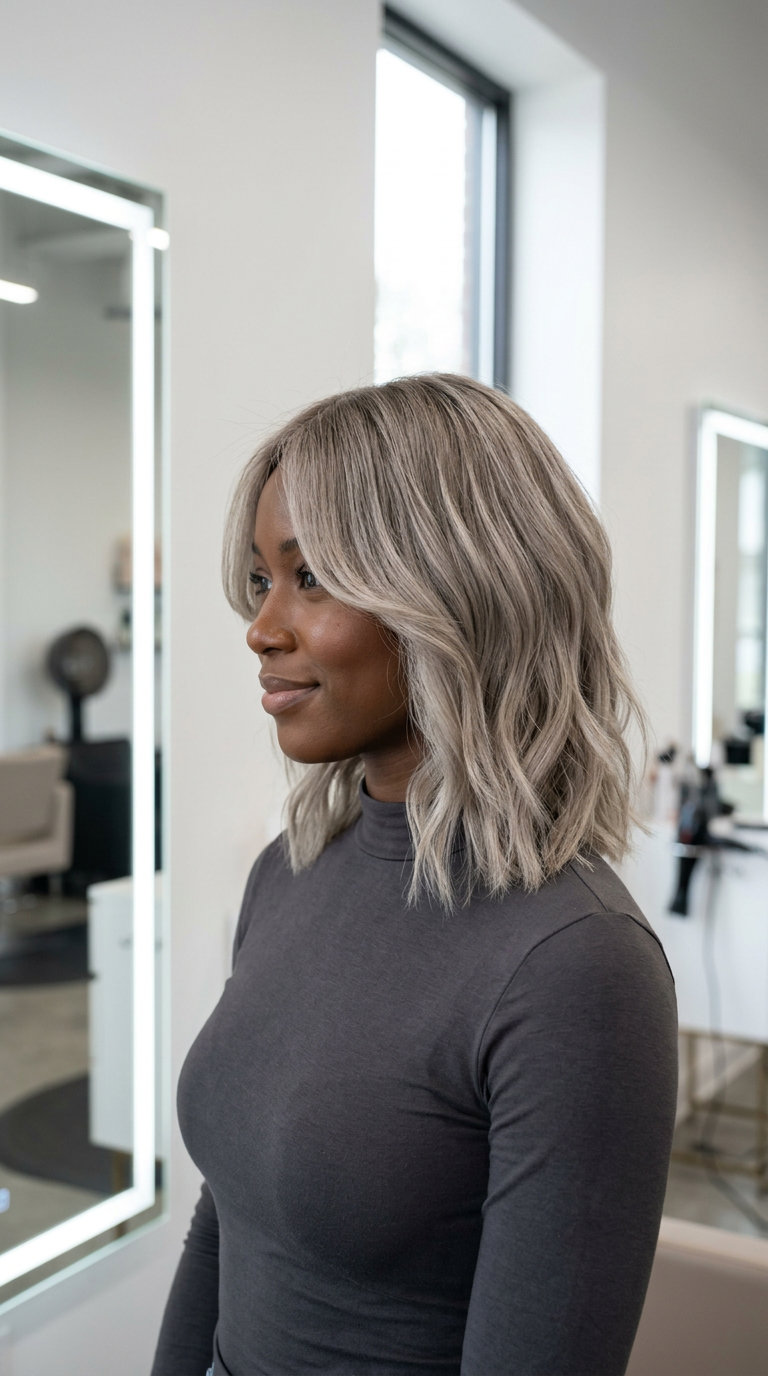
Soft, graduated layers enhance natural waves and reduce bulk, creating a light, airy ‘French Girl’ feel. A wavy ash blonde lob works best on naturally wavy, medium to thick textured hair. Graduated layers enhanced natural waves, allowing for air-drying with minimal frizz—which is my go-to for summer. The cut trusts your texture instead of fighting it, which means you’re not straightening and re-styling every time humidity exists.
This cut can be adapted for fine hair with careful graduation, but the magic really happens when there’s actual wave pattern to work with. Ash blonde regrowth is forgiving, sitting at around 8-10 weeks before roots become an issue. The layers break up bulk without creating that choppy, over-textured look that ages fast. You’re getting movement and dimension with genuine ease, not the kind of ‘effortless’ that requires 20 minutes of styling. Effortless French chic.
Lived-In Textured Lob
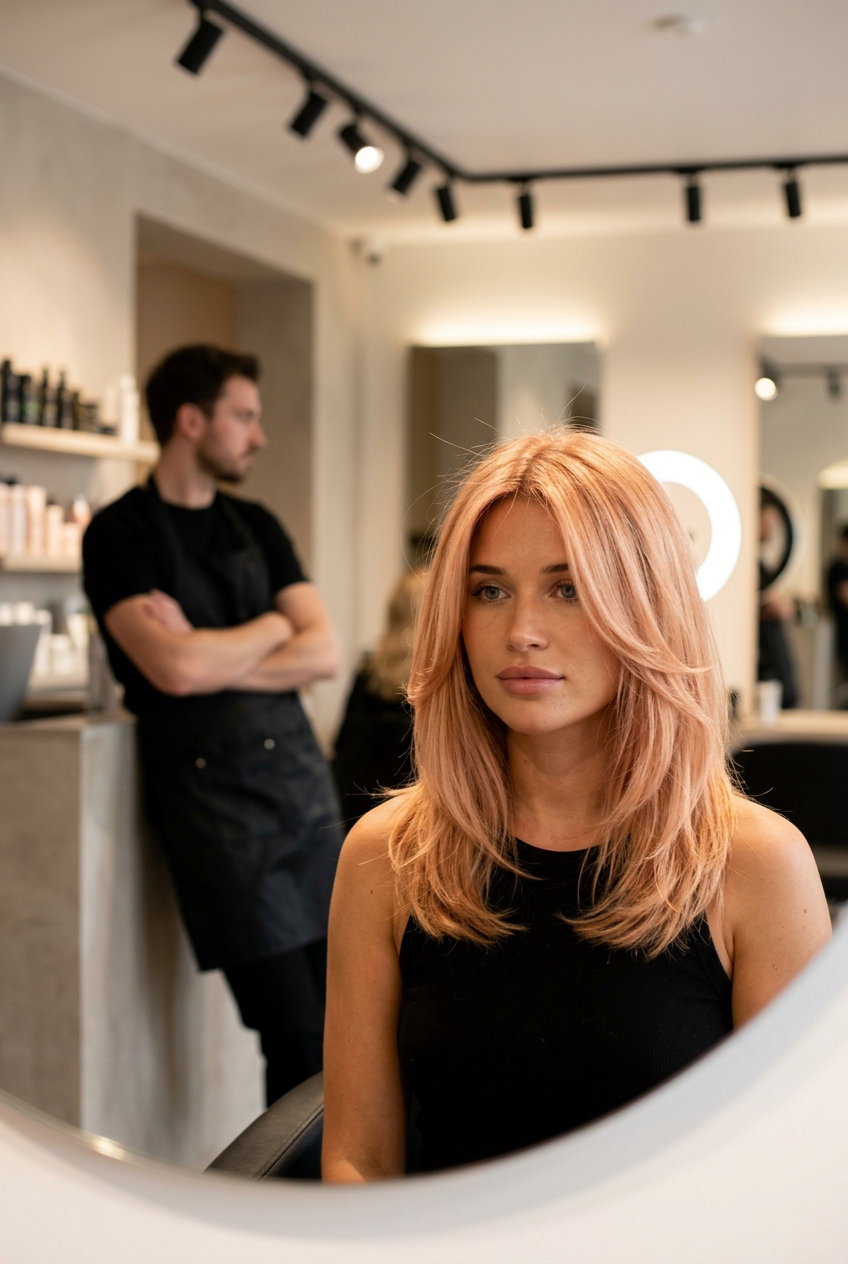
Lived-in effect lasted four days with minimal styling, enhancing natural waves—which is the marketing promise every stylist makes and approximately three of them actually deliver. Point-cut layers reduce bulk and enhance natural texture, creating a soft, lived-in effect that legitimately looks better on day three than day one. This is the cut that makes people ask if you did something different when you actually just slept on it. Wavy, fine to medium textured hair gets the most obvious payoff, though straight hair can work here too if you add styling texture through paste or spray.
The real commitment: this cut requires regular trims every six to eight weeks to maintain its soft perimeter because blunt ends read as sloppy after week five. You’re not paying for complexity—you’re paying for a cut so clean and intentional that it stays visibly intentional through multiple wash cycles. Book the consultation specifically asking about point-cutting technique, which is probably worth the consultation at least. Effortless, truly.
Still Deciding? Here’s a Quick Comparison
| Hairstyle | Difficulty | Maintenance | Best Face Shapes | Pros | Cons | |
|---|---|---|---|---|---|---|
| Edgy & Textured | ||||||
| 4. The Modern Razor-Cut Chocolate Lob | Moderate | Medium — every 6-8 weeks | round, square, oval | Suits most face shapesWorks on multiple textures5-minute styling | Not ideal for very curly hair |
| 10. The Urban Edge Lob | Easy | Medium — every 6-8 weeks | round, heart, square | Easy to style at homeSuits most face shapesWorks on multiple textures | Not ideal for very curly hair |
| 12. The Nirvana Grunge Lob | Easy | Low — every 8-12 weeks | long, diamond, heart | Low maintenanceEasy to style at homeSuits most face shapes | Not ideal for very curly hair |
| 15. The Elegant Champagne Cloud Lob | Moderate | Medium — every 8 weeks | oval, long, square | Suits most face shapesWorks on multiple texturesLayers add movement | Not ideal for very curly hair |
| 16. The Minimalist Scandi-Wave Lob | Moderate | High — every 4-6 weeks | oval, heart, square | Suits most face shapesWorks on multiple texturesLayers add movement | Frequent salon visits needed |
| 18. The Sculpted Midnight Noir Lob | Moderate | Medium — every 6-8 weeks | All face shapes | Suits most face shapesWorks on multiple texturesTextured, lived-in finish | Not ideal for very curly hair |
| 19. The Ash Blonde Undercut Lob | Moderate | High — every 6-8 weeks | square, heart, oval | Suits most face shapesWorks on multiple texturesLayers add movement | Frequent salon visits needed |
| Classic & Clean | ||||||
| 1. The Parisian Peach Lob | Easy | High — every 4-5 weeks | heart, oval, long | Easy to style at homeSuits most face shapesWorks on multiple textures | Frequent salon visits needed |
| 6. The Architectural Lob | Moderate | Medium — every 6-8 weeks | long, oval, diamond | Suits most face shapesWorks on multiple textures5-minute styling | Not ideal for very curly hair |
| 9. The Caramel Swirl Scissor Lob | Moderate | Medium — every 8 weeks | oval, round, heart | Suits most face shapesWorks on multiple texturesLayers add movement | Not ideal for very curly hair |
| 11. The Radiant Golden Hour Lob | Moderate | Medium — every 8 weeks | round, square, oval | Suits most face shapesWorks on multiple texturesLayers add movement | Not ideal for very curly hair |
| 14. The Mahogany Glaze Blunt Lob | Moderate | Medium — every 6-8 weeks | round, square, oval | Suits most face shapesWorks on multiple texturesLayers add movement | Not ideal for very curly hair |
| 17. The Amalfi Gloss Lob | Moderate | Medium — every 7-9 weeks | square, oval, heart | Suits most face shapesWorks on multiple texturesLayers add movement | Not ideal for very curly hair |
| 20. The Effortless Ash Wave Lob | Easy | Medium — every 8-10 weeks | All face shapes | Easy to style at homeSuits most face shapesWorks on multiple textures | Not ideal for very curly hair |
| 25. The Tousled Strawberry Dream Lob | Easy | High — every 4-5 weeks | oval, heart, long | Easy to style at homeSuits most face shapesWorks on multiple textures | Frequent salon visits needed |
| Soft & Romantic | ||||||
| 2. The Sandy Beige Textured Lob | Easy | Medium — every 8-10 weeks | oval, heart, long | Easy to style at homeSuits most face shapesWorks on multiple textures | Not ideal for very curly hair |
| 3. The Butterfly Lob with Caramel Ribbons | Moderate | Medium — every 8-10 weeks | square, round, heart | Suits most face shapesWorks on multiple texturesLayers add movement | Not ideal for very curly hair |
Frequently Asked Questions
What are the easiest textured lob styles to do at home?
The Parisian Peach Lob and The Sandy Beige Textured Lob are genuinely low-fuss—both emphasize air-drying with minimal active styling, often under 15 minutes. Apply a leave-in conditioner like Briogeo Farewell Frizz Rosarco Milk to damp hair, scrunch, and let your natural texture do the work. These cuts rely on point-cut ends that diffuse naturally without needing a blowout.
How can I get more volume in my lob without a salon blowout?
The Butterfly Lob with Caramel Ribbons uses heavy face-framing layers and shorter crown sections to create lift at the roots—pair this with a round brush and curling iron for maximum volume. The Sun-Drenched Shag Lob achieves volume through choppy internal layering; apply mousse to damp hair, scrunch, and diffuse (or air-dry) for texture. Oribe Dry Texturizing Spray also builds volume and enhances the sculpted chaos of both styles.
Do razor-cut lobs work for all hair types?
The Modern Razor-Cut Chocolate Lob works best on medium to thick, straight or slightly wavy hair—razor-cutting creates that deconstructed, edgy perimeter. Skip this if you have very fine, damaged, or extremely curly hair; razor-cut edges can frizz in humidity and look wispy on delicate strands. Ask your stylist to assess your hair texture before committing.
How can I prevent frizz in my textured lob during summer humidity?
Both The Parisian Peach Lob and The Sandy Beige Textured Lob emphasize lightweight leave-in conditioners applied to damp hair to encourage natural texture and fight frizz. Use Briogeo Farewell Frizz Rosarco Milk or Color Wow Dream Coat Supernatural Spray (which lasts through 3-4 shampoos) to create a humidity barrier. The point-cut ends in these styles also help—they diffuse moisture more gracefully than blunt perimeters, reducing the frizz effect.
How often should I trim a textured summer lob?
Most textured lobs need a trim every 6-8 weeks to maintain shape and keep point-cut ends looking intentional rather than ragged. Razor-cut styles like The Modern Razor-Cut Chocolate Lob may need trimming every 5-6 weeks since razor-cut edges dull faster. Ask your stylist what the grow-out plan looks like—some textured lobs age gracefully into shaggy versions of themselves, while others lose their structure quickly.
Final Thoughts
The textured summer lob haircut 2026 isn’t about perfection—it’s about precision disguised as accident. Every point-cut end, every invisible layer, every strategically placed choppy section exists to make your hair look like it woke up that way, when really your stylist spent forty minutes engineering rebellion.
What started as a consultation about