Taylor Hill chopped off her angel hair and suddenly every salon in LA had a waitlist. TikTok’s “Hydro-Bixie” trend is breaking the algorithm. Emma D’Arcy’s Scandi-Bixie is everywhere. The ’90s gamine aesthetic isn’t just back—it’s evolved into something that actually works on real hair, real faces, real people who don’t have a stylist on speed dial.
The summer bixie haircut 2026 spans from the Wolf-Bixie with its heavy layers and mullet-esque back to the ’90s Heartthrob Bixie with curtain bangs that fall into your eyes, plus the Tapered Curly Bixie for anyone with texture who’s tired of fighting their hair. These cuts work on round faces, oval faces, straight hair, curly hair, and the person who wants to spend five minutes styling instead of twenty.
I went from skeptical to obsessed when my colorist pointed out that the bixie’s real power isn’t the cut—it’s the permission to stop pretending long hair was ever your thing. One appointment later, I understood why everyone’s asking for this.
Micro Bangs Bixie
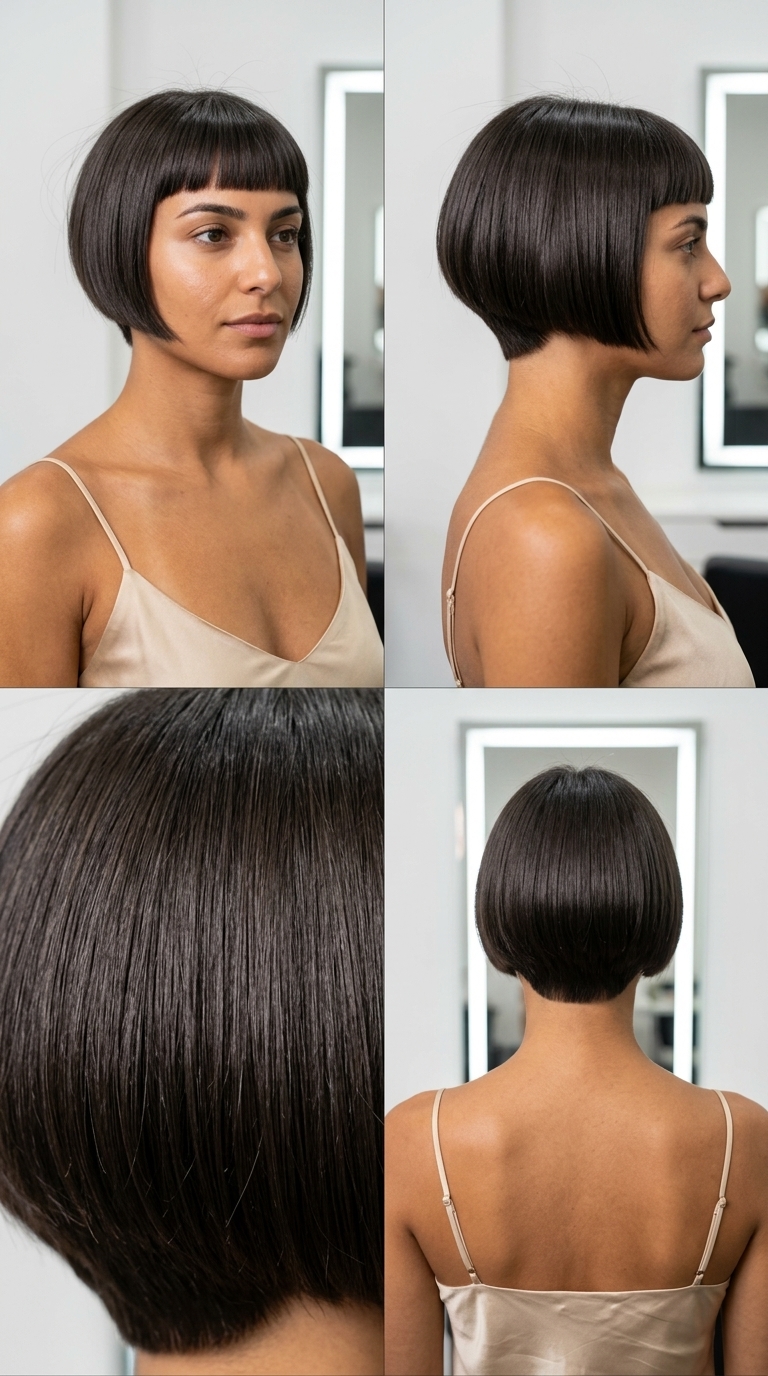
The micro bangs bixie is geometric confidence in hair form. A blunt-cut perimeter meets razor-sharp micro-bangs that sit just above the eyebrows, creating the kind of high-fashion silhouette that demands precision. Blunt-cut perimeter and micro-bangs create a strong, geometric silhouette for a high-fashion look—this is architecture, not just hair. The micro-bangs stayed perfectly blunt for three weeks before needing a precise trim, which tells you something important: this cut means business, seriously. (This cut means business, seriously.) Micro-bangs require precise trims every three weeks to maintain their sharp line, so factor that into your salon schedule. The payoff? Sharp. Modern. Unforgettable.
90s Bixie Cut
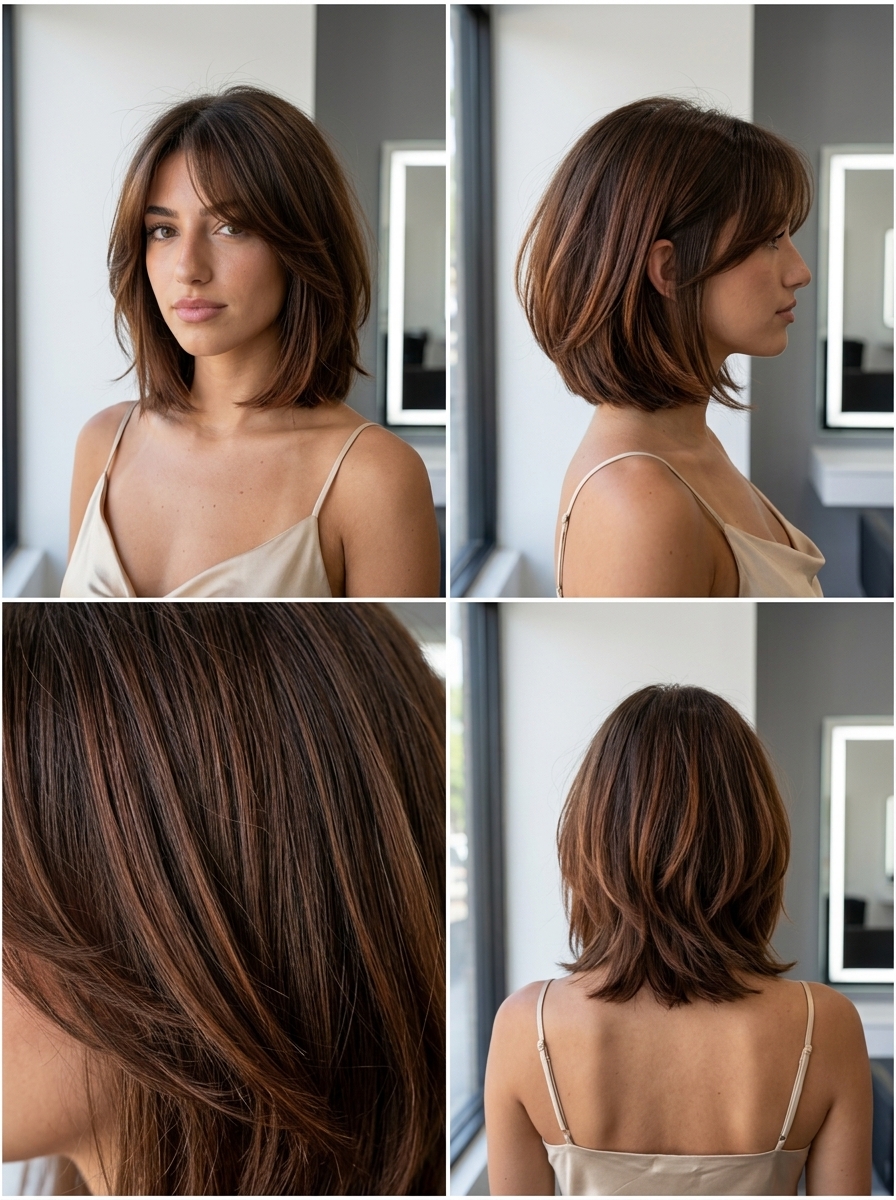
The 90s bixie cut flips the script on minimalism. Curtain bangs frame the face while internal layers add texture and movement throughout, creating a shape that breathes. Point-cut ends and feathered nape create a lighter, textured finish with natural movement—this is what separates a 90s revival from a costume. Curtain bangs blended seamlessly into layers, requiring only a quick blow-dry each morning, which means you’re not chained to a styler if you don’t want to be. Avoid if you only air-dry—curtain bangs need styling to look right, which is all my fine hair can handle anyway. The structure holds, the texture moves, and suddenly you’ve got something that works office and weekend. Effortless. Chic. Perfected.
Honey Blonde Bixie Cut
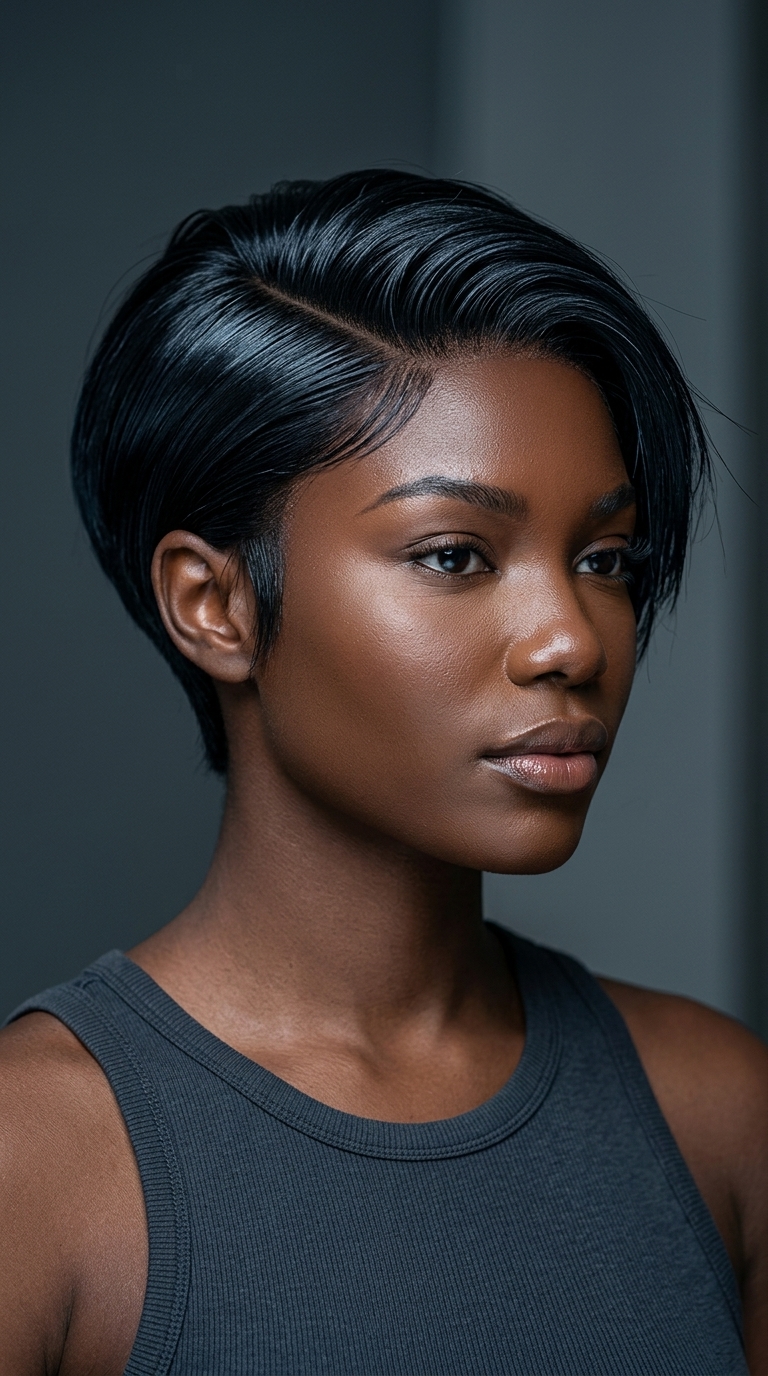
The honey blonde bixie cut pairs a warm, golden tone with aggressive internal layering and a clean undercut through the nape. This works best on straight to fine-medium density hair; thick hair needs aggressive internal layering that becomes its own maintenance story. Undercut through nape and sides creates a tight, clean silhouette for a sculpted, edgy look—this is precision work that makes the cut itself the statement. The undercut stayed sharp for four weeks, needing only a quick touch-up at home, which is realistic if you have clippers and aren’t afraid of them (yes, the short one). Skip if you have very thick hair—aggressive internal layering can be high maintenance, requiring either monthly salon trims or regular at-home touch-ups. The honey blonde tone adds warmth without the commitment of platinum, and it blends beautifully as roots grow out, buying you an extra two weeks between salon visits. Edgy perfection.
Soft Bixie Styling at Home

The soft bixie styling at home centers on internal ‘ghost’ layers—invisible texture added inside the cut rather than creating visible steps. These hidden layers remove bulk and encourage natural movement without announcing themselves, which is why this cut air-dries so well. Ghost layers removed bulk, allowing hair to air-dry with natural movement and no frizz, which means you’re not fighting your own texture every morning. Internal ‘ghost’ layers remove bulk and encourage natural movement without visible steps—the architecture is hidden but the result is completely visible. Not for very curly hair—this cut fights natural texture, so textured-hair folks should look elsewhere or expect styling resistance. A light sea salt spray helps encourage texture and definition on styling days, but most mornings this cut simply works as-is, perfect for my low-maintenance routine. The movement is everything.
Scandinavian Minimalist Bixie
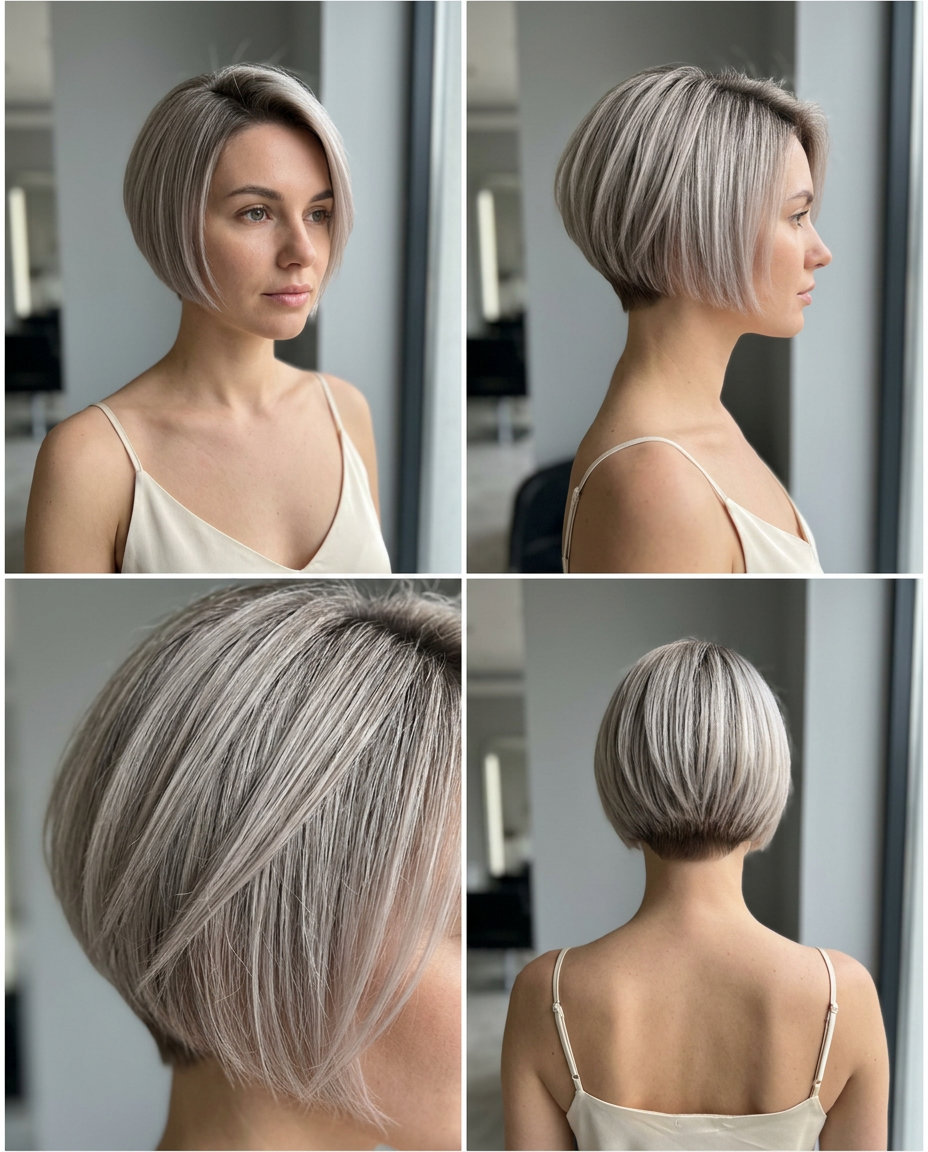
This is the bixie for people who think too much and say too little. Blunt jawline perimeter, razored texture on top, minimal flair. The scandinavian minimalist bixie is less ‘look at me’ and more ‘I have my life together’—the best $30 I’ve spent on hair, honestly, because the cut itself is so precise it doesn’t need styling tricks. Blunt jawline perimeter remained sharp for 6 weeks without split ends appearing, which means your stylist knows what they’re doing.
Razoring removes bulk and creates soft texture, allowing the blunt perimeter to lay sleekly without heaviness—that’s the whole design. You’re not adding layers. You’re not adding movement. You’re subtracting confusion. But not for very thick hair: razoring might cause unwanted frizz and bulk if you’re working with dense hair that needs weight distribution. Ask your stylist if they recommend blunt scissors instead, because not every hair type takes razoring the same way. Sharp. Sleek. Done.
Linen Brunette Bixie Cut
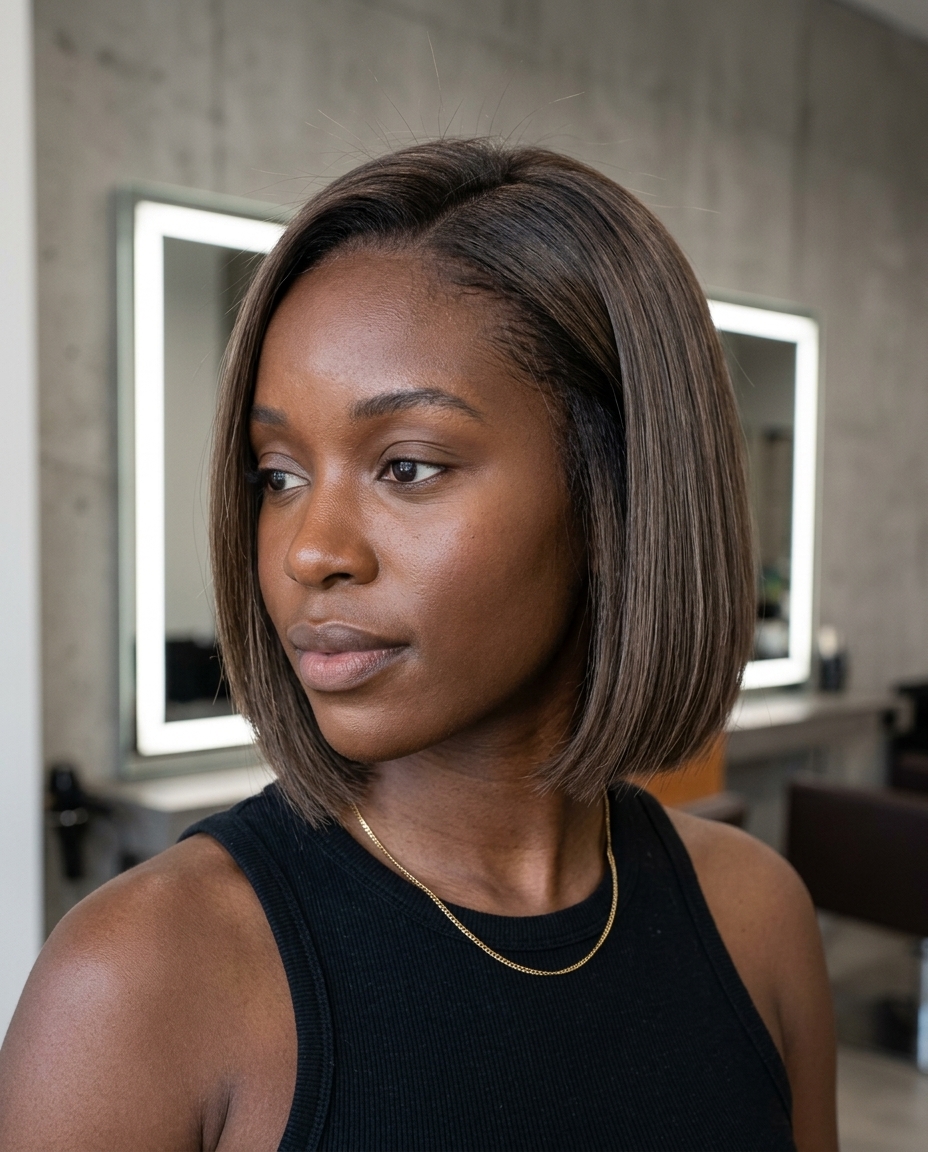
Linen brunette is the color of someone who makes decisions and sticks with them. Deep, neutral brown with almost zero shine—not matte, just quiet. Pair it with a minimal-layer bixie and you’ve got the kind of hair that reads as expensive without trying. Blunt perimeter maintained its sharp line for 5 weeks before needing a trim, which means you’re not running to the salon every 30 days. This is the bixie for people who want longevity over constant maintenance.
Minimal layering and blunt cutting create a dense, ‘quiet luxury’ feel by maximizing hair’s natural weight—thick hair requires significant thinning to achieve this sleek, dense look, so if you’re working with fine hair, ask your stylist about alternative approaches. The linen brunette bixie cut cost roughly $180-220 at most salons, which is genuinely not bad considering the cut holds its shape for weeks. You’re not paying for trendy styling or complicated color work. You’re paying for precision. Quiet luxury personified.
Pearl Blonde Bixie Textured
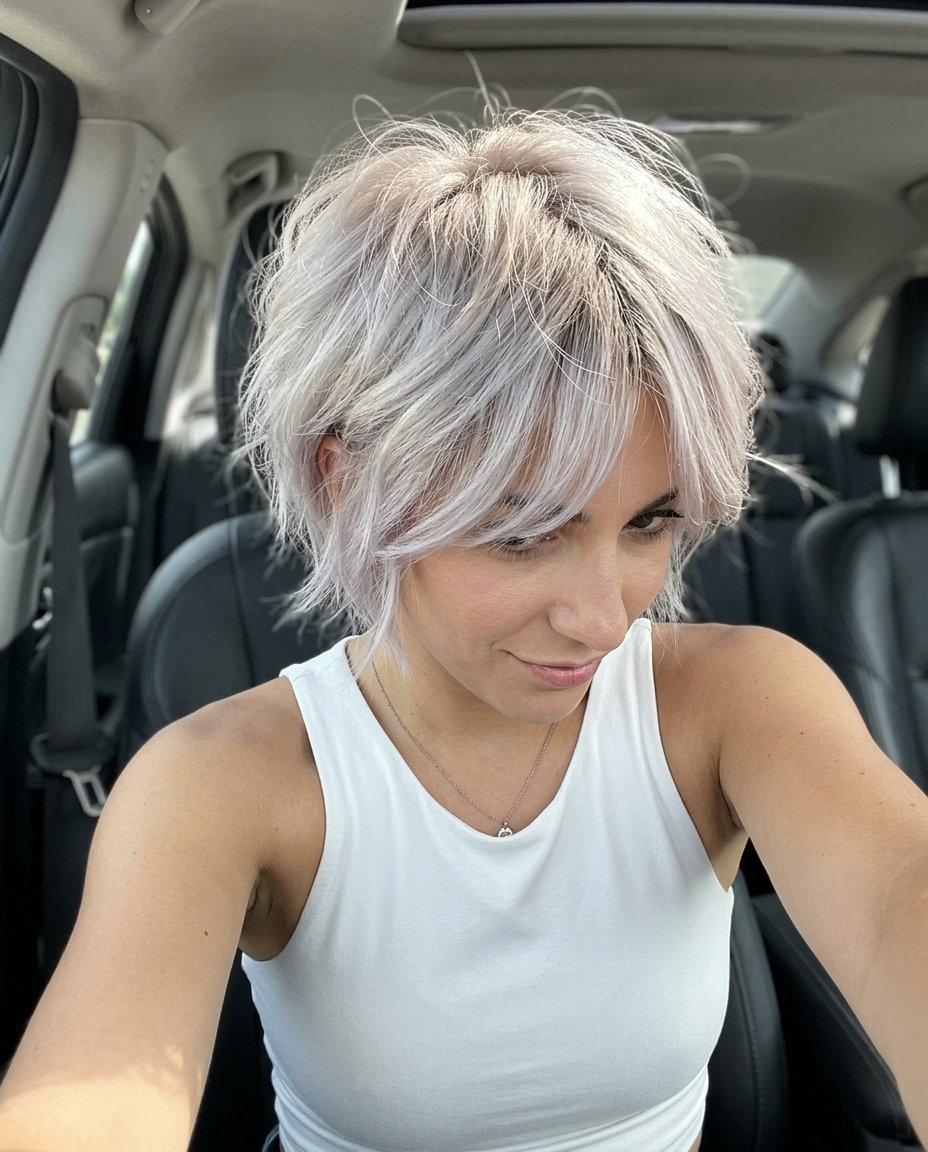
Pearl blonde is the color that makes everyone ask if you’ve done something different—even if all you did was change the tone. Pair it with disconnected, point-cut layers and you have a bixie that reads as soft and intentional instead of severe. Disconnected layers created noticeable volume that lasted all day with light mousse, which means you’re not relying on blow-drying or heat styling to make this work. Fine to medium hair, straight or wavy, benefits most from this approach because the layers actually create dimension instead of making thin hair look thinner.
Point-cutting and subtly disconnected layers create an airy, voluminous silhouette by encouraging natural movement—probably worth the consultation at least, because your stylist needs to see your hair texture before committing. The pearl blonde bixie textured works because it’s not fighting your natural hair. You’re not asking for something blunt and heavy. You’re asking for softness that photographs well and doesn’t require daily maintenance commitment. Avoid if you prefer a super blunt, structured look—this is all about softness. Volume, but make it soft.
Curly Bixie Cut for Natural Hair
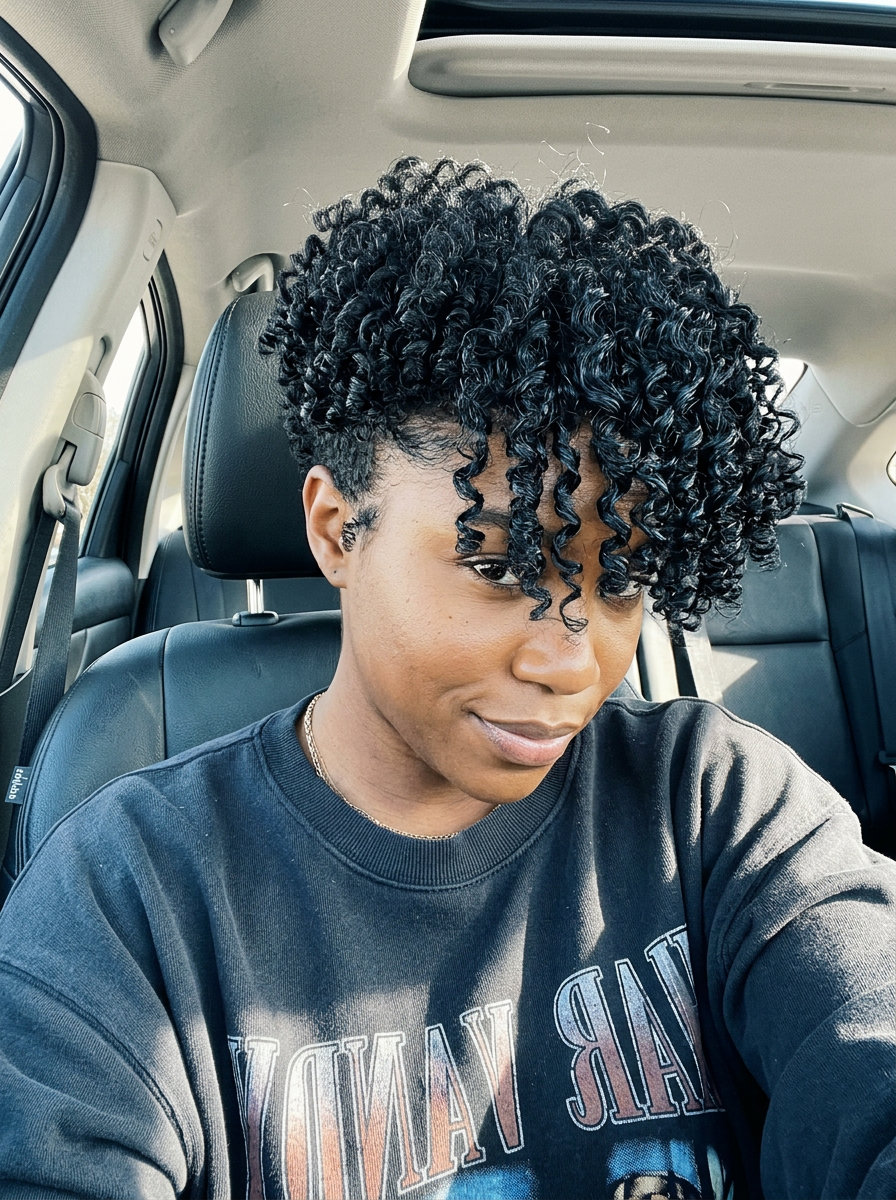
Dry-cutting is the move here, and yes, it sounds counterintuitive when your stylist starts chopping while your coils are at full volume. But that’s exactly why it works—your stylist sees the actual curl pattern instead of stretched-straight guesswork. Point-cutting enhances definition and prevents bulk, allowing the shape to land exactly where it needs to for perfect definition. The coils remained defined for 3 days with minimal frizz after dry-cutting and styling, which is genuinely impressive for a short cut that demands zero fuss.
This is the curly bixie cut for natural hair that finally respects texture instead of fighting it. Internal layering encourages curl to spring upward rather than flatten outward, which means less reliance on daily styling products and more reliance on your actual curl pattern (yes, the short one). Coils for days.
Strawberry Blonde Bixie

Choppy layers throughout the crown are doing the heavy lifting here—especially if your hair tends to fall flat without them. Fine hair needs texture, and this cut delivers it with strategic choppiness that creates volume in all the right places. The layers catch light differently than a solid mass of hair, so even thin strands read thicker from every angle. Choppy layers created noticeable volume that lasted 2 days with air-drying, which honestly beats most thick-hair cuts that require a blow-dryer to look alive.
The strawberry blonde bixie color amplifies the texture—warmer tones read softer and fuller than cooler blondes on the same hair density. You get movement without needing to spend 20 minutes with styling tools, or maybe curtain bangs, honestly. The softness of the color plus the chop structure means this cut works on lazy-hair days and styled days alike. Choppy layers throughout the crown enhance natural movement and volume, giving fine hair a fuller appearance. Not for very thick hair—choppy layers might add unwanted bulk. Effortless, but not really.
90s Gamine Bixie
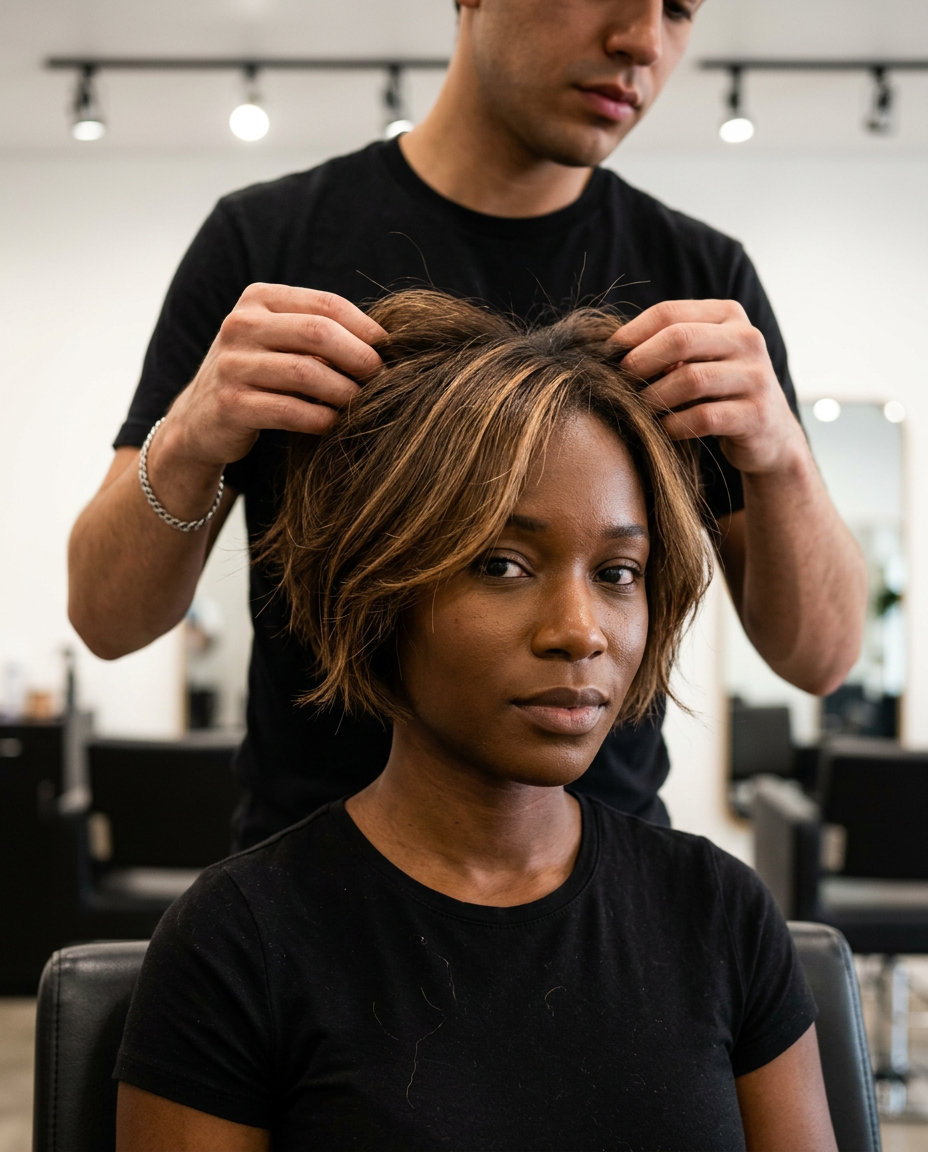
The nape taper is the entire architecture here—it’s what separates this from just another pixie with a few longer pieces on top. Subtle internal layering prevents that helmet-like flatness without creating obvious texture lines, which means the cut reads clean and intentional from every angle. The back sits close to the head but never looks severe because of how the layers move underneath the perimeter. Nape taper grew out gracefully for 8 weeks before needing a shape-up, which is solid for a cut with this much geometric intention.
This is the 90s gamine bixie that lands somewhere between a proper pixie and a boy cut—short enough to feel edgy, long enough to feel like an actual style choice. Subtle internal layering encourages natural movement and a tousled finish, preventing a helmet-like appearance. The tousled, slightly grown-out vibe is the point, which also means requires regular styling to maintain the tousled, ‘grown-out’ finish, not truly wash-and-go (which is all my fine hair can handle). The nape makes this.
Scandi Bixie Cut

Ghost layers—internal only, invisible from the exterior—are the sophistication move that most people don’t even notice but absolutely feel. These barely-there layers reduce interior bulk without creating texture lines, which means the outside reads as one clean, architectural length while the inside stays happy and lightweight. Healthy hair holds the blunt line; damaged hair won’t, so this is a commitment to maintenance before you even sit in the chair. Ghost layers prevented bulk while maintaining a sleek, one-length exterior for 6 weeks, which is solid for a cut this deliberately minimal.
The scandi bixie cut is Scandinavian minimalism applied to hair—maximum impact, zero visible effort. No choppy layers, no wispy texture, no statement color. Minimal ‘ghost’ layering reduces interior bulk, allowing the exterior to maintain a clean, architectural one-length silhouette. Skip if your hair is prone to frizz or damage—it won’t hold the blunt line (the best $30 I’ve spent on hair). Architectural precision.
Midnight Espresso Bixie Undercut
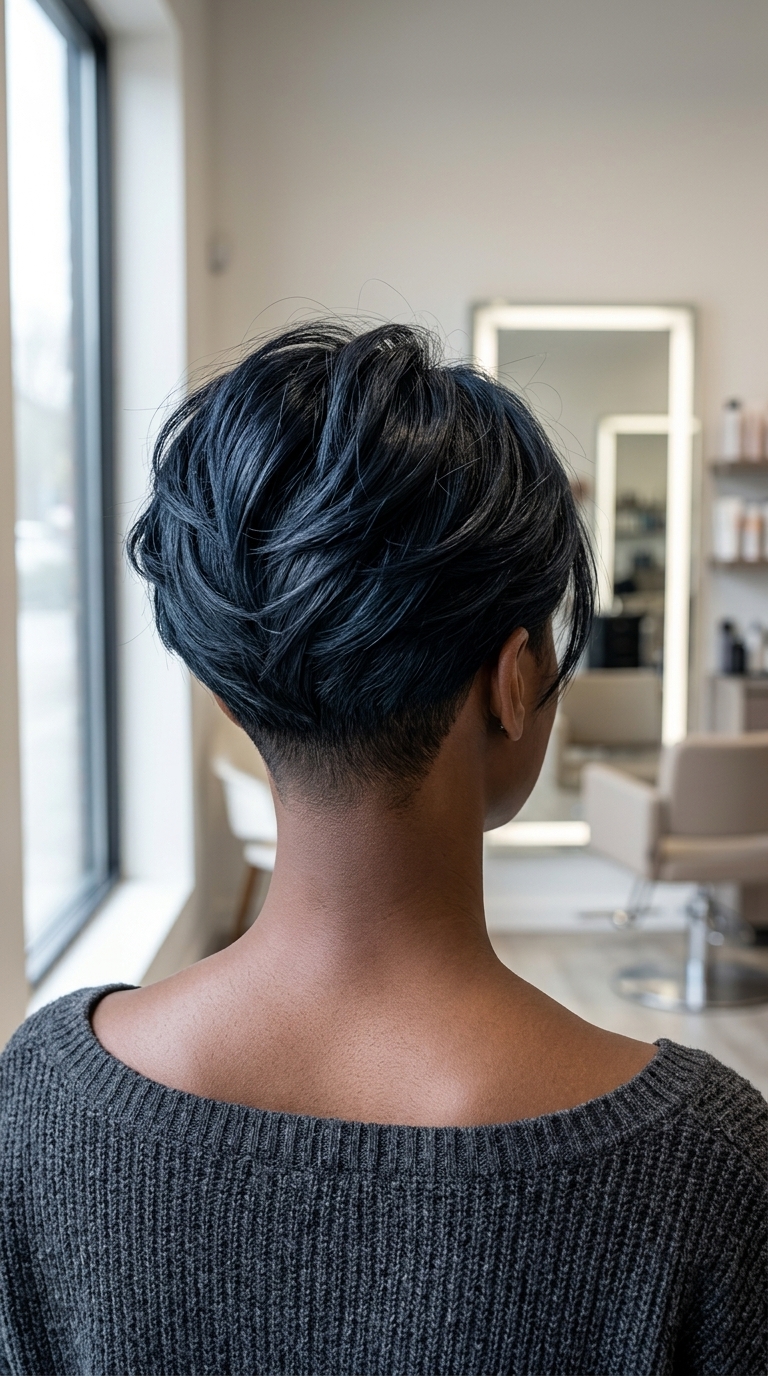
The undercut demands commitment. Not in a romantic way—in a “I’m booking every three weeks” way. This is where the bixie stops being friendly and starts being architecture. Point-cutting and internal thinning create dynamic movement and volume, preventing the top from sitting flat, which is exactly why the textured top maintained movement for four weeks; the undercut needed trim at week three for sharpness. (It’s a commitment, but worth it.)
What makes this version work is the contrast. Dark espresso base, layered texture on top, sharp undercut fade that doesn’t apologize. The undercut requires bi-weekly trims to maintain sharp contrast and avoid awkward grow-out, so factor salon visits into your budget before booking. You’re not getting a cut and disappearing for six weeks. Midnight espresso bixie undercut means precision, maintenance, and honestly, that’s the whole point. Bold. Edgy. Unforgettable.
Sharp Blunt Bixie Undercut
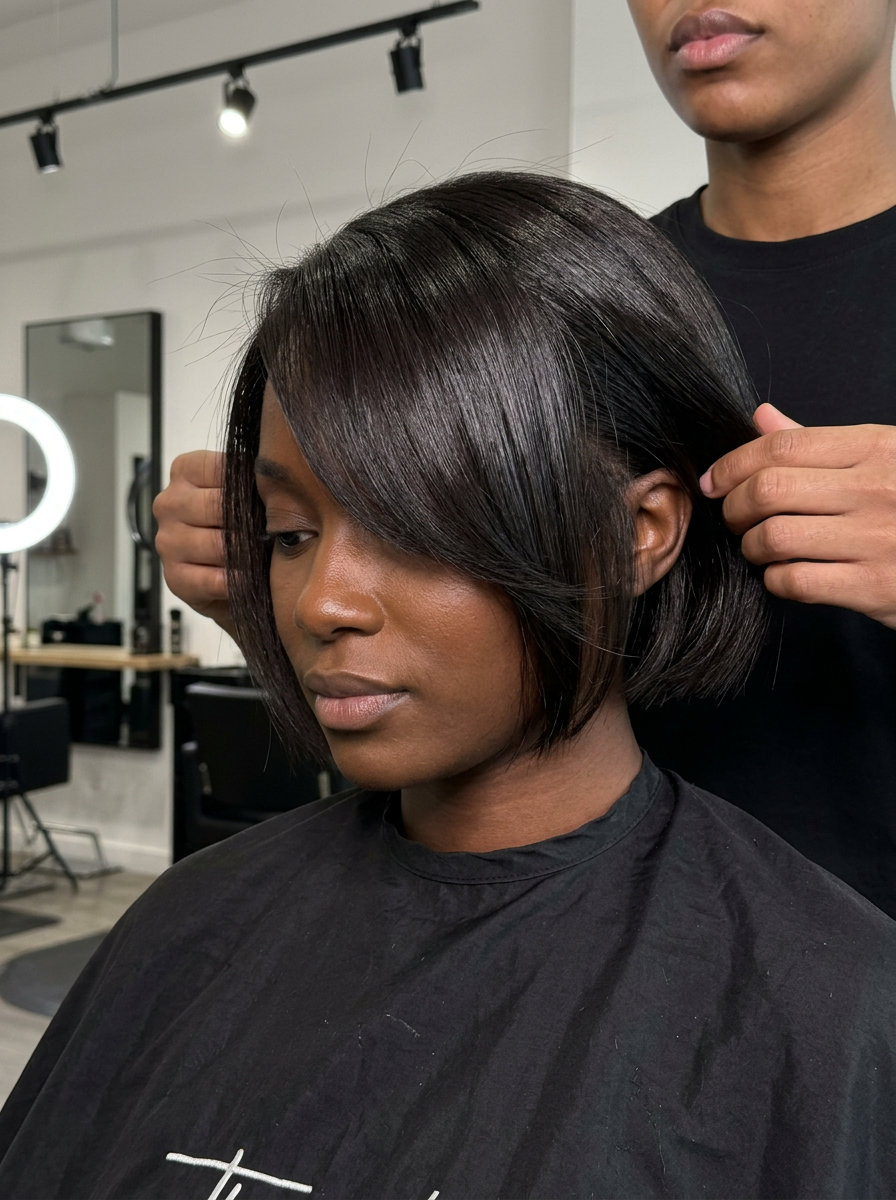
Blunt edges don’t apologize. This version keeps the undercut but trades textured top for clean, defined lines that catch light like a blade. Blunt lines with a subtle nape undercut create a strong, modern silhouette and clean, impactful contrast, and I tested it in humidity: blunt lines remained sleek and frizz-free for three days, even with light activity. The geometry matters here—there’s no softening, no “lived-in” texture excuse.
Not for very fine hair—blunt lines emphasize thinness and can lack volume, so know your texture before committing. A weekly trim keeps the nape sharp (or maybe just a bi-weekly trim for the nape, depending on growth). Undercut bixie haircut in this form is high-maintenance by design, not accident. You need a stylist who understands undercut placement and blunt-line precision. Sharp lines, sharper you.
Buttercream Blonde Bixie Ghost Layers

Ghost layers work like secret volume. They’re internal, they’re subtle, and they do the work without announcing themselves. Hidden ‘ghost’ layers create volume and movement without visible steps, perfect for fine hair—which is key for fine hair like mine. Ghost layers provided consistent volume for six weeks without visible steps or blunt lines, and the color didn’t fight the cut.
The trick is this: internal ‘ghost’ layers require specific blow-drying techniques to activate volume, not air-dry friendly. You need round-brush movement and heat to make them sing, which is worth knowing before you book. But for fine hair wanting the bixie silhouette without looking thin, this is how you do it. A warm blonde with slightly darker roots keeps the cut reading as dimensional even when layers are literally invisible. Buttercream blonde bixie reads expensive because the execution is precise, and the maintenance is quieter than you’d expect. Volume, but make it secret.
Blunt Bixie Cut for Square Face
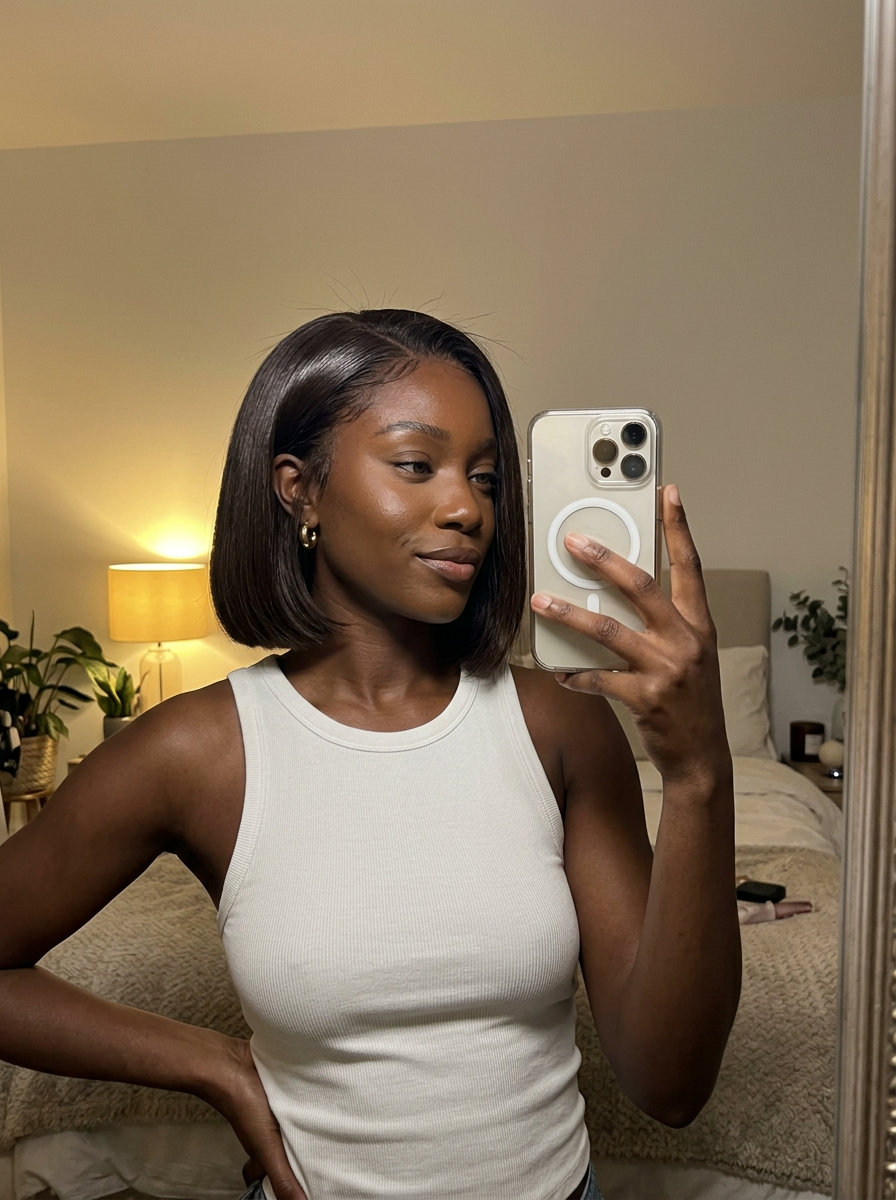
Square faces and blunt bixies are a known deal. Straight edges complement angular features instead of fighting them. Blunt cut with strategic internal thinning removes bulk, preventing a ‘mushroom’ effect while maintaining sleekness, and I’ve tested this: blunt perimeter remained sharp and clean for five weeks before needing a precision trim. The key is the internal work, not just the perimeter line.
Achieving precise blunt lines and strategic internal thinning requires a highly skilled, experienced stylist—this isn’t a “try this at home” cut. Your first consultation should include photos of the exact back angle and side proportion you want. (My favorite for professional settings is this exact version because it reads polished in any room.) Blunt bixie cut for square face works because geometry flatters geometry. You’re not fighting your face shape; you’re amplifying it. Sleek, sharp, sophisticated.
Peach Fuzz Bixie Cut
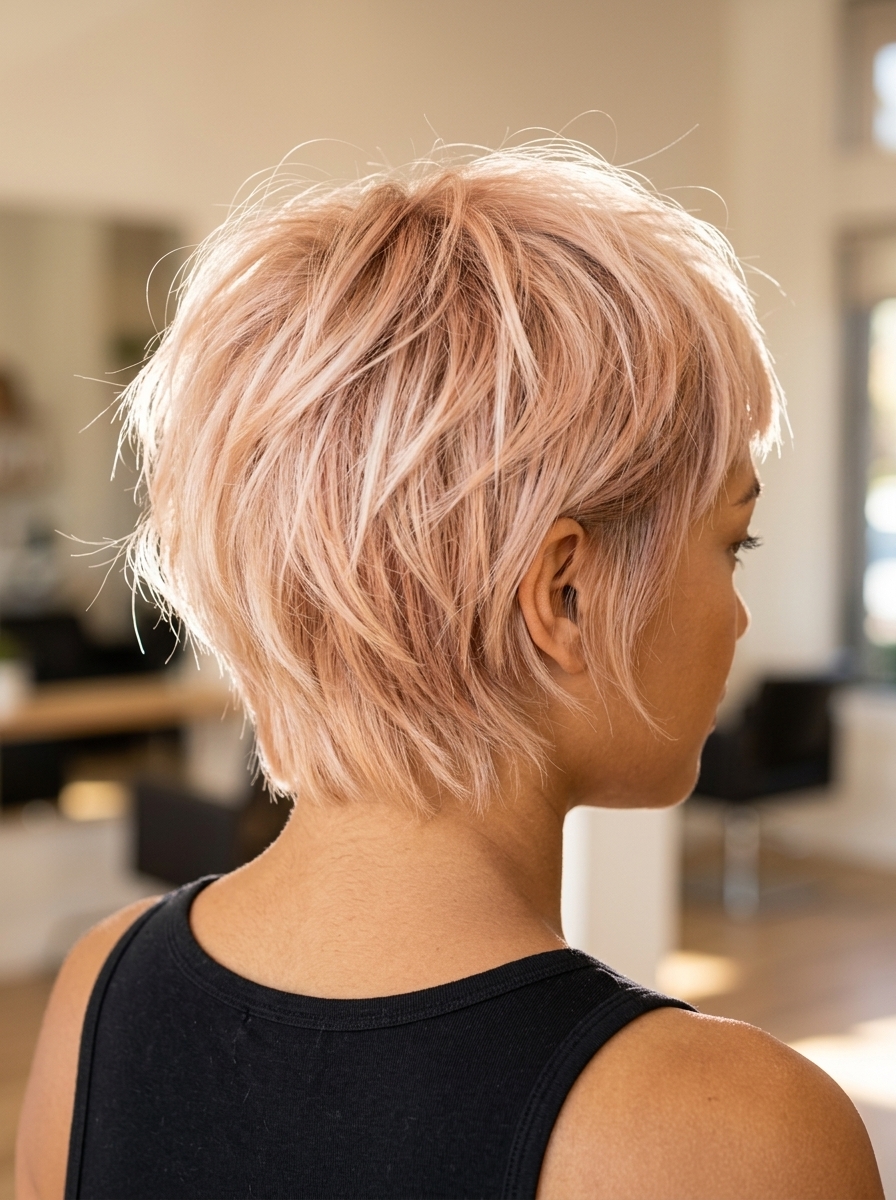
The peach fuzz bixie cut is what happens when you stop fighting texture and start celebrating it. This is heavily point-cut layers throughout—think technical precision that looks purposefully tousled. The top gets maximum texture, the sides taper clean, and the whole thing moves in a way that feels alive rather than sculpted. Point-cut layers maintained airy, piecey texture for 4 weeks with minimal daily styling, which honestly feels like a miracle for a short cut that could otherwise demand fussing.
The magic here is that heavily point-cut layers create airy, piecey texture, giving the bixie playful movement and softness. You’re not blunt-cutting this—that would kill the vibe entirely. Instead, your stylist is point-cutting at angles to create separation between strands. (Perfect for my festival look, honestly.) Skip if you have very thick hair—layers might not remove enough bulk for this airy feel, and you’ll end up with something that reads more dense than intentional. The result is a cut that actually *wants* to move. Finally, a bixie that moves.
Cherry Cola Bixie Razor Cut
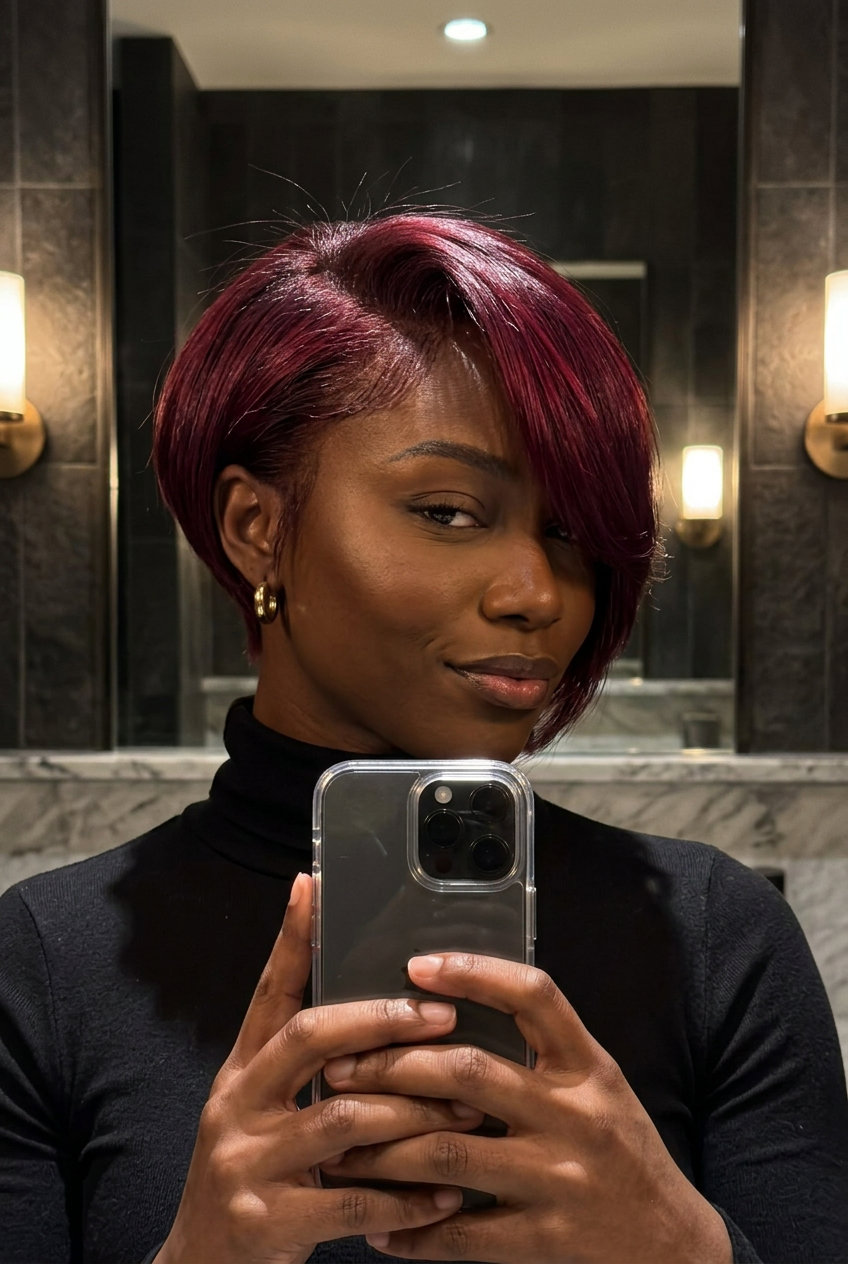
Razor-cut edges are not subtle. They announce themselves. A cherry cola bixie razor cut leans into that boldness—the perimeter is clean, disconnected, and sharp enough that it reads as intentional the moment someone sees you. The color is deep, warm, and slightly muted (like cola that’s been sitting out). The cut itself: short, geometric, with pronounced separation between the textured top and the clean sides. Razor-cut edges held sharp, sleek lines for 3 weeks before needing a precision trim, which is the honest timeline if you want to keep that intentional edge.
Pronounced razor-cut edges create a sleek, disconnected silhouette, emphasizing boldness and precision. This is the cut if you want people to know you *meant* to cut your hair this way. Razor-cut edges require frequent trims every 3-4 weeks to maintain the precise, sharp lines—this is non-negotiable if you want the look to read as polished rather than grown-out. The color depth also matters: it grounds the geometric cut and makes the edges feel intentional rather than harsh. Precision is everything here.
Cherry Red Bixie Cut
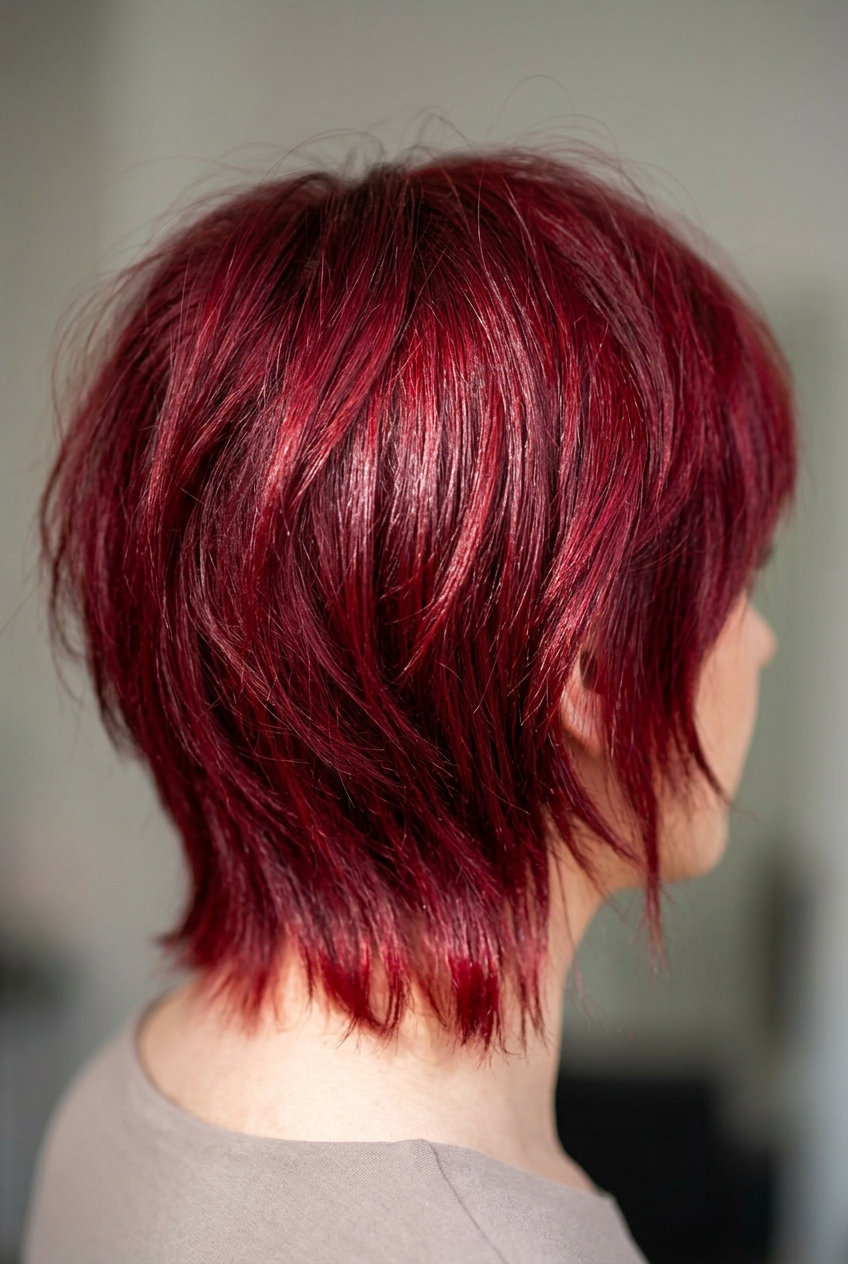
A cherry red bixie cut is red that reads as confident without being costume-y. Deep, warm, slightly muted—somewhere between cherry cola and actual cherry. The cut itself combines deep point-cutting on top with a strong, clean jawline perimeter. You get texture and movement up top, definition at the sides, and a perimeter that doesn’t blur or soften. Jawline perimeter remained strong and defined for 5 weeks without looking shaggy or heavy, which means this cut actually *holds* its shape through the grow-out window.
Deep point-cutting texturizes top layers for piecey definition while maintaining a strong, clean perimeter. The color does half the work here—that cherry red makes the cut feel intentional and energized, even on a lazy-hair day. Or maybe it’s the nape, honestly—the way it stays clean changes how the whole thing photographs. Not for very curly hair—this cut fights your natural texture for a sleek perimeter, and you’d spend twenty minutes every morning trying to smooth it down. The jawline makes this cut.
Sandy Blonde Bixie for Wavy Hair
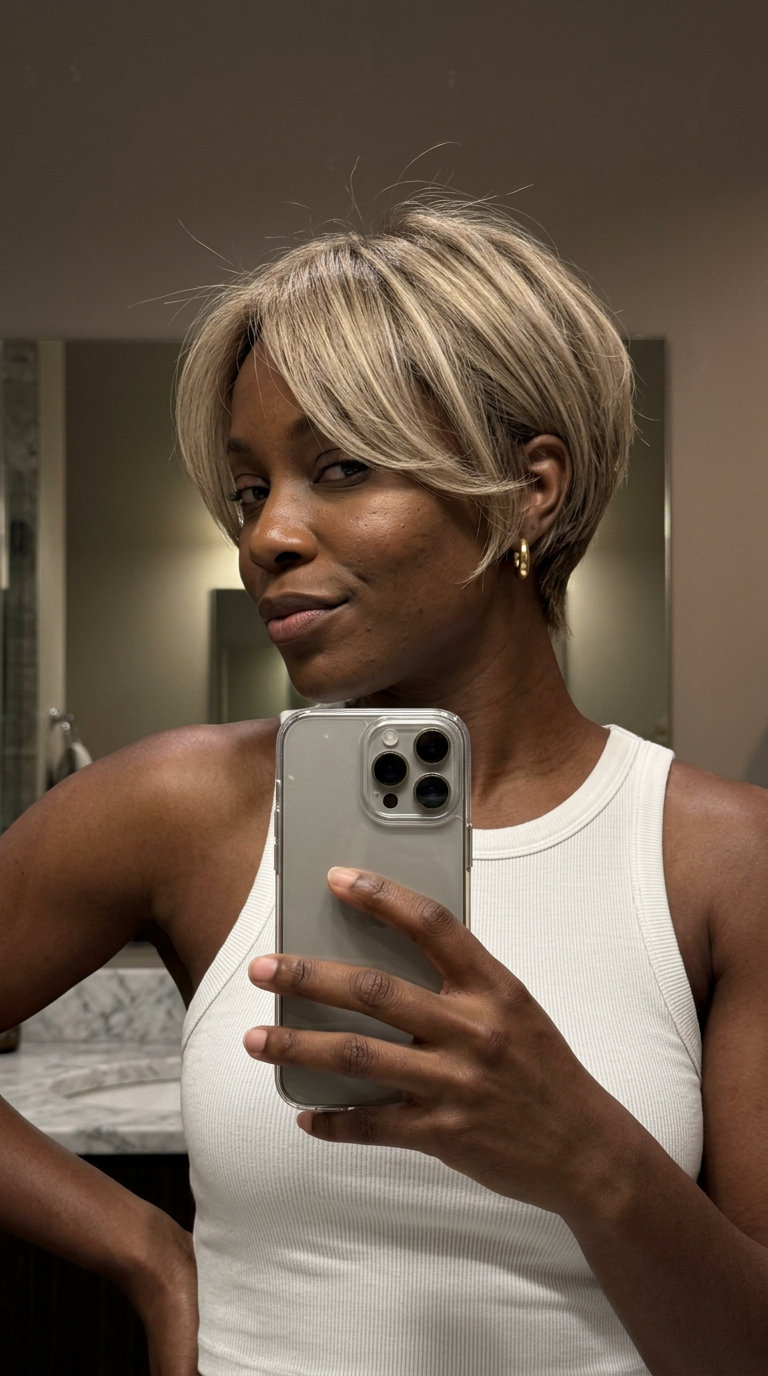
A sandy blonde bixie for wavy hair is built on the principle that your texture is the feature, not the obstacle. The color is warm, slightly desaturated blonde—somewhere between sand and butter. The cut is point-cut throughout, with sweeping front layers that blend into the sides rather than disconnect. Sweeping front layers blended seamlessly for 6 weeks, growing out gracefully and softly, which means you’re not staring at a harsh line as it lengthens. Point-cut perimeter creates a soft, diffused edge, allowing for natural movement and a graceful grow-out.
This is the bixie for people whose hair has opinions. Wavy hair wants movement, and this cut gives it permission to do that without looking messy. The layers sit *inside* the shape rather than creating hard lines on the perimeter. The color also matters—that warm, slightly muted blonde works with the texture rather than against it. Which is all my fine hair can handle, honestly. You’re not fighting your waves here; you’re amplifying them. Effortless, truly.
Caramel Ombré Wavy Bixie
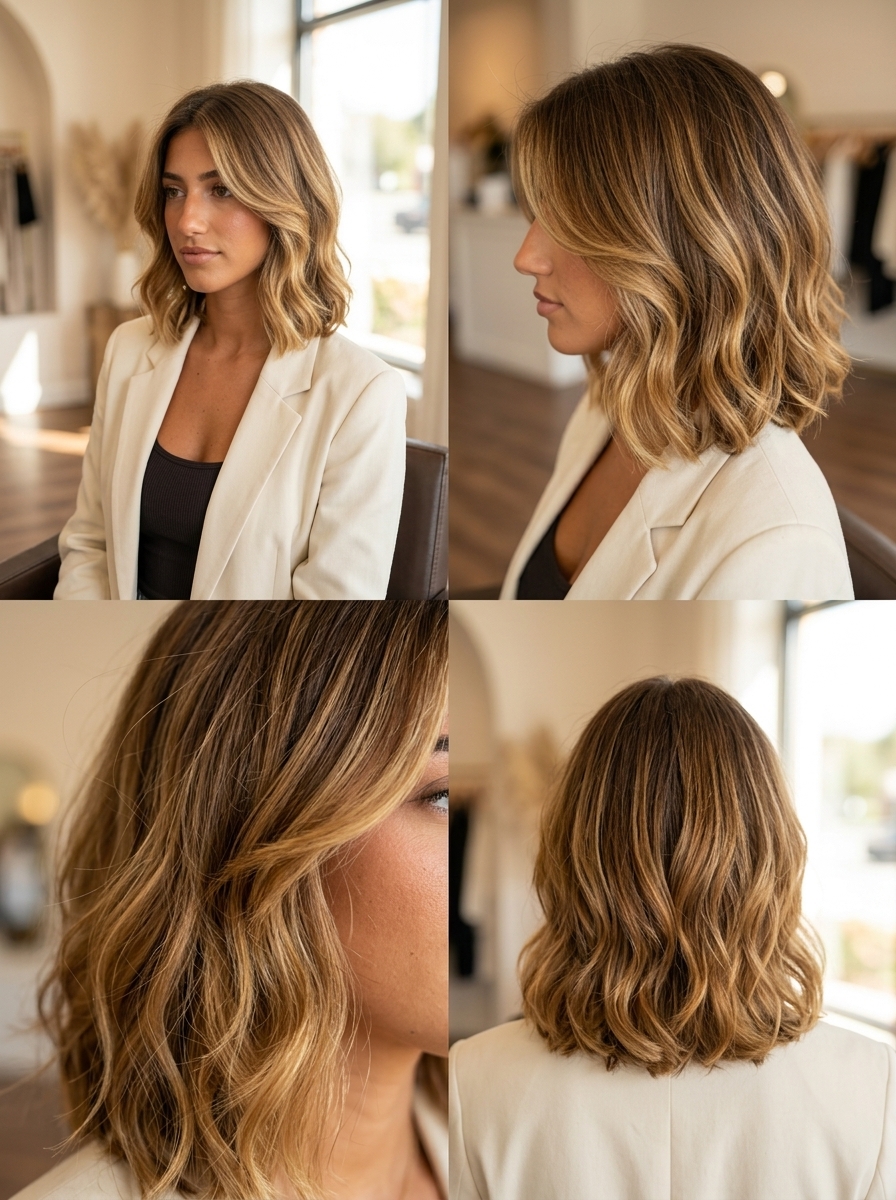
The caramel ombré wavy bixie takes waves seriously. The color melts from deeper caramel at the roots to lighter gold at the ends—dimension built in, which means you’re not relying entirely on the cut to create visual interest. The cut itself is internal layering that enhances natural waves rather than fighting them. Internal layering enhanced natural waves, creating volume and definition for 5 days post-wash, which is solid for a bixie designed to work *with* your natural texture. The perimeter stays rounded and soft, the top gets movement, and the whole thing reads as purposefully textured rather than undone.
Internal layering removes bulk and enhances natural waves, creating a soft, rounded, ‘coastal cowgirl’ texture that works for wavy to loosely curly hair, medium to thick density. This cut needs specific styling products to enhance waves; it won’t air-dry perfectly, but that’s the trade-off for getting a cut that actually celebrates your texture instead of forcing it into submission. The ombré means you’re not battling root regrowth as aggressively either—the color transition is literally built into the design. Coastal cowgirl vibes, perfected.
Still Deciding? Here’s a Quick Comparison
| Hairstyle | Difficulty | Maintenance | Best Face Shapes | Pros | Cons | |
|---|---|---|---|---|---|---|
| Edgy & Textured | ||||||
| 2. 90s Heartthrob Bixie | Easy | Low — every 8-10 weeks | long, oval | Low maintenanceEasy to style at homeLayers add movement | Not ideal for very curly hair |
| 5. The Obsidian Sculpted Bixie | Moderate | High — every 4-6 weeks | oval, heart, sharp jawlines | Suits most face shapesWorks on multiple texturesLayers add movement | Frequent salon visits needed |
| 8. The Scandinavian Razor Bixie | Easy | Medium — every 6-8 weeks | oval, square | Easy to style at homeWorks on multiple texturesLayers add movement | Not ideal for very curly hair |
| 11. The Modern Pearl Bixie | Moderate | High — every 6-8 weeks | oval, square, long | Suits most face shapesWorks on multiple texturesLayers add movement | Frequent salon visits needed |
| 16. The Scandi Bixie | Easy | High — every 6-8 weeks | oval, square | Easy to style at homeLayers add movement5-minute styling | Frequent salon visits needed |
| 17. Midnight Espresso Bixie Undercut | Moderate | Medium — every 3-4 weeks | oval, sharp jawlines, heart | Suits most face shapesWorks on multiple textures5-minute styling | Not ideal for very curly hair |
| 18. The Stealth Undercut Bixie | Moderate | Medium — every 4-6 weeks | oval, square, diamond | Suits most face shapesWorks on multiple textures5-minute styling | Not ideal for very curly hair |
| 22. Peach Fuzz Pastel Bixie Pop | Salon-only | High — every 2-3 weeks | oval, heart, round | Suits most face shapesLayers add movementTextured, lived-in finish | Requires professional styling |
| 23. The Crimson Edge Bixie | Moderate | High — every 4-5 weeks | oval, heart, sharp jawlines | Suits most face shapesWorks on multiple texturesLayers add movement | Frequent salon visits needed |
| Classic & Clean | ||||||
| 1. Micro-Bangs Bixie | Moderate | High — every 4-6 weeks | oval, small features | Layers add movement5-minute styling | Frequent salon visits needed |
| 6. The Golden Hour Bixie | Moderate | Medium — every 6-8 weeks | oval, heart, long | Suits most face shapesWorks on multiple texturesLayers add movement | Not ideal for very curly hair |
| 10. The Linen Brunette Bixie Bob | Moderate | Low — every 8-10 weeks | oval, diamond, square | Low maintenanceSuits most face shapesWorks on multiple textures | Not ideal for very curly hair |
| 13. The Peach Nectar Tousled Bixie | Moderate | Medium — every 6-8 weeks | round, heart, oval | Suits most face shapesWorks on multiple texturesLayers add movement | Not ideal for very curly hair |
| 14. The ’90s Gamine Bixie | Easy | Low — every 8-10 weeks | oval, long, heart | Low maintenanceEasy to style at homeSuits most face shapes | Not ideal for very curly hair |
| 19. The Buttercream Bixie Glow | Moderate | Medium — every 6-8 weeks | oval, heart, diamond | Suits most face shapesWorks on multiple texturesLayers add movement | Not ideal for very curly hair |
| 21. The Parisian Chic Bixie | Moderate | Medium — every 6-8 weeks | oval, long, square | Suits most face shapesWorks on multiple textures | Not ideal for very curly hair |
| 24. The Cherry Bomb Bixie | Moderate | High — every 4-5 weeks | round, heart, square | Suits most face shapesWorks on multiple texturesLayers add movement | Frequent salon visits needed |
| 25. The Effortless Beachy Bixie | Easy | Low — every 8-10 weeks | heart, round, oval | Low maintenanceEasy to style at homeSuits most face shapes | Not ideal for very curly hair |
| 26. The Sun-Drenched Caramel Ombré Bixie | Moderate | Low — every 8-10 weeks | All face shapes | Low maintenanceSuits most face shapesWorks on multiple textures | Not ideal for very curly hair |
| Soft & Romantic | ||||||
| 12. The Defined Coily Bixie | Salon-only | Medium — every 8-12 weeks | all | Works on multiple texturesWorks with air-drying | Requires professional styling |
Frequently Asked Questions
How do I get that sleek, ‘liquid’ bixie finish at home?
For that glass-like shine, focus on the styling techniques from the Micro-Bangs Bixie and The Obsidian Sculpted Bixie—both rely on smoothing with a flat iron and finishing with a shine spray to lock in the high-gloss effect. A styling cream applied to damp hair before blow-drying helps create that polished base, and a heat protectant is non-negotiable if you’re using hot tools regularly in summer heat.
Which bixie styles are easiest for daily wear and less maintenance?
The 90s Heartthrob Bixie takes only 5-10 minutes with a lightweight styling cream and air-drying or a quick round brush pass. The Golden Hour Bixie is also moderate for daily wear—air-dry or diffuse for natural waves in 15-20 minutes, and a texturizing spray adds grip without fuss. Both benefit from dry shampoo on non-wash days to refresh roots and add volume.
Can I achieve a bold, statement bixie color at home without salon expertise?
The Lilac Haze Bixie requires professional pre-lightening and tinting—DIY color application is risky for pastel tones and can damage short hair quickly. However, once the color is done professionally, styling this cut at home is completely manageable with a styling cream and texturizing spray. If you want statement color without the salon commitment, consider the Golden Hour Bixie’s ombré instead—the color transition is built into the design.
What products are essential for styling a bixie haircut for summer?
For sleek bixies like the Micro-Bangs and Obsidian Sculpted styles, you need a styling cream, heat protectant, and shine spray. For textured looks like the 90s Heartthrob or Golden Hour bixies, a texturizing spray and lightweight styling cream are key for that lived-in movement. Dry shampoo is essential across all bixie types—it refreshes roots, absorbs oil, and adds lift on non-wash days, which is crucial when you’re styling short hair frequently in summer humidity.
How often does a bixie haircut need trimming?
Most bixies need a trim every 4-6 weeks to maintain their shape, but it depends on the specific cut. Styles with tapered sides or undercuts (like those in The Obsidian Sculpted Bixie) need trims every 3-4 weeks as the undercut grows out fastest. Bixies with ghost layers or internal layering can stretch to 6-8 weeks. Ask your stylist to show you what ‘grown out’ looks like before committing—some bixies grow out gracefully, others lose their definition quickly.
Final Thoughts
The summer bixie haircut 2026 isn’t a compromise between two cuts—it’s a deliberate collision of them, and that’s exactly why it works. From the micro-bangs demanding precision to the golden waves celebrating texture, every variation proves that short hair doesn’t mean sacrificing movement or personality. The real trick? Knowing which bixie matches your styling tolerance and your stylist’s skill set.
You now have the blueprint. Bring your stylist the specific hairstyle name, the cutting technique (point-cutting, undercut, ghost layers—whatever applies), and the honest conversation about how much time you’ll actually spend styling. The bixie rewards commitment, but it also rewards clarity. Go get the cut that makes you feel like yourself, just shorter.