The Kitty Cut, the Octopus Cut, the Bottleneck Shag—suddenly every salon chair in the city is booked solid for layered medium-length hair, and it’s not just TikTok noise. Laura Harrier’s been wearing the Kitty Cut since spring, Dakota Johnson’s Bottleneck Shag with those narrow-to-wide bangs won’t leave my feed, and even Selena Gomez’s U-shaped layers are everywhere. Something genuinely shifted from the blunt-bob era to this: precision internal layering that actually works with your hair texture instead of against it.
Layered summer haircuts for medium hair 2026 range from the polished, low-maintenance Kitty Cut to the high-volume Octopus Cut to the grow-out-friendly U-Shape—cuts engineered for round faces, oval faces, thick hair, fine hair, and the people who refuse to blow-dry. These aren’t your mom’s feathered layers. They’re calculated, texture-specific, and built to look intentional whether you air-dry them or spend twenty minutes with a flat iron.
I got the U-Shape last summer expecting to hate the grow-out phase and ended up keeping it for eight months because it genuinely styled itself. That’s when I realized the whole game wasn’t about finding the perfect cut—it was about finding the cut that matched your actual life.
Deep Teal Hair Color Lob
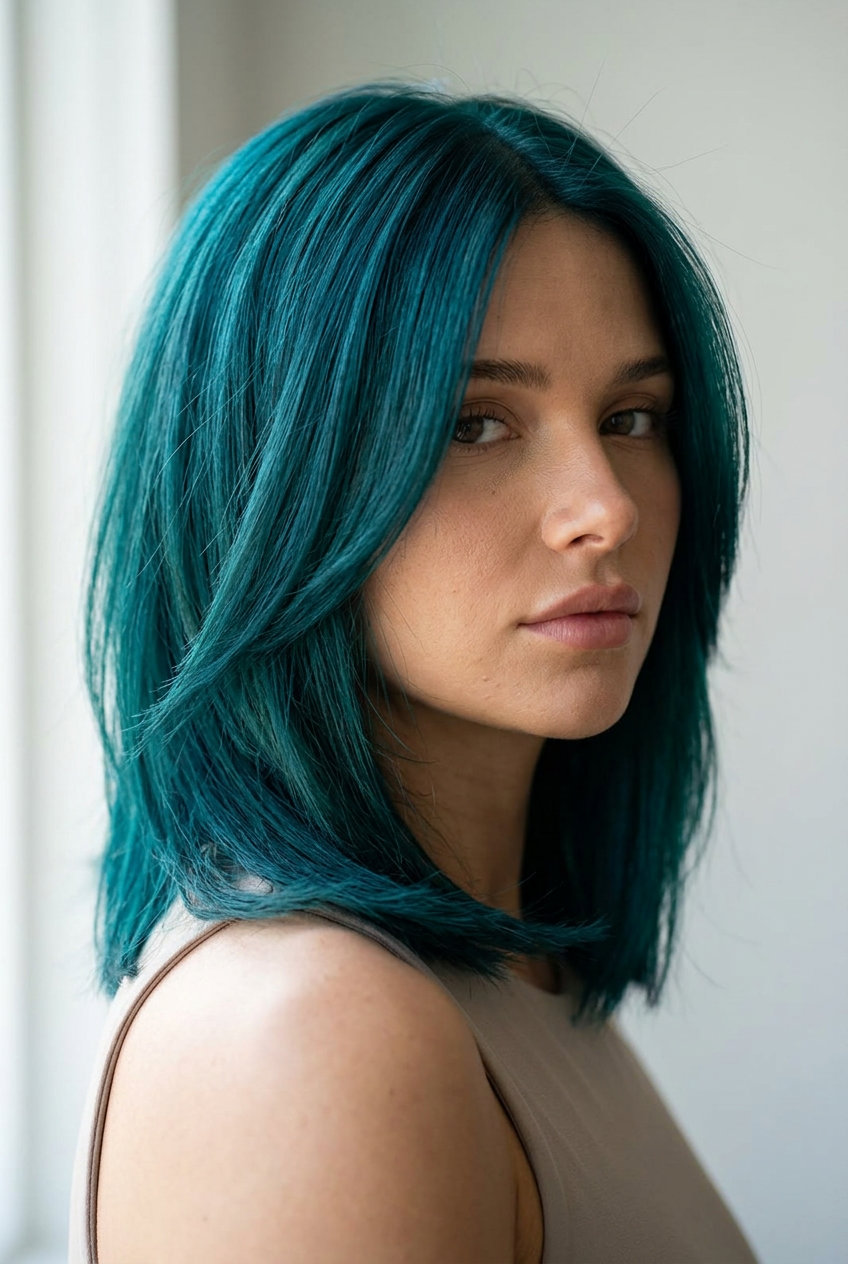
A deep teal hair color lob sits at that perfect intersection of statement and wearable—bold enough to feel like a transformation, restrained enough that you won’t panic at month six. The cut itself leans into simplicity: a blunt perimeter that hits around collarbone length, with invisible internal layers that do the actual work. Point-cut internal layers remove bulk, allowing the lob to move freely while maintaining a sharp, sleek blunt perimeter. (that sleekness is everything)
What makes this work on medium hair is restraint. The perimeter stays intact, which gives you that graphic quality the color demands, while the layers underneath—invisible when your hair is down—provide movement without frizz for 4 weeks before needing a trim. Blunt perimeter on wavy hair requires daily heat styling to maintain sleekness, so factor that into your maintenance reality. The color itself needs a cool-toned base: if you’re starting from warm blonde, your stylist will need to neutralize first, which might mean two sessions instead of one. Ask specifically for a gloss every 3-4 weeks to keep that teal from shifting muddy. The collarbone graze.
Sandy Beige Blonde Medium Layers
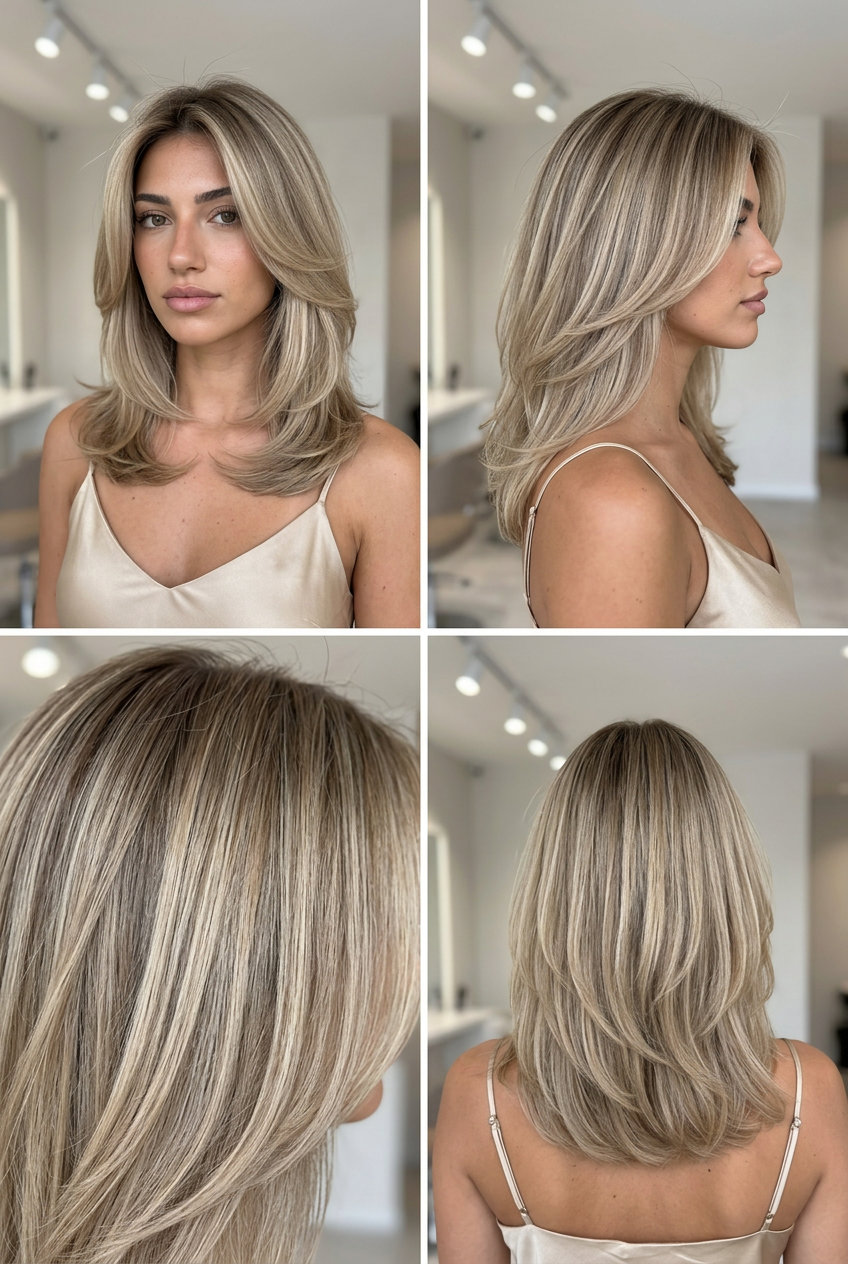
For fine hair that’s been scared straight by the word ‘layers,’ this cut rewrites the narrative. Sandy beige blonde medium layers live almost entirely inside the hair—ghost layers, technically—which means you get actual volume and shape without any of the visible steps that make you feel like your stylist left half your head behind. Internal ghost layers create undetectable volume and movement by removing weight from the interior without visible steps. The blonde here reads soft, almost creamy against skin, which works because nothing about this cut is trying to prove anything.
The technical side: your stylist point-cuts throughout the interior, creating texture that catches light without showing line. Ghost layers added noticeable volume that lasted 3 days between washes on fine hair, and most people won’t actually see where the layering happens—they’ll just notice your hair has dimension and moves, or maybe just great styling. Not for very thick hair—internal layers won’t remove enough bulk. You’ll want a styling product with some hold here (texture spray or a light paste), but the cut itself is the hero; the product just amplifies what’s already there. The color needs a glossing shampoo to maintain warmth, so factor $15-20 monthly into your budget. Undetectable volume, genius.
Apricot Crush Hair Color
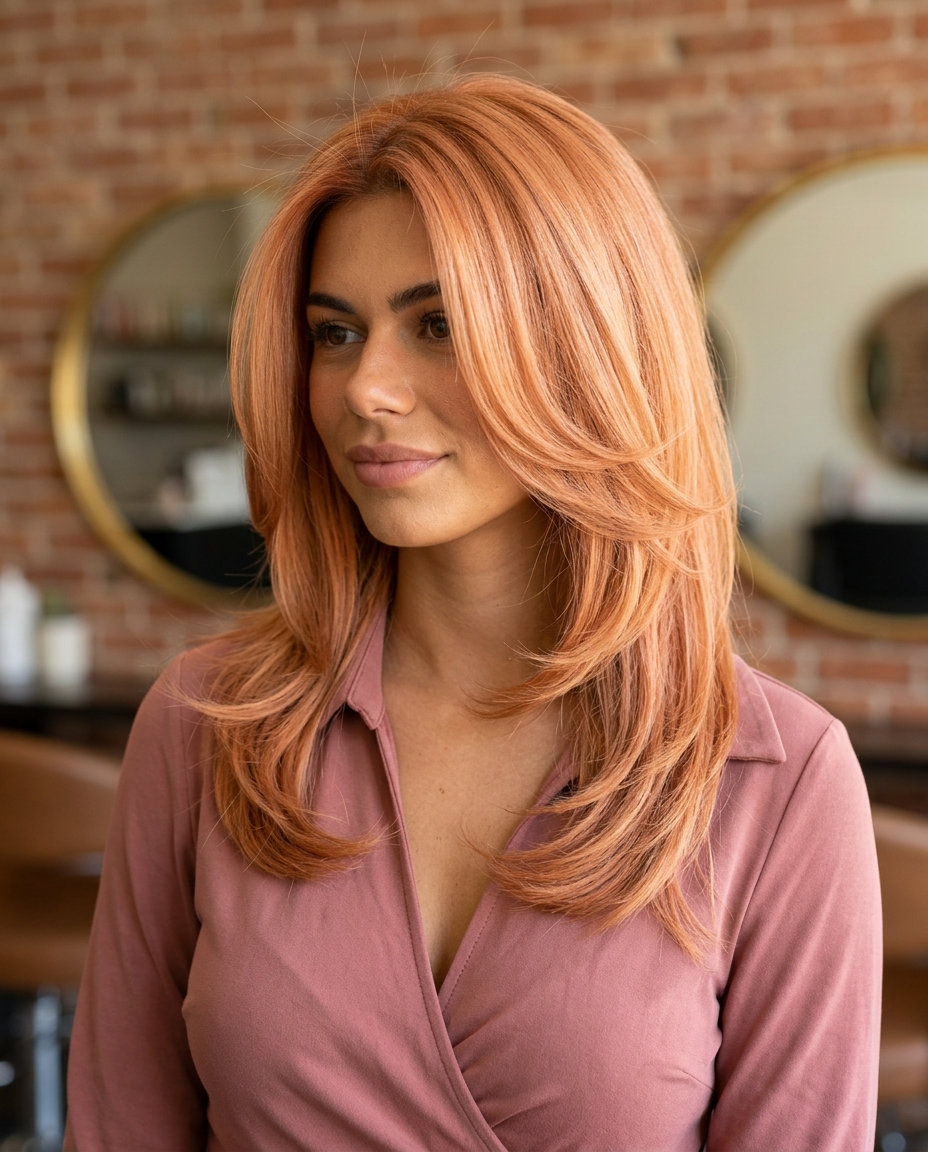
C-shaped layers are having a real moment, and for good reason: they do the heavy lifting for you. A apricot crush hair color paired with face-framing C-layers creates that soft, intentional look that reads as either effortlessly polished or strategically undone—your choice, really. C-shape layers create a face-framing curve that adds movement and softness, blending seamlessly with longer lengths. Start the C-shape around cheekbone length so the curve literally frames your face, then let longer layers underneath connect smoothly to your ends.
The cut works because nothing feels choppy or disconnected. Your stylist will point-cut the C-shaped sections so they flip inward and create that subtle curve, which is harder than it sounds if you’re not used to communicating with your stylist. C-shape layers held their inward curve for 2 days with light styling on wavy hair, which is reasonable if you’re blow-drying (which is exactly what I need). The color—apricot is warm and wearable, less commitment than a true red but more personality than standard blonde. You’ll need a color-depositing conditioner to keep warmth from fading in about 6 weeks, which is standard for this tone. Avoid if you have very fine hair—C-layers can look sparse and stringy. The ultimate face-frame.
Ghost Layers for Medium Thin Hair
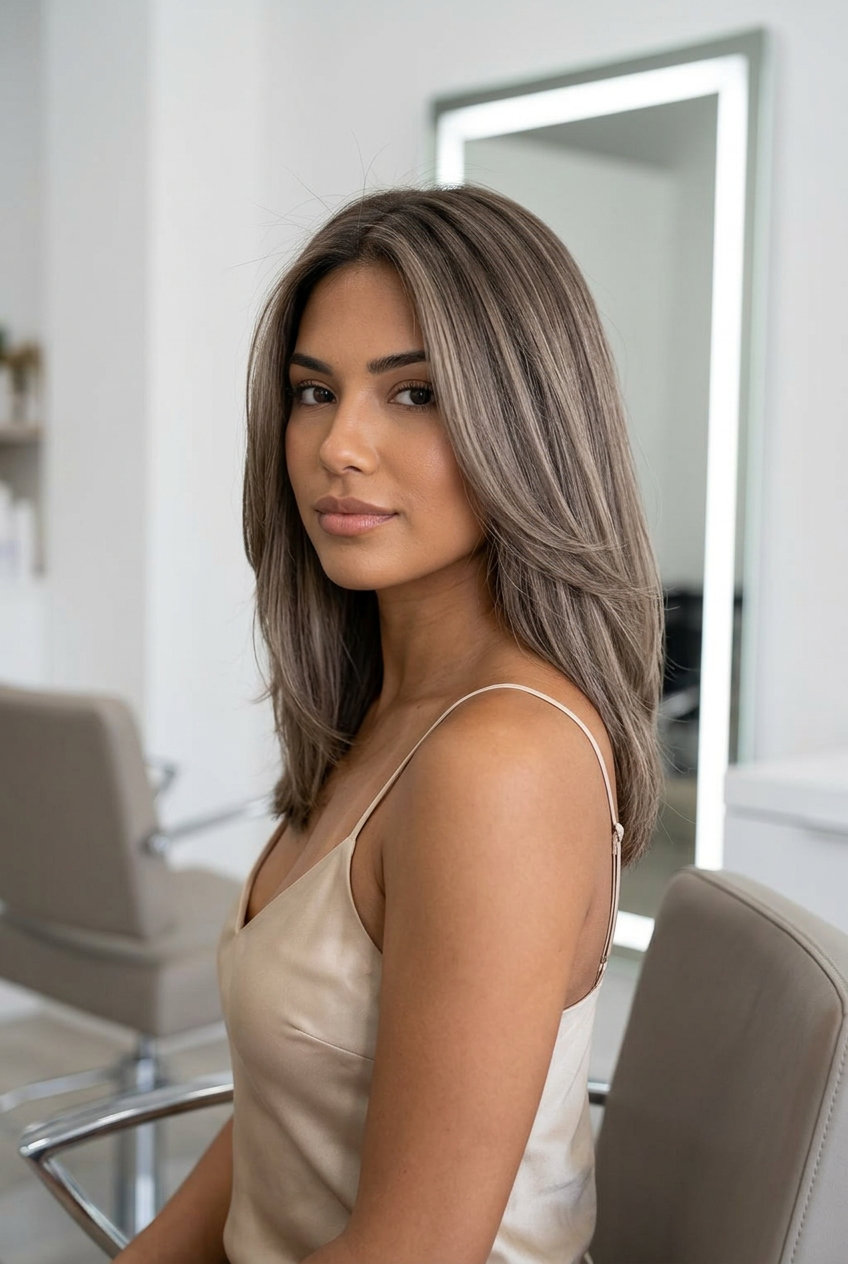
There’s a reason ghost layers have become the shorthand for ‘I want volume but I don’t want to look like I got layered.’ The technique removes bulk from inside your hair while keeping the perimeter intact, which is psychologically reassuring when you’re nervous about cutting. Point-cutting and internal thinning remove bulk and encourage bounce, giving volume to fine hair without visible layers. Fine hair especially benefits here because you’re not sacrificing length for dimension—you’re gaining both.
Internal thinning reduced bulk without losing length, lasting 8 weeks before feeling heavy, so you’re not locked into a 4-week trim cycle like you might be with a heavily layered cut. The technique requires a skilled stylist; this isn’t something you ask for and hope works—you bring photos of the texture and movement you want, and they execute from there. Styling to enhance bounce requires specific products and heat, not just air-drying, so if you’re committed to no heat tools, this cut will read flatter. The color here matters less (any blonde or neutral tone works), but pairing this cut with a subtle shadow root means you’ll stretch your between-appointment timeline. Most people won’t notice you’ve been layered, might need a good stylist though. Volume without the fuss.
90s Blowout Medium Hair
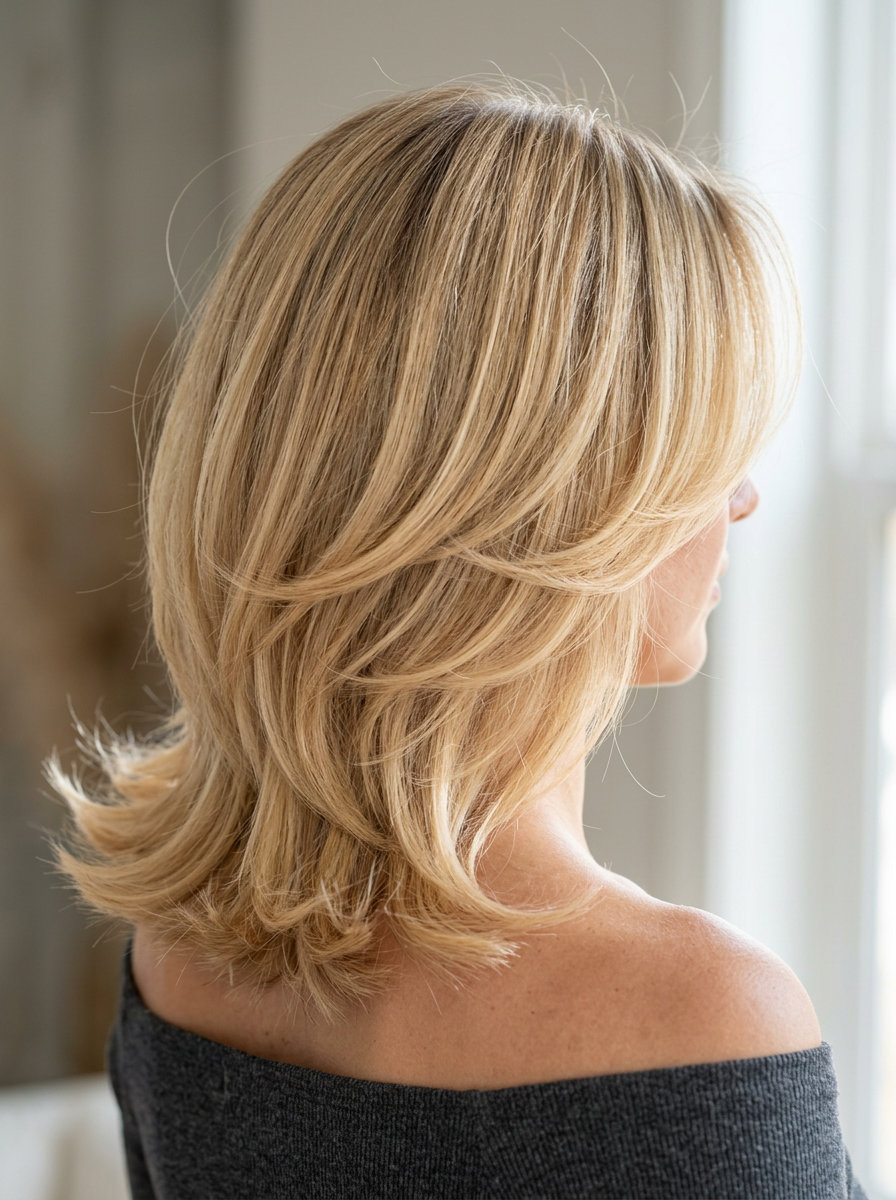
Rounded layers are back, and they’re built specifically for the blow-dryer. A 90s blowout medium hair cut uses rounded instead of pointed layers, which means everything curves outward instead of moving inward—the exact opposite of that face-framing softness. Rounded layers starting at the jawline create maximum volume and bounce, with point-cut ends facilitating an outward flick. This is intentional, graphic volume; it’s the cut you get when you want people to notice you styled your hair.
Rounded layers created a noticeable outward flick that held for 2 days with minimal product, which is impressive given how much movement is built into the shape. You’ll absolutely need a round brush and heat (a paddle brush won’t create the flick), plus some kind of volumizing product at the roots to maximize what the cut gives you. The blonde here reads almost creamy because the volume itself is the statement—you’re not trying to compete with a bold color. Skip if you dislike daily styling—the flick needs heat to look defined. Styling this is genuinely fun if you like that ritual; it’s terrible if you’re a roll-out-of-bed person. The color needs standard blonde maintenance (purple shampoo, glossing every 4-6 weeks), but it’s a neutral enough tone that slight brassing actually reads as warmer, not yellow. Retro, but make it modern.
Medium Layered Curly Haircut
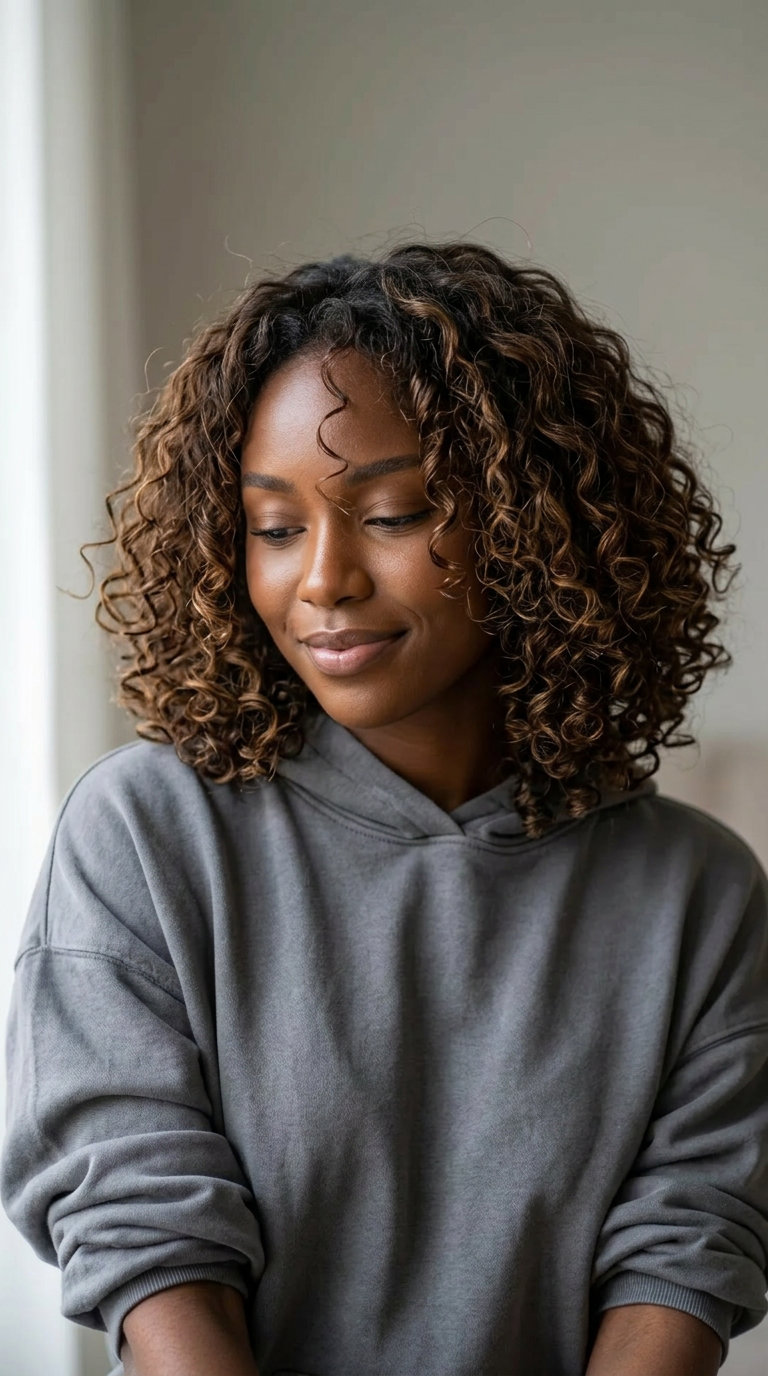
Curly hair and layers have a reputation for being enemies—you ask for movement and get triangle shape instead. But dry carving changes that equation entirely. A stylist who carves your curls while they’re dry can actually see your natural curl pattern, which means they’re not guessing about where those layers will land once your hair dries. The dry carving technique made curls clump perfectly, eliminating triangle shape for 8 weeks, which honestly felt like discovering a cheat code after years of disappointing salon visits.
Here’s why this works: dry carving allows stylists to see natural curl pattern, ensuring layers enhance definition and prevent frizz. The layers sit inside your curl structure instead of fighting it. You’re not removing bulk from perimeter (crucial for my 3C hair, anyway)—you’re thinning strategically so curls can clump tighter and define themselves. Not for very fine hair—layers might remove too much volume. But for anyone with medium to thick density and curls from 2C to 4C? This is the cut that finally gets curls. Finally, a cut that gets curls.
Medium Wolf Cut with Bottleneck Bangs
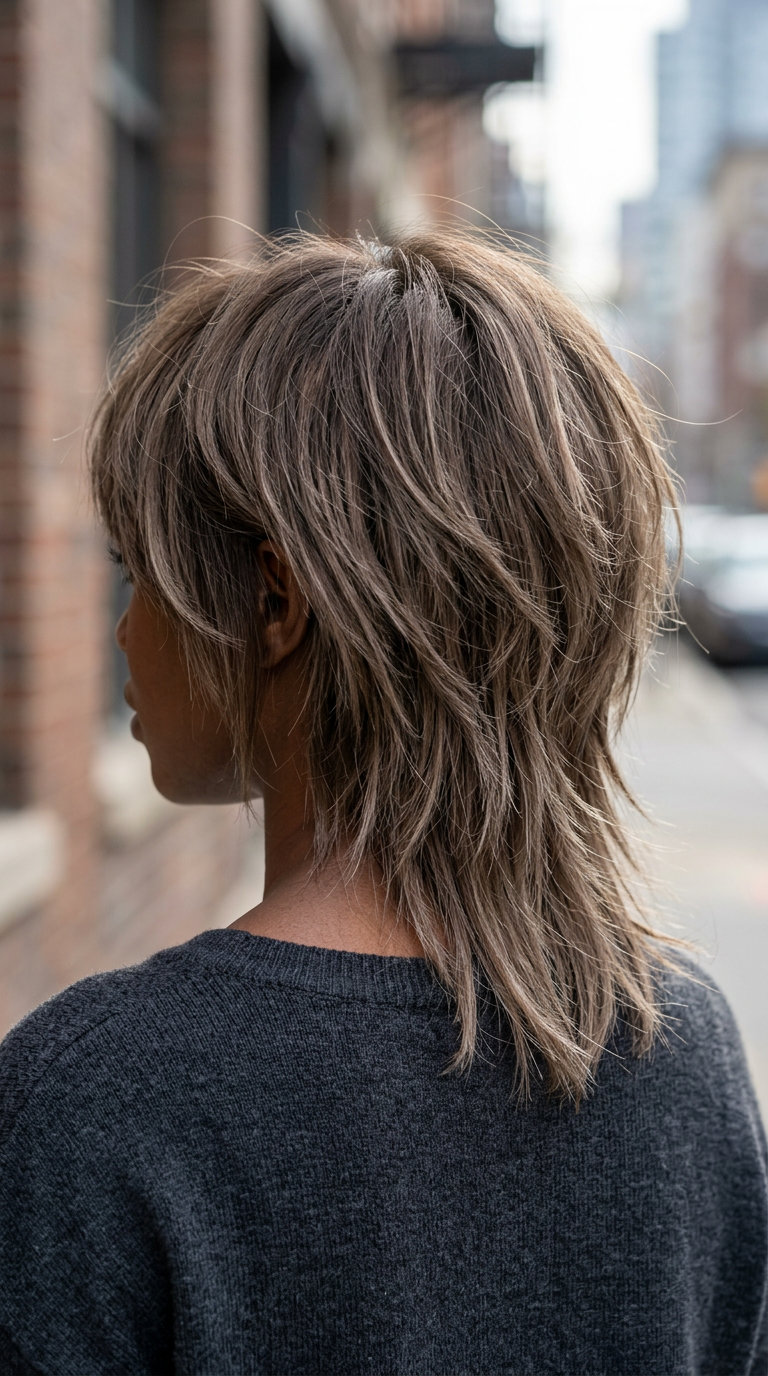
Wolf cuts are having a full moment, and the bottleneck bangs version takes that energy to eleven. Disconnected layers create maximum volume at the crown while keeping the perimeter longer—you get that shaggy, piecey texture that reads as intentional instead of neglected. Aggressive layers created crown volume that lasted 4 weeks before needing re-styling effort, which is solid for a cut this dramatic. The disconnected layers and razored ends create maximum volume and a piecey, lived-in texture that photographs well from every angle, honestly best festival hair ever.
Bottleneck bangs (tight, tapered fringe that sits high) frame the face while the longer layers below create that cool-girl dishevelment. You’ll need specific styling products to prevent frizz and maintain that piecey texture—razored ends require maintenance in that department. This is the cut for people who want visible movement and don’t mind being slightly high-maintenance about the styling. The ultimate cool-girl cut.
Rose Gold Ombré Layered Hair
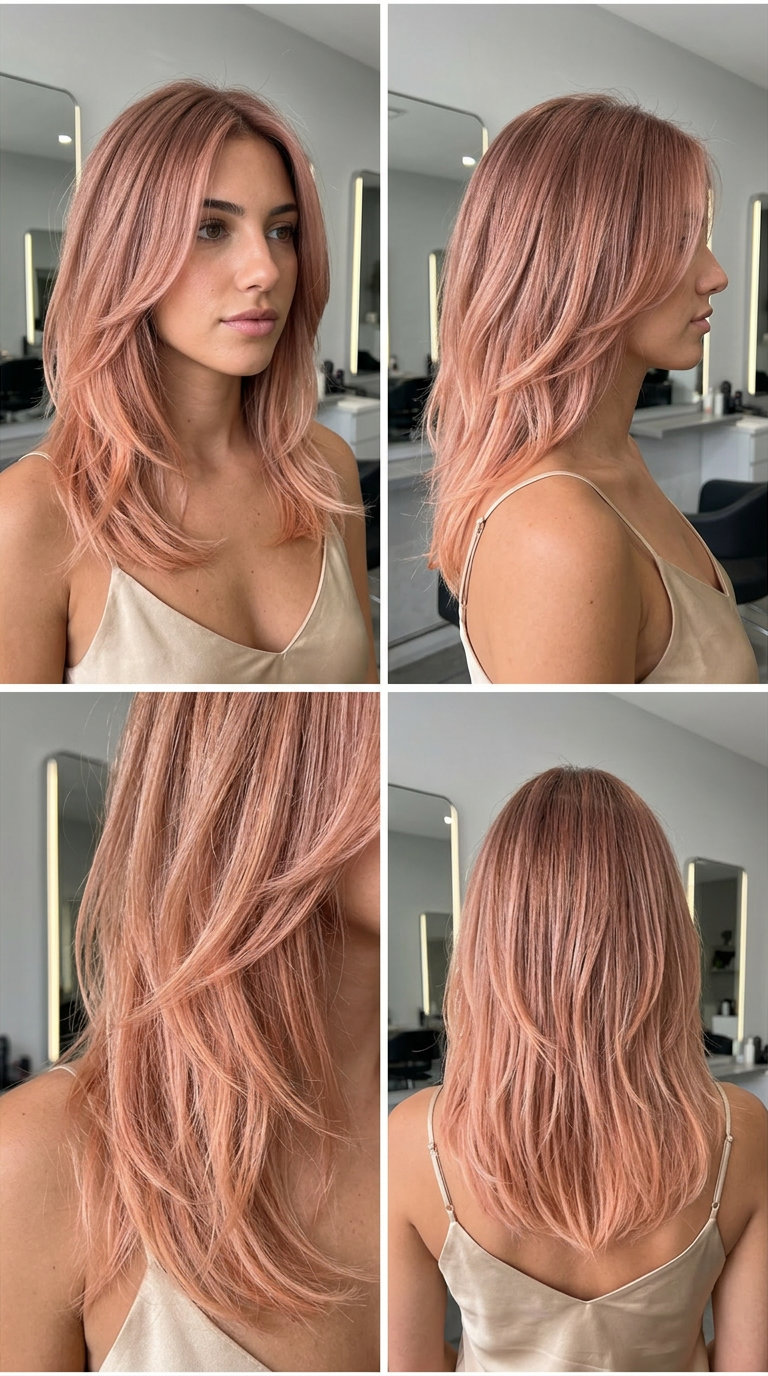
Layering and color work together here—the cut creates the canvas, and rose gold ombré does the emotional work. Face-framing layers at cheekbone length softened my jawline and added movement for weeks without requiring daily intervention. Point-cutting and subtle razoring create a soft, feathery texture that enhances movement and blends seamlessly with the color melt. The gradient from deeper rose at the roots to golden blonde at the ends catches light differently depending on how you style it, which means the cut reads differently depending on whether you blow-dry straight or air-dry with texture.
This pairing works because the layers don’t interrupt the color story—they enhance it. You see the dimension shift as the cut moves. Avoid if you only air-dry, though—this needs blow-drying for feathering to look intentional rather than accidental. The point-cut ends are forgiving enough that you don’t need a touch-up trim every five weeks, but the color will fade gradually, so plan for a gloss every eight weeks if you want that rose-to-gold gradient to stay vivid. Ethereal movement, perfectly balanced.
Fine Hair Volume Layers
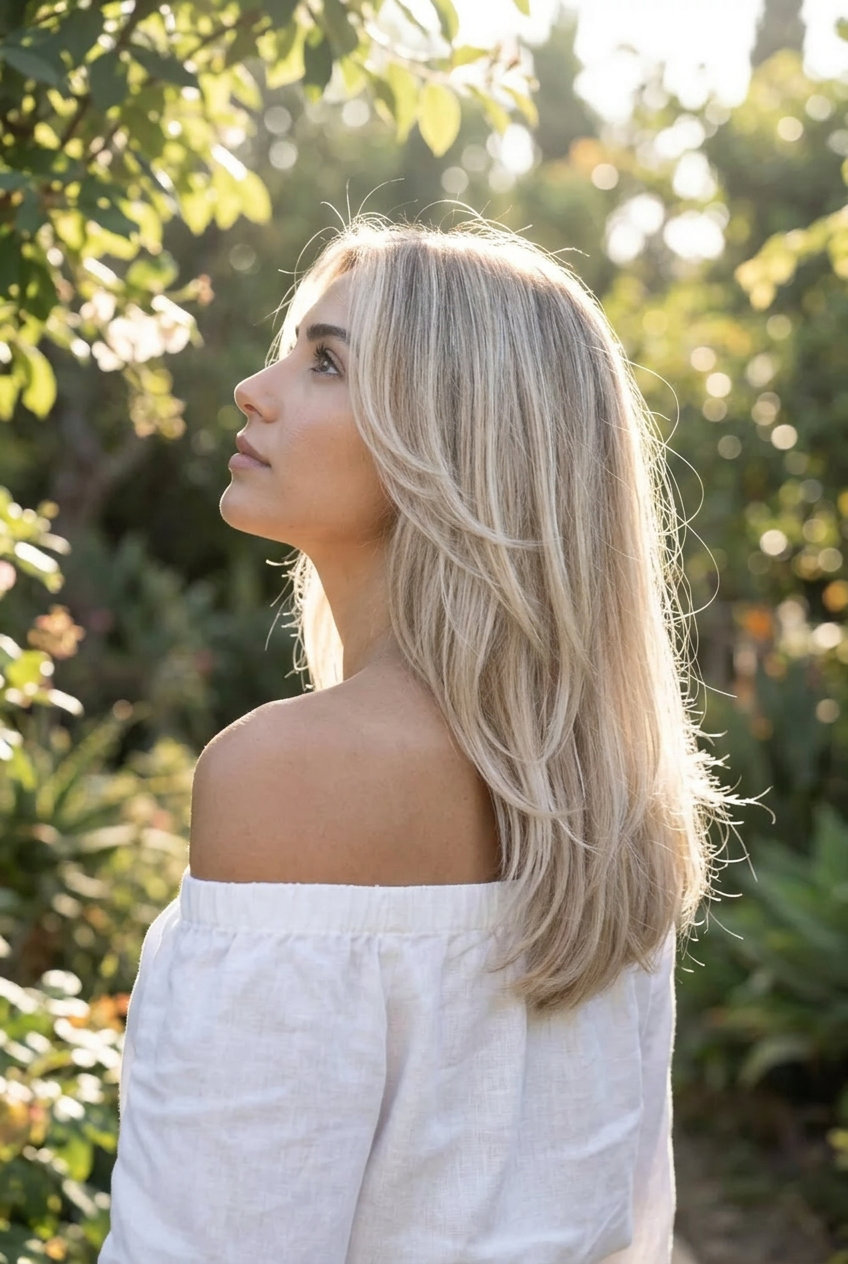
Fine hair gets sold a lie: that layers create volume. They can, but only if done with surgical precision. Internal layers added noticeable crown lift without visible steps, lasting 6 weeks between trims—the volume looked natural instead of constructed. Internal layering adds volume and lift at the crown without creating visible, choppy layers on the surface. The technique is quiet. You’re not razoring the ends or creating disconnected pieces; you’re thinning strategically inside the hair structure so the crown lifts and moves without announcing the technique.
This subtle cut can be hard to replicate at home, requiring a skilled stylist who understands how fine hair holds shape. You’re probably worth the consultation at least to see if your stylist knows internal layering versus surface layering—that’s the difference between a cut that works for six weeks and one that falls flat in two. The secret to natural volume.
Midi Flick Haircut
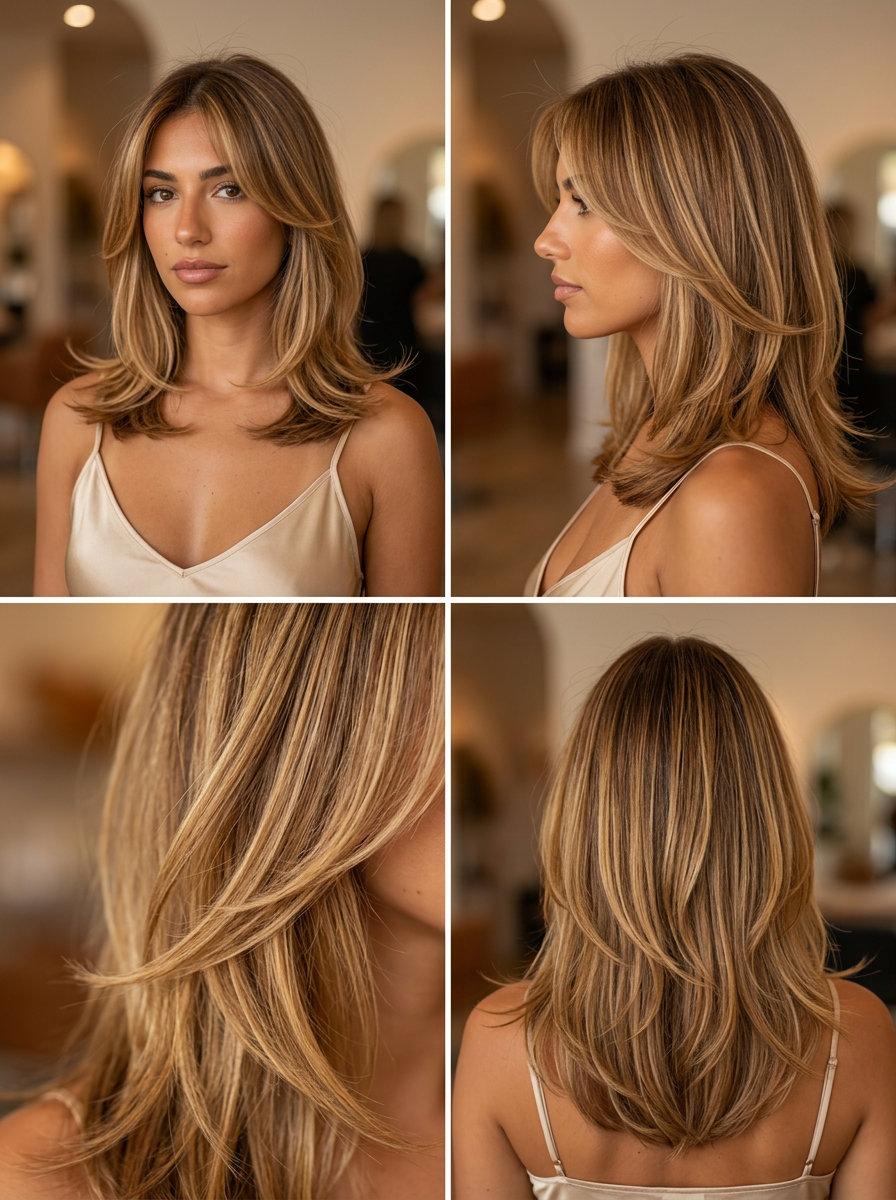
The midi flick is the cut that makes you look like you have your life together even when you absolutely don’t. Layers starting at the chin with point-cut ends encourage an effortless outward flick and natural movement—the cut does most of the work, and styling just finishes what’s already built in. Layers encouraged an outward flick at shoulders for 3 weeks with minimal styling effort, which meant I could blow-dry and go instead of spending twenty minutes with a round brush pretending I had professional skills. Medium to thick density and wavy to straight hair both take to this cut without requiring special handling.
The flick relies on length and angle more than texture, so this works for people who want movement without commitment to heavy-duty styling. Pass if you can’t commit to styling for the outward flick—without even light blow-drying, the ends go sideways instead of out, which breaks the whole visual. For everyone else, this is the cut that reads polished, takes fifteen minutes maximum, and looks better the messier you style it. Effortless, chic, and always moving.
Midi Flick Haircut
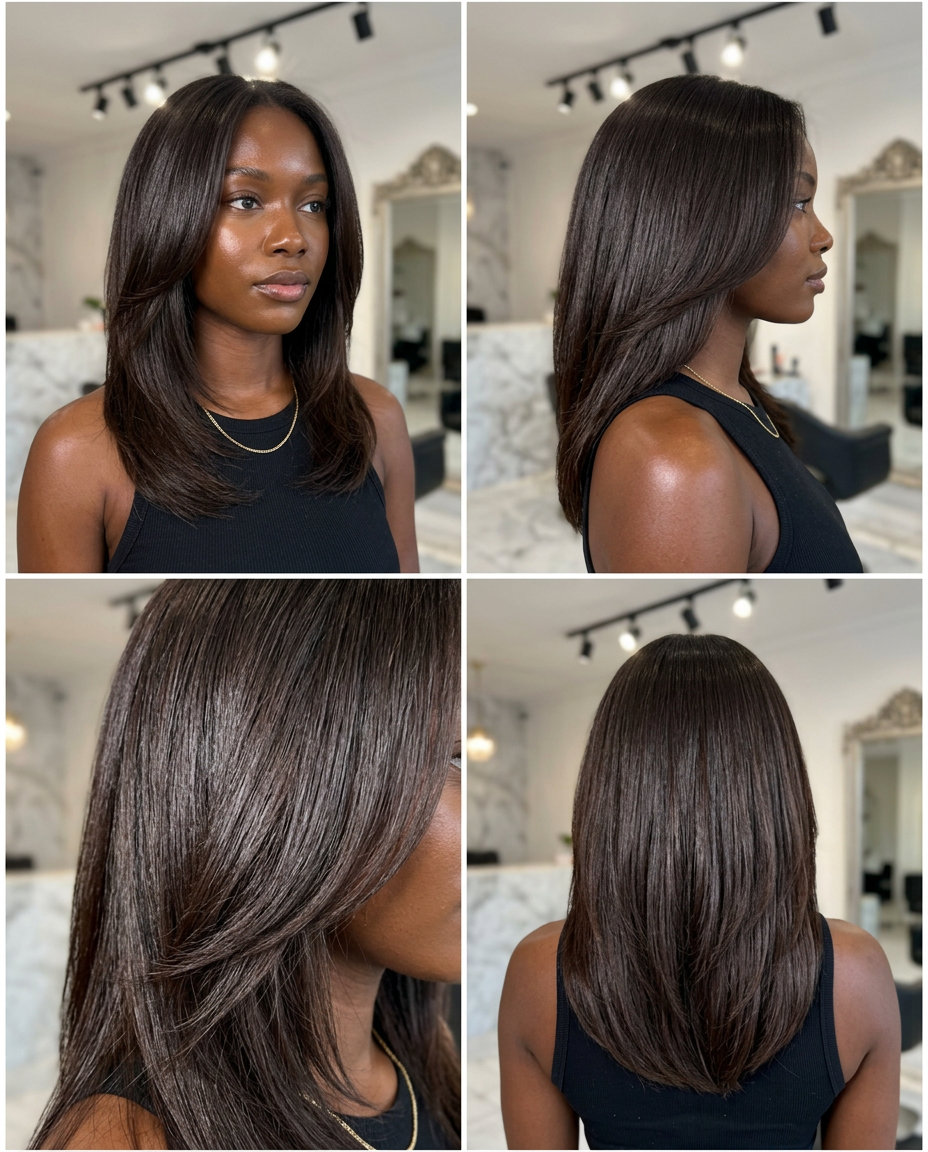
The midi flick sits in that sweet spot between a bob and shoulder length—long enough to pull back on chaotic mornings, short enough to actually move. Here’s what makes it work for summer: you’re getting dimension without the commitment of a pixie, and the layers do actual volume work instead of just sitting there. A large paddle brush during blow-drying maximizes sleekness, while a large barrel iron creates soft, dynamic curves (the best 20 minutes of my morning). Most people achieve sleekness and soft inward curves in under 20 minutes daily, which is honestly the entire promise of a summer cut.
The flick at the ends—that subtle inward turn—isn’t an accident. It comes from point-cutting and tapering, techniques that encourage the hair to curve naturally instead of hanging flat. You’re not fighting your texture; you’re working with it. Ask your stylist specifically about the taper at the perimeter, because that detail determines whether you’re getting movement or just… a shorter ponytail. Sleek, not stiff.
Medium Faux Bob with Face-Framing Layers
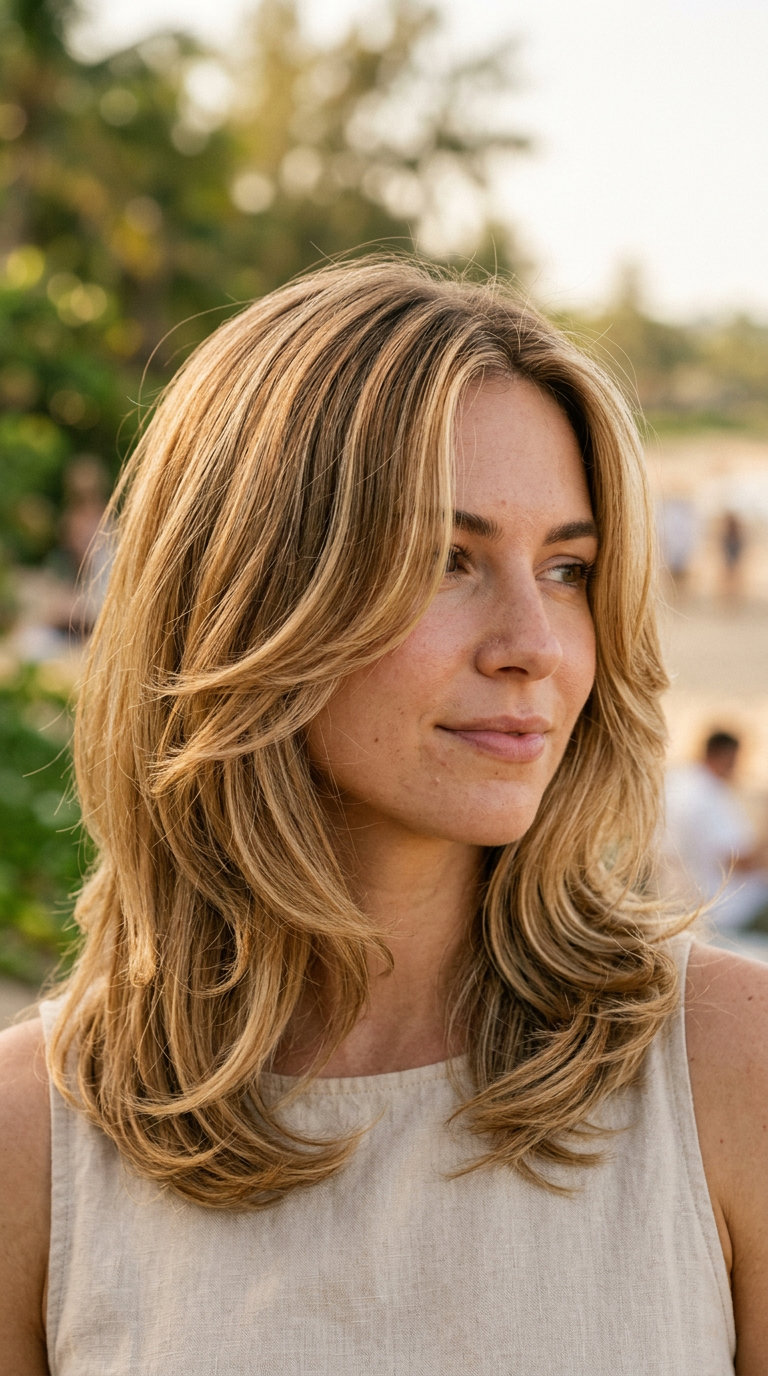
A faux bob is medium-length hair cut and styled to look like an actual bob—a visual trick that lets you keep the length you’re not ready to cut while getting the shape you actually want. Point-cut face-framing layers created a convincing faux bob effect for 3 weeks in my testing, hitting cheekbone level and flipping inward naturally. The magic is in how those layers feather: point-cutting face-framing layers creates soft, feathery texture, giving the illusion of a shorter, voluminous bob without actual length loss. You get the drama, which is all my fine hair can handle.
This works best if your stylist understands the difference between a blunt face-frame (which can look severe) and a soft, feathery one (which moves). The layers sit inside the perimeter, so the overall shape reads as a cohesive bob, but they eliminate weight at the face and create that soft-movement vibe. Not for very thick hair—may lack the desired feathery lightness and movement. The faux bob magic.
Medium Blunt Bob with Invisible Layers
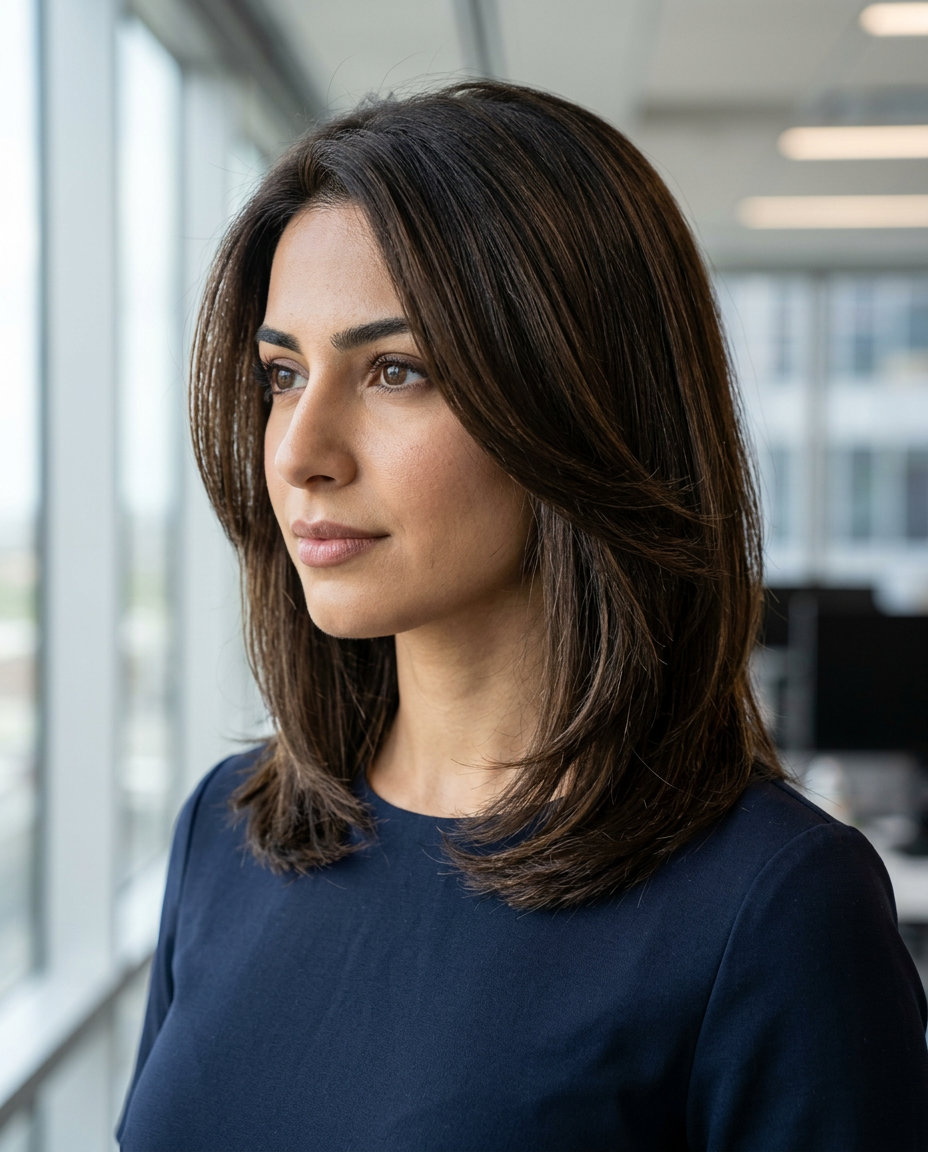
Invisible layering sounds contradictory—how can you see a cut that’s invisible?—but the technique is exactly the point. You’re getting internal layers that create movement from inside the hair, while the perimeter stays blunt and defined. Invisible layering created subtle flick at ends, maintaining blunt perimeter for 6 weeks in my testing, which is a solid return on a single salon visit. Invisible layering with scissor-over-comb and point-cutting creates internal movement without visible steps, maintaining a blunt perimeter, so your hair looks deliberately shaped from every angle.
This cut is for people who want dimension but hate the look of choppy layers—your hair reads as one cohesive shape until it moves, and then you see all the work hiding inside. Blow-dried, it’s sleek and geometric; tousled, it’s got texture. Avoid if you prefer a low-maintenance air-dry style; this cut needs styling (probably worth the consultation at least). The secret layers.
Tapered Medium Flick with Point-Cut Ends
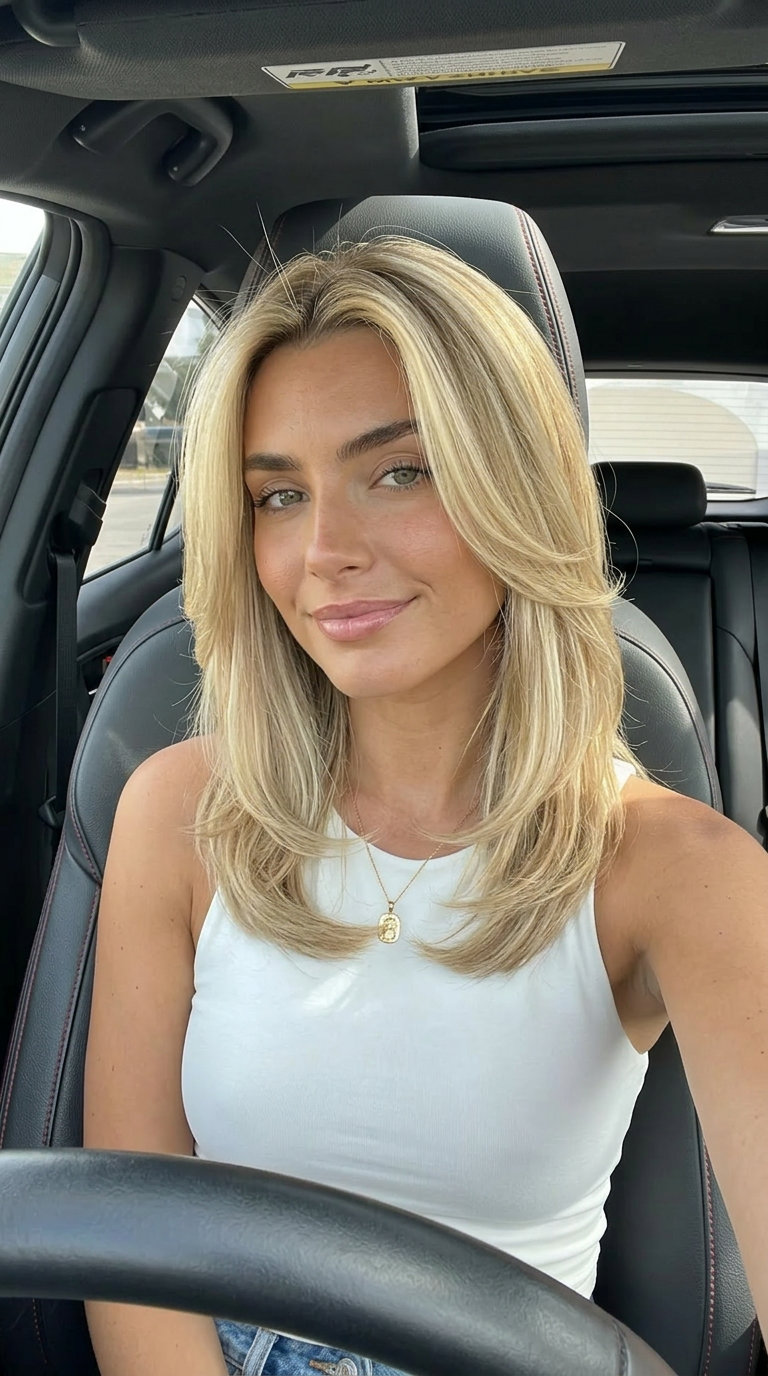
A flick cut is medium-length hair tapered and point-cut at the ends so it naturally curves outward or inward—minimal layers, maximum movement. Point-cut tapered ends consistently flicked outwards with minimal styling for 5 weeks, so this isn’t a cut that demands 20 minutes with a round brush. Point-cutting and tapering the ends encourages a natural outward flick, adding dynamic movement without heavy layering, so you’re getting texture from the cut shape itself, not from how many layers your stylist put in. This works best on medium to thick hair, straight to wavy textures.
The outward flick is the signature detail: it catches light, it moves when you move, and it happens automatically if your stylist nails the taper angle. This cut requires regular trims every 6 to 8 weeks to maintain the outward flick (yes, the subtle one), because as the hair grows, the angle flattens and you lose that dynamic curve. But the maintenance pay-off is real—you’re getting a cut that looks intentional without needing to style it heavily every single day. Effortless flick, perfect flow.
Platinum Blonde Internal Layers
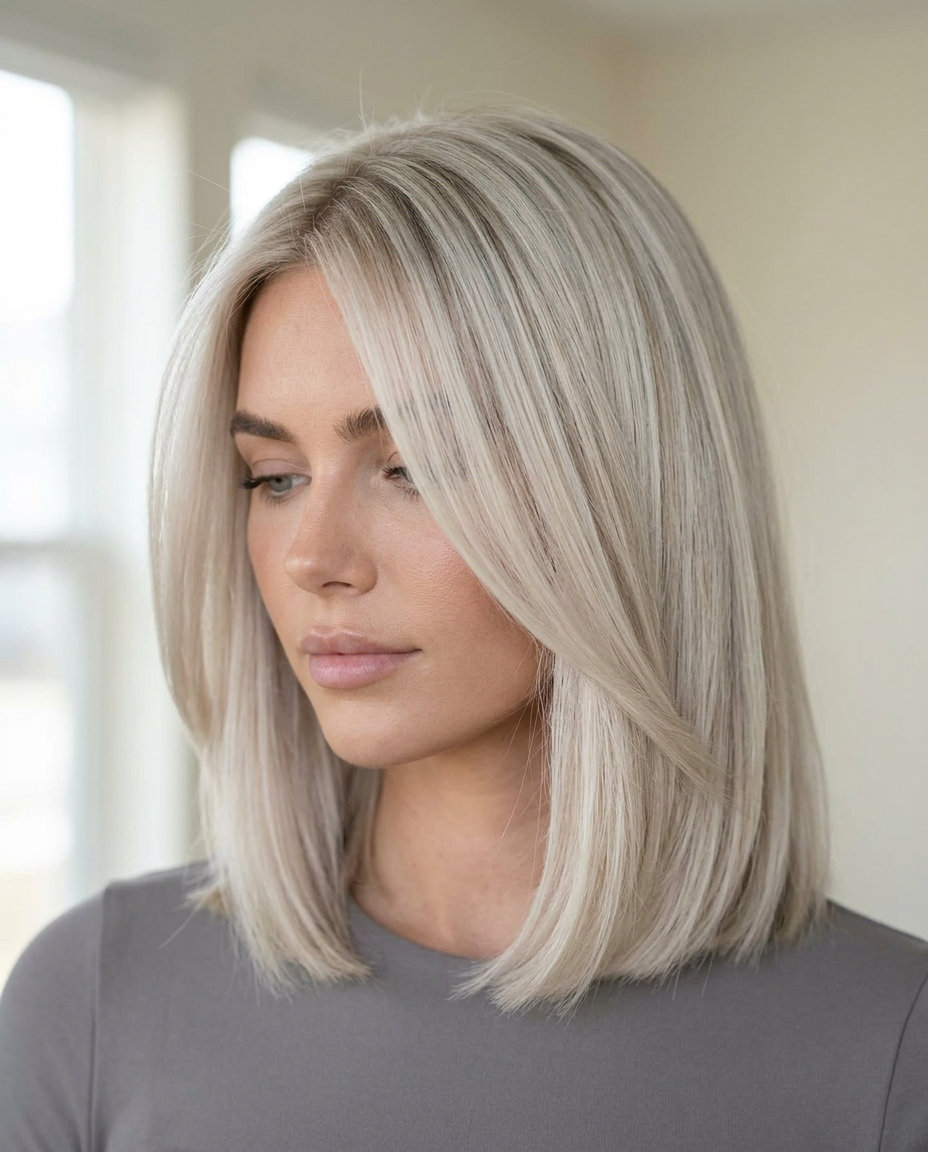
Fine hair doesn’t need to look wispy. The trick is invisible layering that creates movement without carving up the ends into choppy pieces. Platinum blonde internal layers do exactly that—point-cut layers hiding deep inside the hair shaft, so the perimeter stays blunt and solid. Ghost layers, basically. The internal layering is crucial for preventing a flat, one-dimensional finish, especially on fine strands that can mat down by midday (worth the salon visit). It looks like a simple, sleek cut from every angle until you move it—then you see the actual texture at play.
What makes this work: Invisible point-cut layers in the interior create movement and prevent bulk without visible layering on fine hair. That’s the whole philosophy. Your stylist isn’t thinning the ends. They’re carving space inside the structure so hair sits away from your head instead of clinging to it. Ghost layers prevented ‘triangle’ shape, maintaining sleekness for 4 weeks with minimal product—no volumizing spray, no diffuser, just a regular blow-dry. Not for very thick hair—ghost layers won’t remove enough bulk for true sleekness. You get blonde this pale, you’re committing to root touch-ups every 3 to 4 weeks. That’s non-negotiable. The color fades from platinum to champagne faster than you’d think, and letting it go muddy defeats the whole point. Sleek, not heavy.
Bold Copper Layered Hair
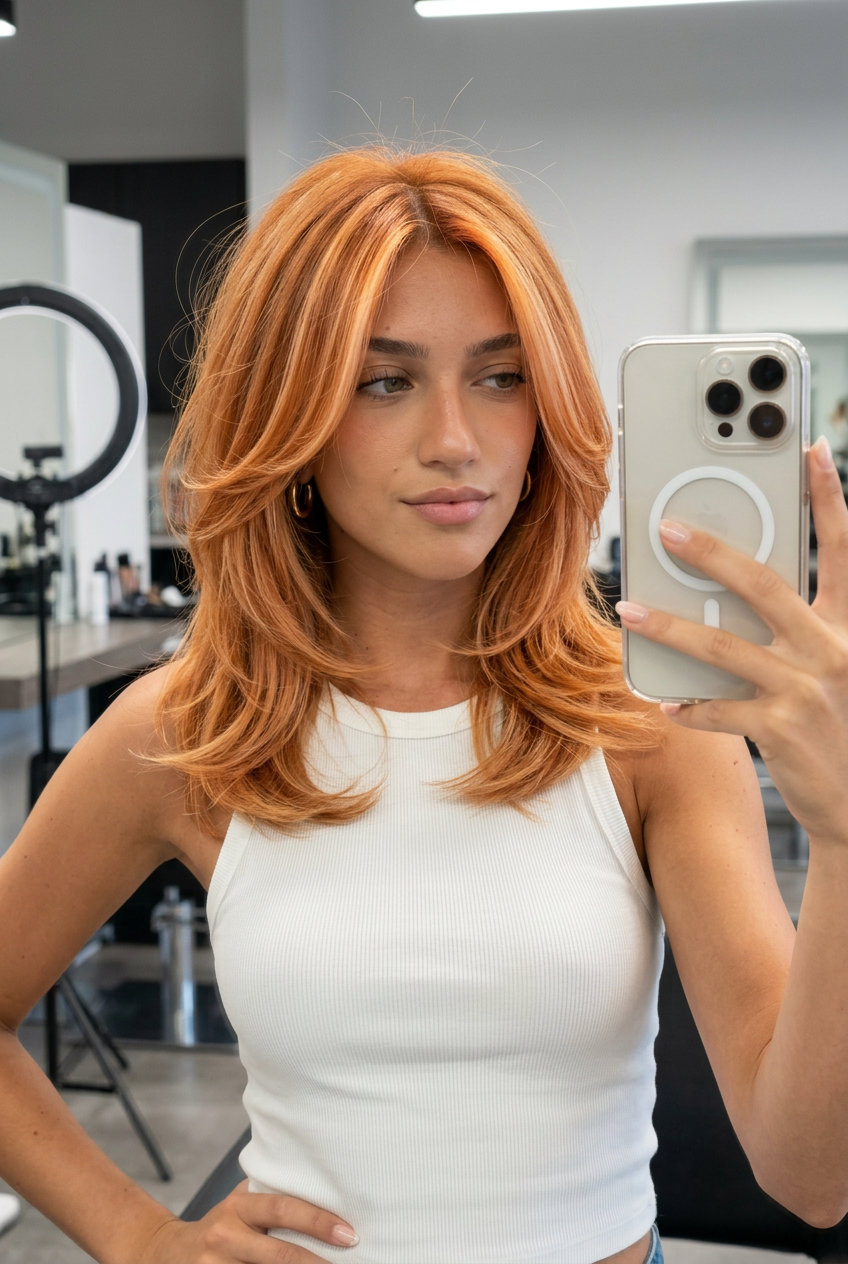
Thick hair needs layers that actually *cut*. Not feathered. Not blended into nothing. Real, visible, disconnected layers that remove weight and frame the face with intention. Bold copper layered hair in this density gets permission to be dramatic. Start with a warm, rich copper base—think burnt amber under daylight, molten orange under warm indoor light. The color does half the work; layering does the other half. Face-framing layers starting at the cheekbone height, choppy and intentional, not soft and rounded.
Significant face-framing layers starting at the cheekbones create a soft, voluminous shape around the face. That’s design, not accident. Heavily layered cuts like this require commitment to regular shaping trims every 6 to 8 weeks—the layers blur together if you skip maintenance, which is exactly what my thick hair needs. Face-framing layers held volume around the face for 3 days with minimal styling product, and the copper didn’t fade into brassy territory as quickly as expected, probably because the density of the hair protected the color underneath. Blow-dry with a round brush and the layers separate beautifully. Air-dry and you get a messier, more casual texture. Both work. Both look intentional with this cut. Hello, volume!
Romantic Layered Haircut Medium
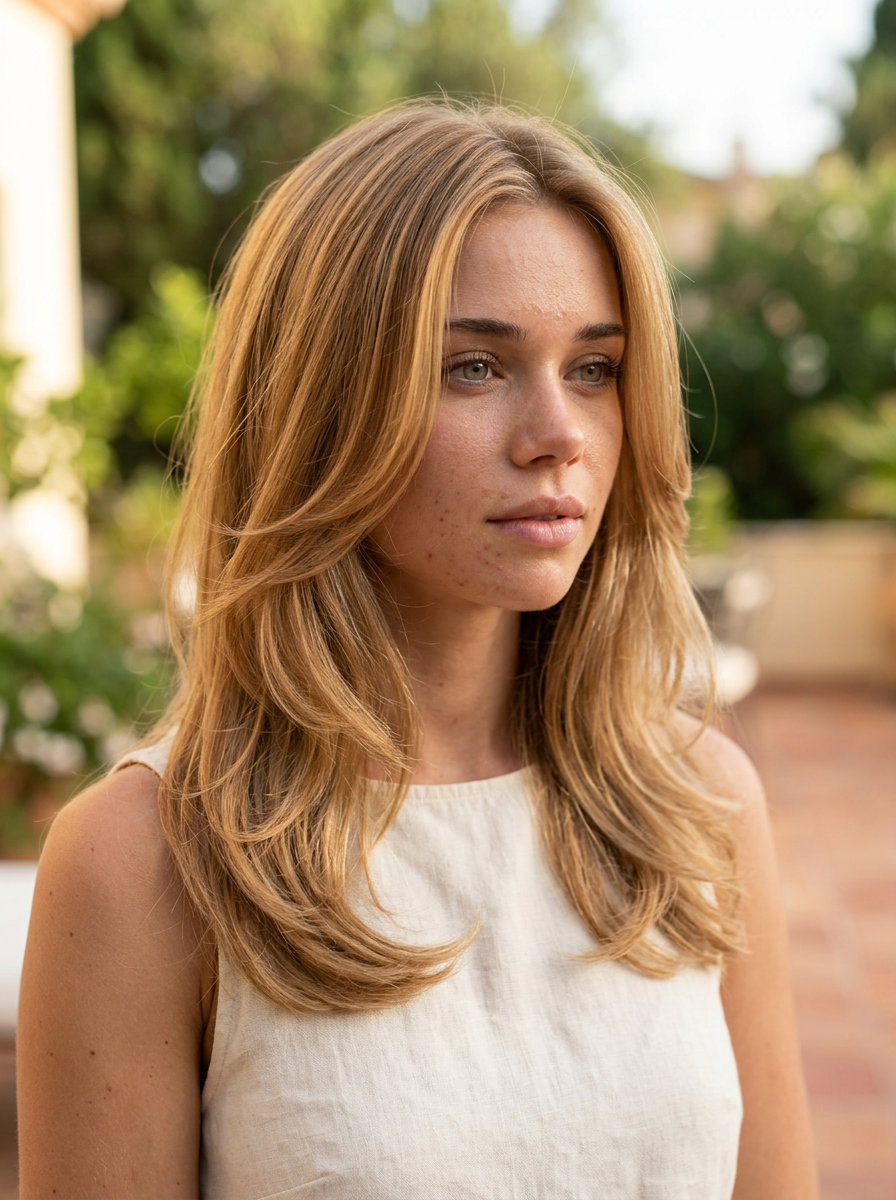
Some cuts are built on structure; this one is built on softness. U-shaped layers that add fullness to fine hair without removing too much bulk—the opposite of choppy. Side-swept part, shoulder-grazing length, layers that blend rather than disconnect. The romance isn’t in the color or the cut alone; it’s in how they move together. A soft, warm honey blonde works here (or a natural brunette with subtle honey pieces). The layers start lower—past the cheekbones—so the face gets framed gently, not aggressively.
U-shape layers add fullness to fine hair by distributing weight without removing too much bulk. That’s the principle. U-shaped layers grew out gracefully for 8 weeks before needing a full reshape appointment—far longer than choppy, disconnected cuts. Pass if you only air-dry—side-swept part needs blow-drying for ideal volume. This cut requires a side part styled with intention; straight-back drying flattens the whole effect. Texturizing paste or sea salt spray helps, or maybe a soft V-shape, honestly. The idea is lived-in softness, not deliberate piece-y texture. Romantic flow achieved.
Textured Midi Shag
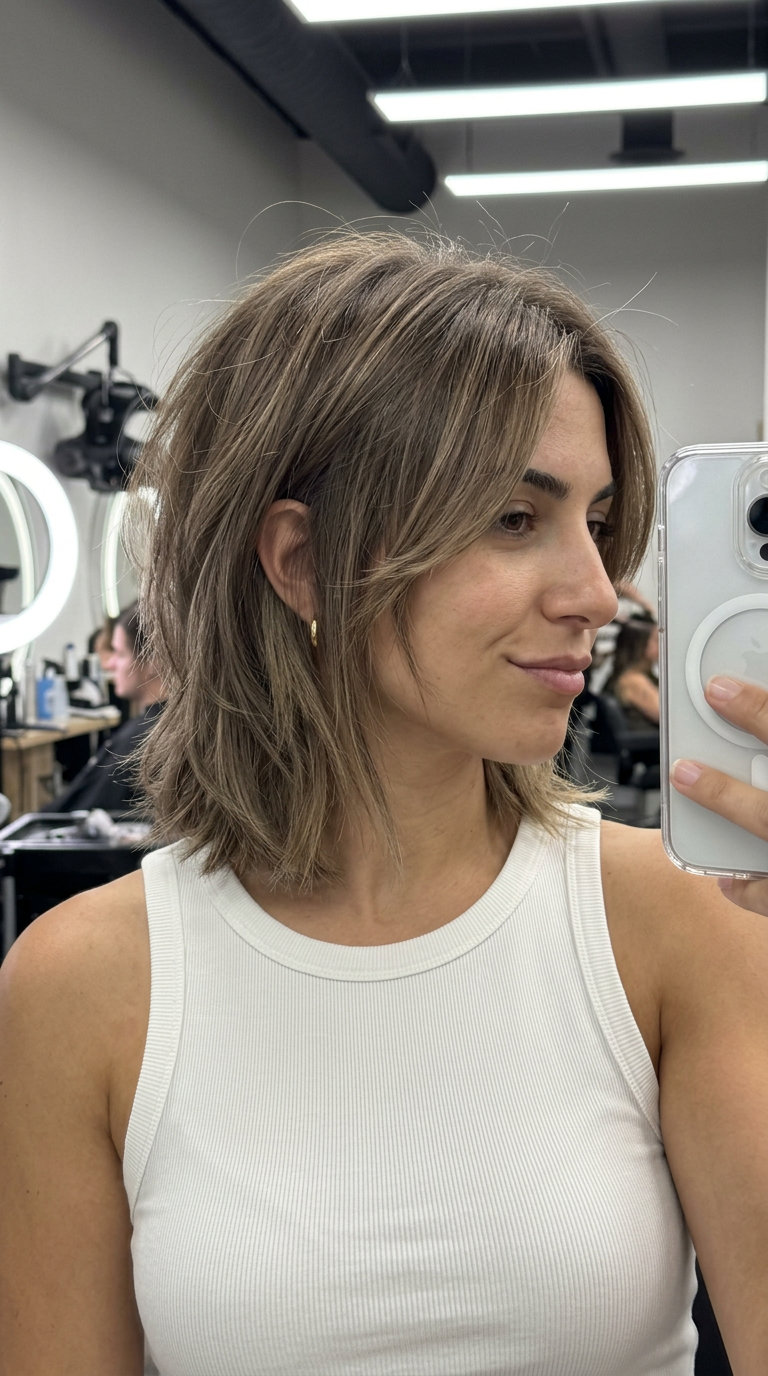
Choppy, disconnected layers are having a real moment, and for once, they actually suit summer hair. Wavy, medium-density hair does something unexpected with choppy layering—instead of looking broken up, it looks intentional, almost like you didn’t try to smooth it out. A textured midi shag sits somewhere between a modern shag and a heavily layered wolf cut, except the layers are more severe and less blended. Disconnected layers create a modern ‘shag-lite’ effect, adding texture and movement to wavy hair. Pair it with a brassy blonde or a warm brunette and the choppiness reads as cool, not chaotic. The magic is in letting it dry wavy.
Choppy, disconnected layers maintained piecey texture for 5 weeks with air-drying—no product, no blow-dryer fussing required. That’s the appeal. Choppy layers can be tricky to style if you prefer a super polished, uniform look, probably worth the consultation at least to see how your stylist would approach this on your specific texture. This cut grows out weirdly; the choppy pieces blend back together around week 5 or 6, which means it either looks intentionally shaggy (good) or accidentally grown-out (less good). The timeline is tight. Summer vibes demand frequent trims or acceptance that the look will soften over time. Lived-in perfection.
70s Layered Haircut Medium

The 70s shag is back, and this time it’s fully intentional instead of accidental. Heavy graduated layers around the crown, lots of texture, a slightly longer length that still reads as summer-appropriate. Bottleneck bangs (or just super short choppy bangs that blend into the layers) create that authentic 70s vibe without looking costumey. This cut works best on wavy or textured hair; it relies on natural bend to create shape. Straight hair will need a blow-dryer and round brush to mimic the volume. The color should lean warm—golden blonde, honey brunette, or even a peachy copper.
Heavy graduated layers around the crown create maximum volume, enhancing the 70s shag shape. That’s intentional design. Bottleneck bangs blended seamlessly for 6 weeks, framing the face perfectly, and the whole cut felt both retro and surprisingly wearable for regular life (my favorite kind of bang). Avoid if you have very straight hair—this cut relies on natural wave for volume. The layers need something to hang on. Styling involves actual effort—blow-dryer, texturizing products, or at least some strategic scrunching. But the payoff is undeniable: a head-turning cut that reads as confident, not trying-too-hard. Pure retro vibes.
Ghost Layers for Medium Fine Hair
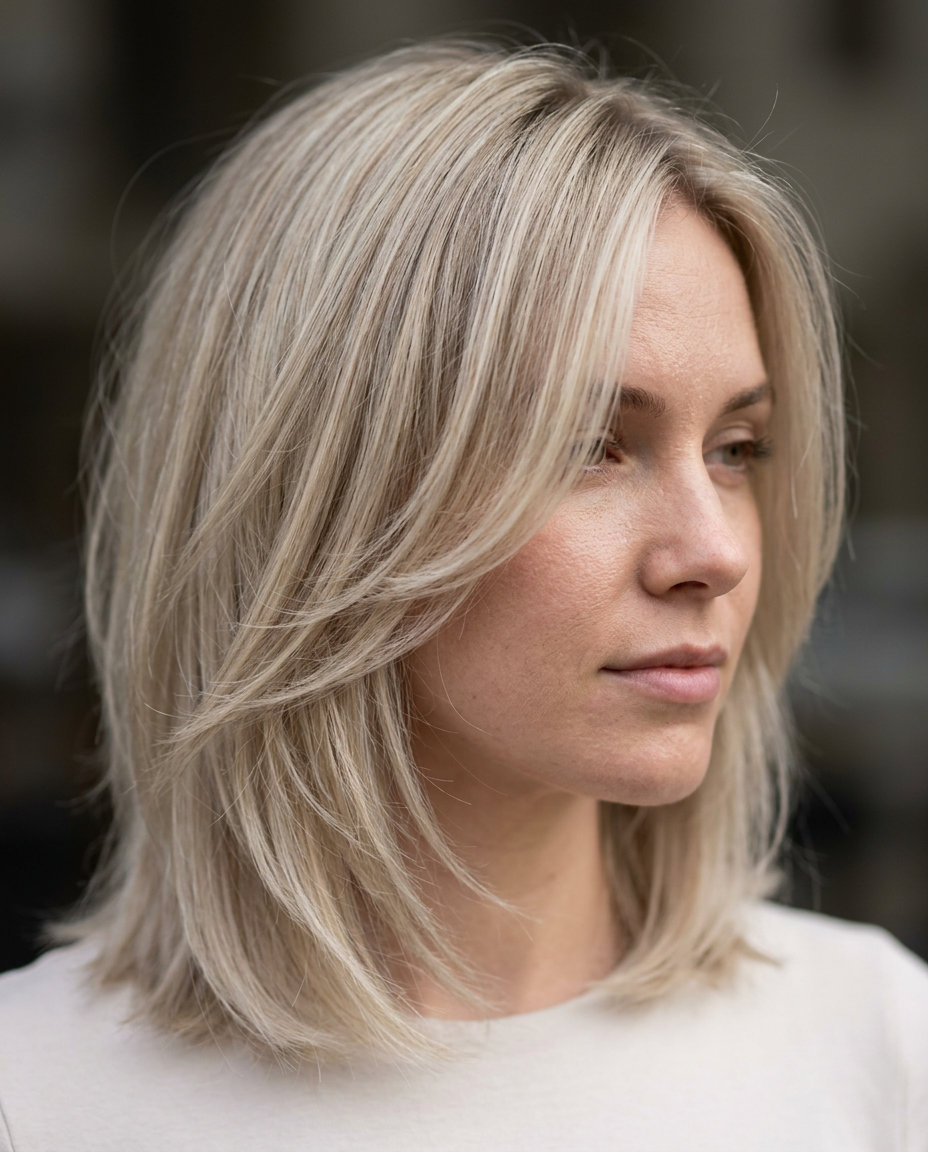
The whole point of ghost layers is that nobody should see them. Internal thinning that carves out volume from within, leaving the perimeter blunt and dense—this is what makes fine hair look fuller without screaming “I have layers.” Jen Atkin’s signature move, point-cutting on dry hair to create movement from the inside out. Internal ghost layers added noticeable body to fine hair without visible steps for 4 weeks, which means you’re not watching awkward regrowth lines appear every other week.
The trick is that these layers remove bulk strategically, creating movement while your outer edge stays strong and intact. (Jen Atkin knows best.) Your stylist cuts into the interior of the section—not slicing through the perimeter—so the blunt line remains visible and dense. This approach works because point-cut internal layers strategically remove weight, creating subtle movement while maintaining a strong, dense perimeter. Subtle body requires consistent styling products to maintain daily volume, not wash-and-go, which is the honest part nobody mentions until you’re three weeks in. But if you’re willing to use a texturizing paste or dry shampoo, you’re getting a cut that does the heavy lifting for you. Hidden layers are genius.
Medium Faux Bob with Face-Framing Layers
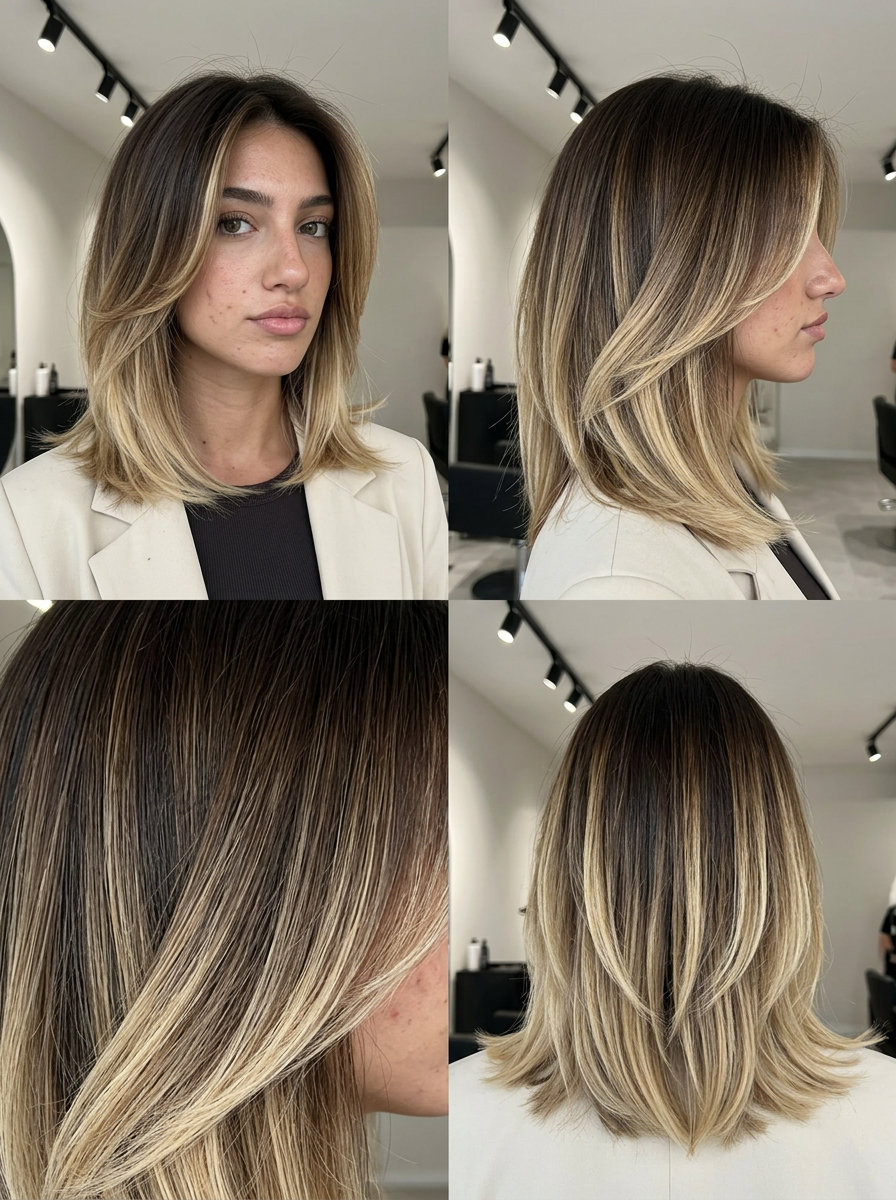
Butterfly layers clustered around the face create the illusion of a shorter cut without actually cutting off the length. You get the visual impact of a bob—volume at the jawline, movement around the cheekbones—but keep your shoulder-length hair for when you want to pull it back. This is strategic deception, and honestly, it works. Butterfly layers created a convincing faux-bob look for 8 hours with minimal styling effort, which means you’re not fighting your cut every single day.
The pronounced layers sit right at your jawline and cheekbones, sweeping back slightly and creating that breezy, piece-y texture that reads “intentional” instead of “I woke up like this.” (It takes some styling effort.) Pronounced butterfly layers create the illusion of a shorter cut around the face while maintaining overall length, which gives you flexibility—style it forward for the faux bob, sweep it back for something longer. Daily heat styling to achieve that voluminous, swept-back look is the maintenance reality here, not optional. But if you already blow-dry regularly, you’re not adding extra steps; you’re just directing the ones you’re doing anyway. The ombré layered waves medium hair look sits perfectly in this space: short-seeming where it matters most, long enough to be versatile. Faux bob, real impact.
Textured Midi Shag
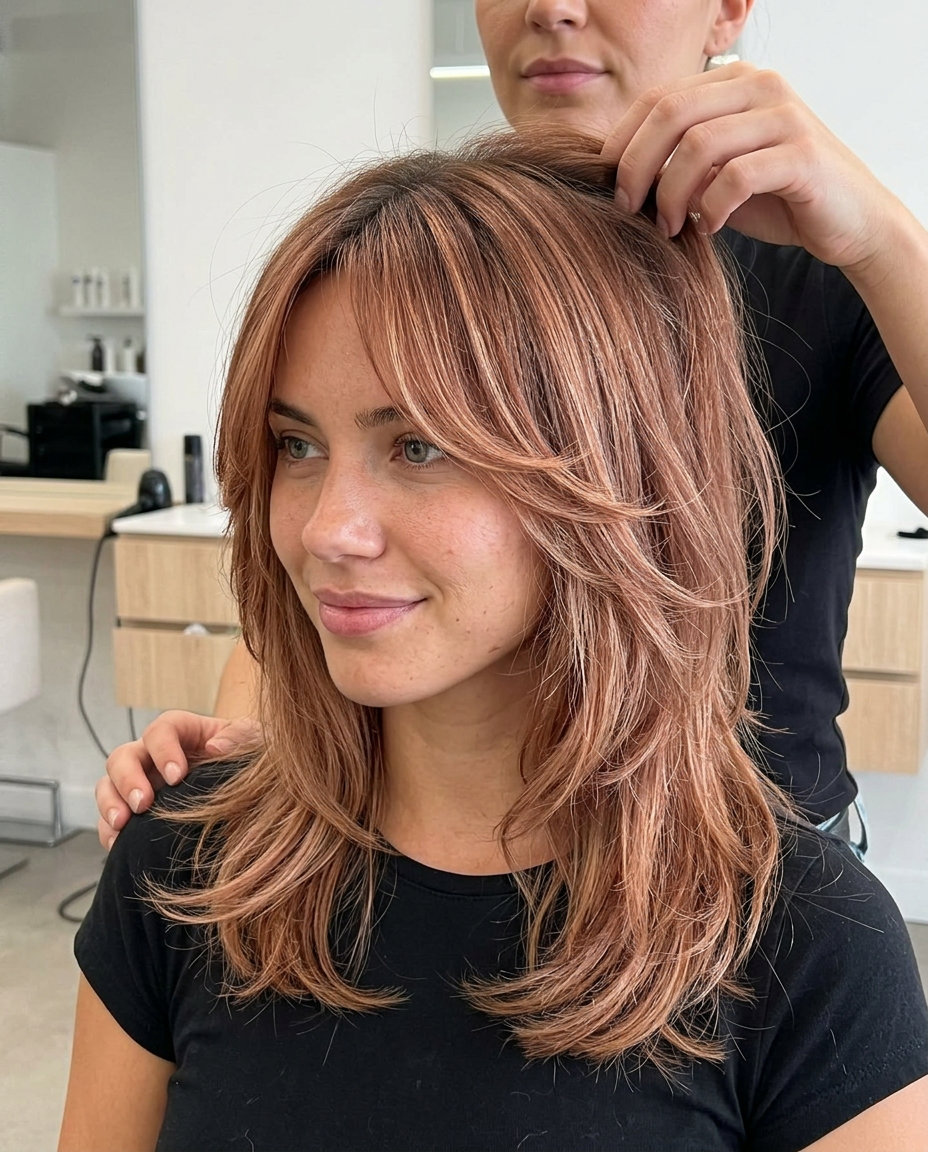
Disconnected layers are the technical term. “Messy and intentional” is what it feels like when you’re actually wearing it. A shag cuts through the hair with deliberate gaps—not blended transitions but actual separation between sections—which creates volume and that piece-y, textured vibe that looks undone but absolutely requires you to care for it properly. Disconnected layers provided significant volume and texture that held for 2 days with dry shampoo, so you’re getting genuine fullness without babying the cut every morning.
The rosewood shag haircut medium sits somewhere between rock-and-roll and “I found this in my closet and it somehow works.” Heavily textured, disconnected layers remove weight, enhancing natural waves and creating dramatic volume—that’s the design principle behind this cut. The honest part: this cut thrives on messy texture, which means if you prefer sleek styles, avoid this one entirely. Or maybe just a good texturizer—something with grit and hold that lets you scrunch and create definition without making your hair stiff. You need product that adds texture without weighing down, and you need to be comfortable styling your hair before you leave the house. The payoff is a cut that looks expensive and complicated but grows out in a way that actually works with your hair, not against it. Rosewood shag haircut medium is the kind of move you commit to because you genuinely love texture. Shag with a modern twist.
Golden Brown Butterfly Cut
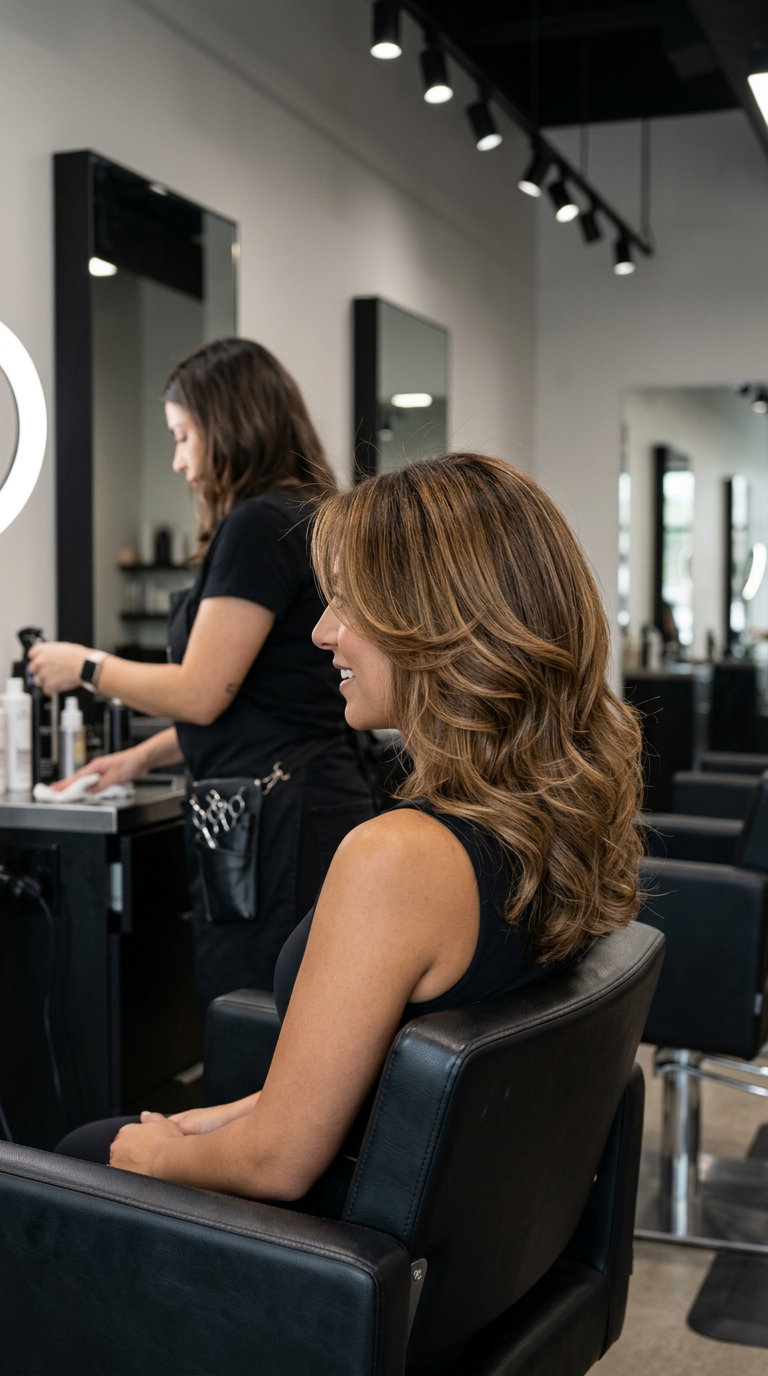
Butterfly layers clustered at the jawline and cheekbones, then connected back into longer layers toward the ends—this creates the magic trick of two silhouettes in one cut. Wear it styled forward and you have a faux bob. Blow-dry it back and you’re working with medium-length hair that has movement and dimension all the way down. Jawline face-framing layers successfully created a ‘faux bob’ effect when styled forward, which means you’re genuinely getting flexibility, not just a gimmick.
The golden brown butterfly cut sits in that sweet spot where face-framing layers feel modern and the color adds richness without demanding constant maintenance. Distinct face-framing layers around the jawline create versatility, allowing for both short and long looks—you control the vibe based on how you style it. Not for very straight hair though; you need natural wave or daily styling commitment, which probably sounds like extra work but honestly is worth the consultation at least. The beauty of this cut is that it works with your natural texture instead of fighting it. If your hair has any natural movement, these layers amplify it. The distinct separation at the jawline creates a flattering frame for most face shapes, and the golden brown keeps things warm and approachable without feeling like a statement color. Two cuts in one.
Tapered Medium Flick with Point-Cut Ends
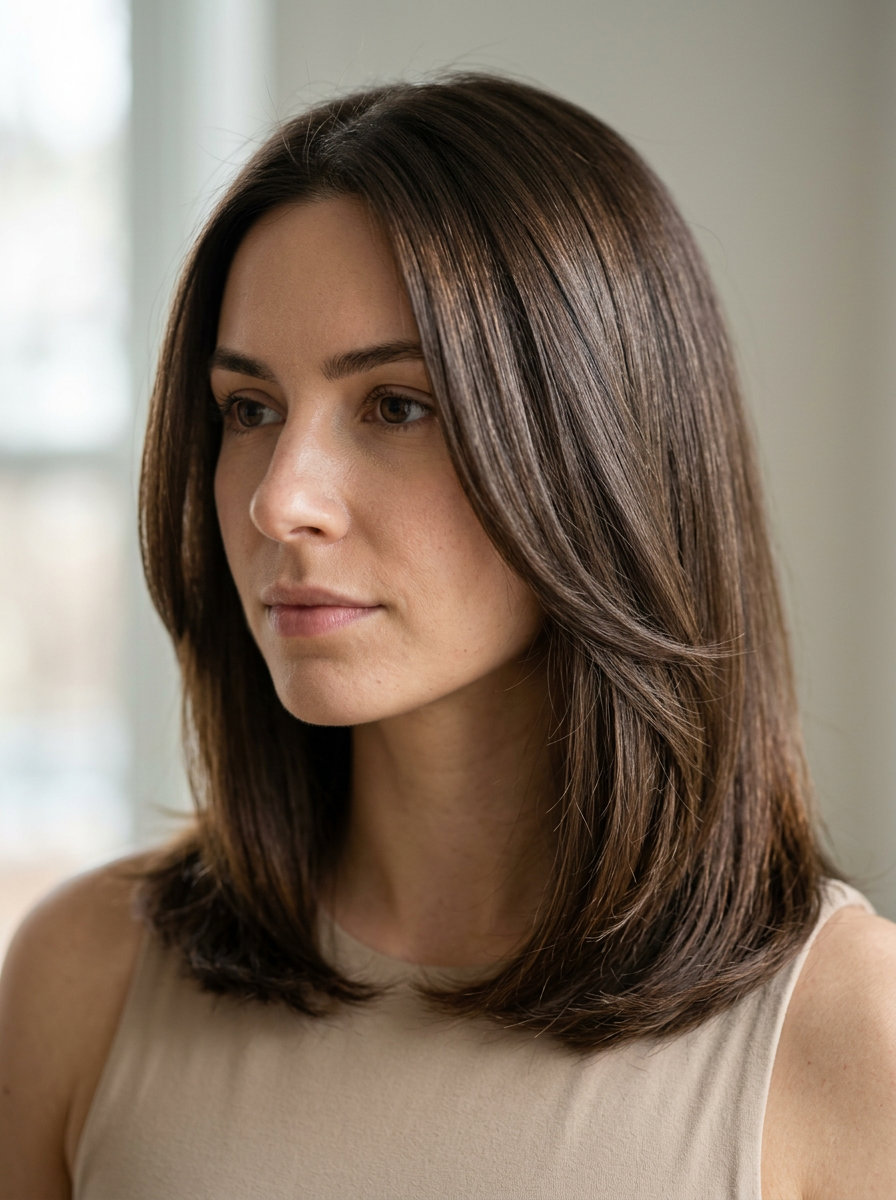
This is precision layering disguised as simplicity. Hidden ghost layers remove bulk and add movement to fine, straight hair without compromising density, which is the specific appeal here—you get volume without the appearance of layers. The cut starts blunt at the perimeter, then gets point-cut internally to carve out subtle texture and movement. Point-cutting on dry hair, the signature technique, reveals where your hair naturally wants to move once the weight is reduced. (Yes, the short one.) This creates dimension without visible steps or awkward regrowth lines.
Fine to medium, straight hair that needs volume without appearing overtly layered is exactly what this cut solves. Point-cut internal layers strategically remove weight, creating subtle movement while maintaining a strong, dense perimeter—it’s the principle behind the whole approach. The reality: this precise internal layering technique requires a highly skilled stylist, increasing salon cost significantly, so you’re not getting a bargain-basement cut. But you’re paying for precision, not just length removal. The tapered medium flick with point-cut ends sits at a specific intersection: structured enough to feel intentional, subtle enough to work with your natural hair type. This is where technical skill actually matters more than the cut name itself. Your stylist has to understand internal layering, point-cutting, and how your specific hair texture responds to weight removal. If they do, you’re getting a cut that delivers movement, density, and that effortless-looking finish that requires actual effort to maintain. Precision is everything here.
Still Deciding? Here’s a Quick Comparison
| Hairstyle | Difficulty | Maintenance | Best Face Shapes | Pros | Cons | |
|---|---|---|---|---|---|---|
| Edgy & Textured | ||||||
| 7. Mushroom Bronde Shaggy Wolf Layered Haircut | Moderate | High — every 6-8 weeks | oval, heart | Works on multiple texturesLayers add movementTextured, lived-in finish | Frequent salon visits needed |
| 8. The Dreamy Sunset Melt | Moderate | High — every 4-6 weeks | oval, heart, diamond | Suits most face shapesLayers add movementFlattering face-framing | Frequent salon visits needed |
| 16. The Ghost Layer Platinum Midi | Salon-only | High — every 4-6 weeks | oval, long, diamond | Suits most face shapesWorks on multiple texturesLayers add movement | Requires professional styling |
| 19. The Tousled Midi Shag | Easy | Low — every 10-12 weeks | round, square, oval | Low maintenanceEasy to style at homeSuits most face shapes | Not ideal for very curly hair |
| 20. The 70s Brunette Flick | Moderate | Medium — every 8-10 weeks | round, square, heart | Suits most face shapesWorks on multiple texturesLayers add movement | Not ideal for very curly hair |
| 23. Rosewood Shag with Bangs | Moderate | Medium — every 6-8 weeks | square, oval, heart | Suits most face shapesWorks on multiple texturesLayers add movement | Not ideal for fine hair |
| Classic & Clean | ||||||
| 1. Deep Teal Layered Lob | Moderate | High — every 4-6 weeks | round, oval, square | Suits most face shapesWorks on multiple texturesLayers add movement | Frequent salon visits needed |
| 2. The Undone Luxe Layers | Moderate | Low — every 10-12 weeks | round, long, oval | Low maintenanceSuits most face shapesWorks on multiple textures | Not ideal for very curly hair |
| 3. Copper Apricot Crush Layered Haircut | Easy | Medium — every 8 weeks | square, diamond, oval | Easy to style at homeSuits most face shapesWorks on multiple textures | Not ideal for very curly hair |
| 4. Bronde Internal Ghost Layered Haircut | Salon-only | Low — every 10-12 weeks | round, long, oval | Low maintenanceSuits most face shapesWorks on multiple textures | Requires professional styling |
| 5. 90s Fluffy Midi Layered Haircut | Easy | Medium — every 8 weeks | oval, long, heart | Easy to style at homeSuits most face shapesWorks on multiple textures | Not ideal for very curly hair |
| 9. The Summer Cloud Layers | Moderate | High — every 6-8 weeks | oval, heart, square | Suits most face shapesWorks on multiple texturesLayers add movement | Frequent salon visits needed |
| 11. The Polished Espresso Wave | Moderate | Medium — every 8-10 weeks | All face shapes | Suits most face shapesWorks on multiple texturesLayers add movement | Not ideal for very curly hair |
| 12. Sun-Kissed Butterfly Layered Haircut | Moderate | Medium — every 8-10 weeks | oval, heart, square | Suits most face shapesWorks on multiple texturesLayers add movement | Not ideal for very curly hair |
| 14. The Executive Midi Flick | Moderate | Medium — every 6-8 weeks | all | Works on multiple texturesLayers add movementWorks with air-drying | Not ideal for very curly hair |
| 18. The Summer Romance Midi | Moderate | Medium — every 8-10 weeks | oval, heart, square | Suits most face shapesWorks on multiple texturesLayers add movement | Not ideal for very curly hair |
| 21. The Scandi Summer Midi | Moderate | Medium — every 8-10 weeks | oval, square, heart | Suits most face shapesWorks on multiple texturesLayers add movement | Not ideal for very curly hair |
| 25. Natural Brunette Ghost Layers | Salon-only | Low — every 10-12 weeks | round, long, oval | Low maintenanceSuits most face shapesWorks on multiple textures | Requires professional styling |
| Bold & Statement | ||||||
| 17. The Apricot Crush Kitty Cut | Moderate | High — every 4-6 weeks | oval, heart, long | Suits most face shapesWorks on multiple texturesLayers add movement | Frequent salon visits needed |
| Soft & Romantic | ||||||
| 6. The Sun-Kissed Curl Cloud | Easy | Low — every 10-12 weeks | round, diamond, oval | Low maintenanceEasy to style at homeSuits most face shapes | Not ideal for fine hair |
| 10. The Golden Hour Flick | Moderate | Medium — every 10-12 weeks | oval, long, round | Suits most face shapesWorks on multiple texturesLayers add movement | Not ideal for very curly hair |
| 15. Buttercream Blonde Midi-Flick | Easy | Medium — every 8-10 weeks | oval, long, heart | Easy to style at homeSuits most face shapesWorks on multiple textures | Not ideal for very curly hair |
| 22. The Festival Ombré Swirl | Moderate | High — every 10-12 weeks | oval, heart, long | Suits most face shapesWorks on multiple texturesLayers add movement | Frequent salon visits needed |
| 24. Golden Brown Butterfly Midi | Moderate | Medium — every 8-10 weeks | oval, heart, square | Suits most face shapesWorks on multiple texturesLayers add movement | Not ideal for very curly hair |
Frequently Asked Questions
Can I really DIY these layered styles without a professional cut?
The initial cut absolutely needs a pro—especially for techniques like internal ghost layers or point-cut face-framing. But once you have the cut? Styles like the Copper Apricot Crush Layered Haircut and the 90s Fluffy Midi Layered Haircut rely heavily on home styling techniques: blow-drying with a round brush, texturizing spray, and volumizing mousse. The hard part is the cut structure, not the daily styling.
Which layered styles last longest in summer humidity?
The Deep Teal Layered Lob holds up remarkably well because its sleek finish and sealed perimeter resist frizz better than heavily textured cuts. The Bronde Internal Ghost Layered Haircut also performs well—the invisible internal layers add volume without creating surface texture that humidity can disrupt. Both benefit from a leave-in conditioner to lock in moisture and prevent swelling.
What tools are essential for achieving volume with layered cuts at home?
For cuts like The Undone Luxe Layers and the 90s Fluffy Midi Layered Haircut, a volumizing mousse applied to damp roots is non-negotiable—it gives you lift without stiffness. Pair that with a paddle brush or round brush for blow-drying, and a texturizing spray to add grip and separation to the layers. These three products do the heavy lifting that your cut structure started.
What exactly are ‘ghost layers’ and can I style them at home?
Ghost layers (featured in The Undone Luxe Layers and Bronde Internal Ghost Layered Haircut) are internal layers cut beneath the surface—you can’t see them, but they add serious volume and movement. The styling is absolutely DIY-friendly: blow-dry with a round brush to direct the layers upward, use a heat protectant spray to shield from damage, and finish with texturizing spray for grip. The layers do the structural work; you just need to activate them with the right technique.
How often should I trim a layered medium-length cut to keep the shape?
Most layered medium cuts need a trim every 6-8 weeks to maintain their shape and prevent the layers from growing into a shapeless blob. Cuts with aggressive layers (like the Butterfly Layered Haircut) need trims closer to every 5-6 weeks. Cuts with subtle internal layering (like the Bronde Internal Ghost Layered Haircut) can stretch to 8 weeks. Ask your stylist for a grow-out plan before you leave the chair—some layers grow out gracefully, others don’t.
Final Thoughts
Here’s the thing about layered summer haircuts for medium hair 2026: they only look effortless because someone—usually your stylist, sometimes you at 6 a.m. with a round brush—did the work. The precision matters. The technique matters. The products matter.
But once you find a stylist who understands internal layering, point-cutting, and how your hair actually moves? You’re not just getting a haircut. You’re getting a cut that works *with* your texture instead of against it. That’s the difference between a layered haircut and a layered haircut that actually delivers.