Gigi Hadid cut off a year’s worth of waves. Taylor Hill showed up at Cannes with an Italian-French hybrid that somehow looked both effortless and expensive. TikTok stylists are now splitting hairs—literally—between the Hydro-Bob, the Micro-Fringe Bob, and the Box Bob. The French bob isn’t just back; it’s evolved into something that actually works on American hair textures and real summer humidity, which is why every salon in a three-mile radius is suddenly booked through July.
The chic summer French bob haircut 2026 comes in several iterations: the blunt, chin-length classic with invisible layering for thick hair; the slicked-back Hydro-Bob for anyone who wants five-minute styling; and the Baroque Bob if you’re willing to commit to a curling iron. These cuts work on oval faces, round faces, and the I-don’t-have-time-for-this crowd—though some versions demand more maintenance than others.
I went from shoulder-length to a French bob last summer and spent the first week adjusting to seeing my ears. By week four, I understood why people were messaging me asking for my stylist’s number. The cut was precise, but the real magic was in the color work—root shadowing meant I could actually go eight weeks without looking like I’d abandoned the whole thing.
Teal Short Bob
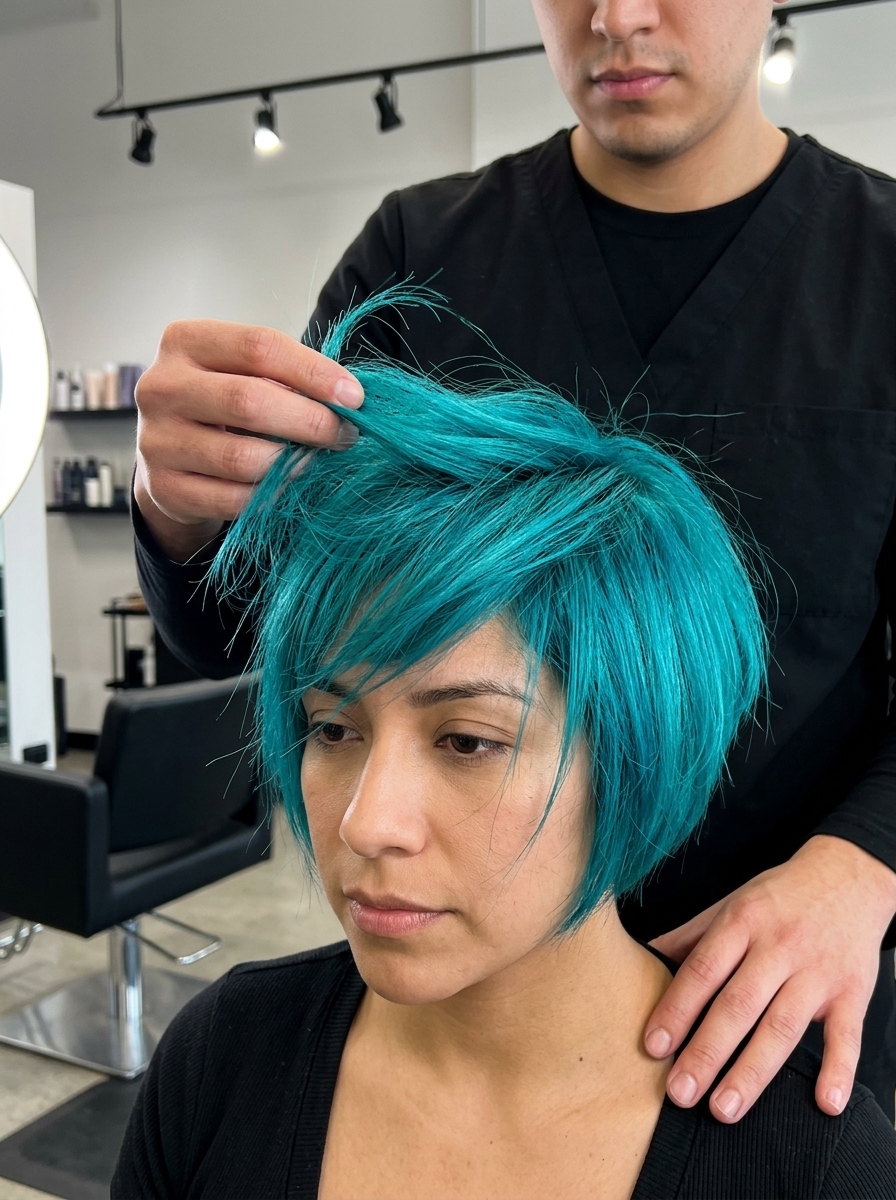
This cut thrives on precision and movement in equal measure. A teal short bob is built on razor-cut ends throughout—not a blunt-line situation. The stylist point-cuts rather than slices, creating feathered, wispy ends that catch light and move with intention. Razor-cutting throughout the ends creates feathered, wispy texture, enhancing movement and an airy feel. You’re looking at a cut that sits just below the chin, slightly longer in front, with texture radiating from the ends outward (a true statement cut).
The reality: razor-cut ends maintained piecey, feathered texture for 3 weeks with minimal styling product, which is genuinely worth noting if you’re considering this. Styling is straightforward—a texturizing paste applied to damp hair, scrunched upward, then air-dried or quick blow-dried for definition. The teal color amplifies the texture because the dimensional tones catch movement. But here’s the friction: razor cutting needs a highly skilled stylist; finding one can be difficult and costly. Not every salon has someone who understands that point-cutting on fine to medium density hair requires a completely different hand pressure than blunt-cutting would demand. This matters. You can’t just book anyone. Edgy, not messy.
French Bob Ombré
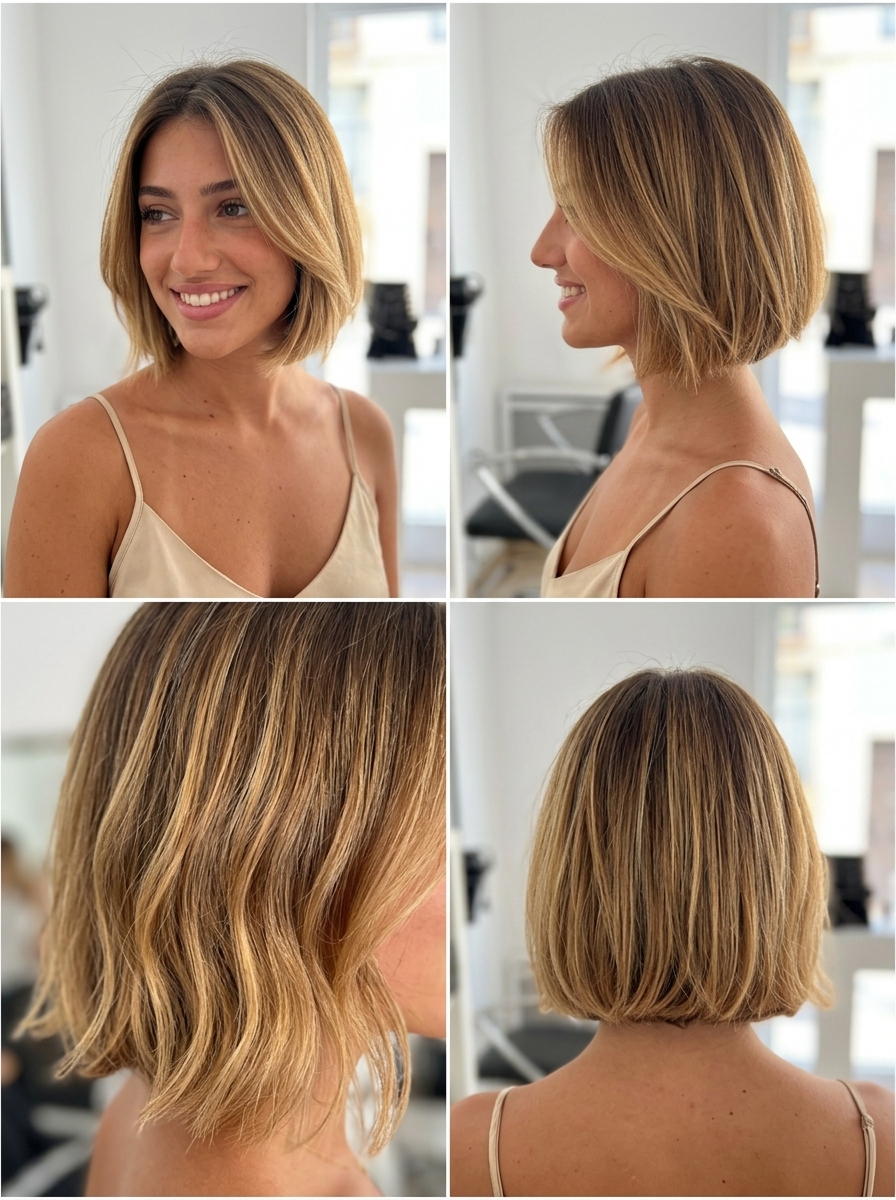
This is the french bob ombré that doesn’t scream “I just got highlights.” Instead, it whispers. Internal long layers run throughout the cut—not visible from the perimeter, but engineered underneath to allow natural waves to move without fighting the shape. The color gradient moves from a deeper root tone to lighter mid-lengths, creating seamless transition rather than blocky dimension. Subtle internal layers create seamless movement, preventing harsh lines, especially for ombré transitions. Start with a chin-length perimeter, straight across, then build invisible architecture inside.
The magic happens when you’re not trying too hard. Internal long layers allowed natural waves to air-dry without harsh lines for 4 weeks, which means you’re not locked into a daily styling routine (which is all my fine hair can handle). The ombré color strategy extends the time between salon visits because the gradient hides regrowth beautifully. But: not for very thick hair—internal layers might not remove enough bulk for this shape. You need a stylist who understands the difference between removing bulk and creating movement. This cut rewards texture. It doesn’t fight waves; it partners with them. Effortlessly chic.
French Bob with Brow-Skimming Fringe
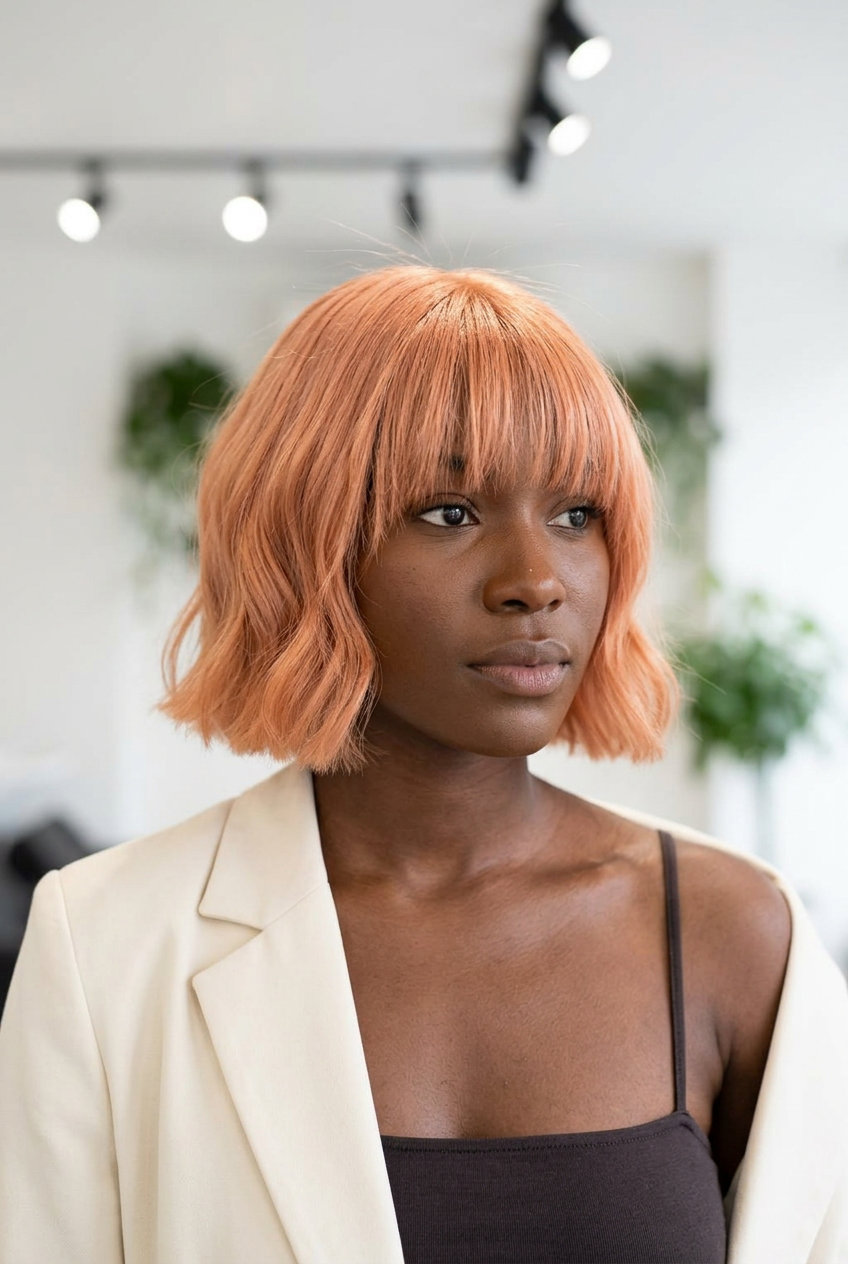
A full brow-skimming fringe transforms a french bob from soft-edged to architectural. The perimeter stays blunt—chin-length, dense—while the fringe is point-cut to blend seamlessly into cheekbone-length layers. The color here is apricot crush hair color french bob: a warm, medium-depth blonde with subtle peachy undertones that photograph differently depending on light. Blunt perimeter creates maximum density and bounce, while point-cut fringe blends with natural waves. This isn’t a “one and done” cut. The fringe and the longer perimeter require different maintenance schedules, so your stylist needs to understand how to cut them as separate elements that function as one.
Blunt perimeter maintained density and playful bounce for 6 weeks before needing a trim, though the fringe typically needs attention around week three (or maybe just a really good stylist can extend that). Full brow-skimming fringe requires daily styling and frequent trims to maintain shape—this is non-negotiable. You’re committing to a blow-dry and straightening iron most mornings, or accepting a slightly softer fringe shape on air-dry days. The color investment matters too: apricot crush tones need purple-toning shampoo twice weekly to prevent brassiness. But the payoff is a cut that photographs beautifully and reads as intentional rather than accidental. Fringe perfection.
Micro French Bob with Bangs
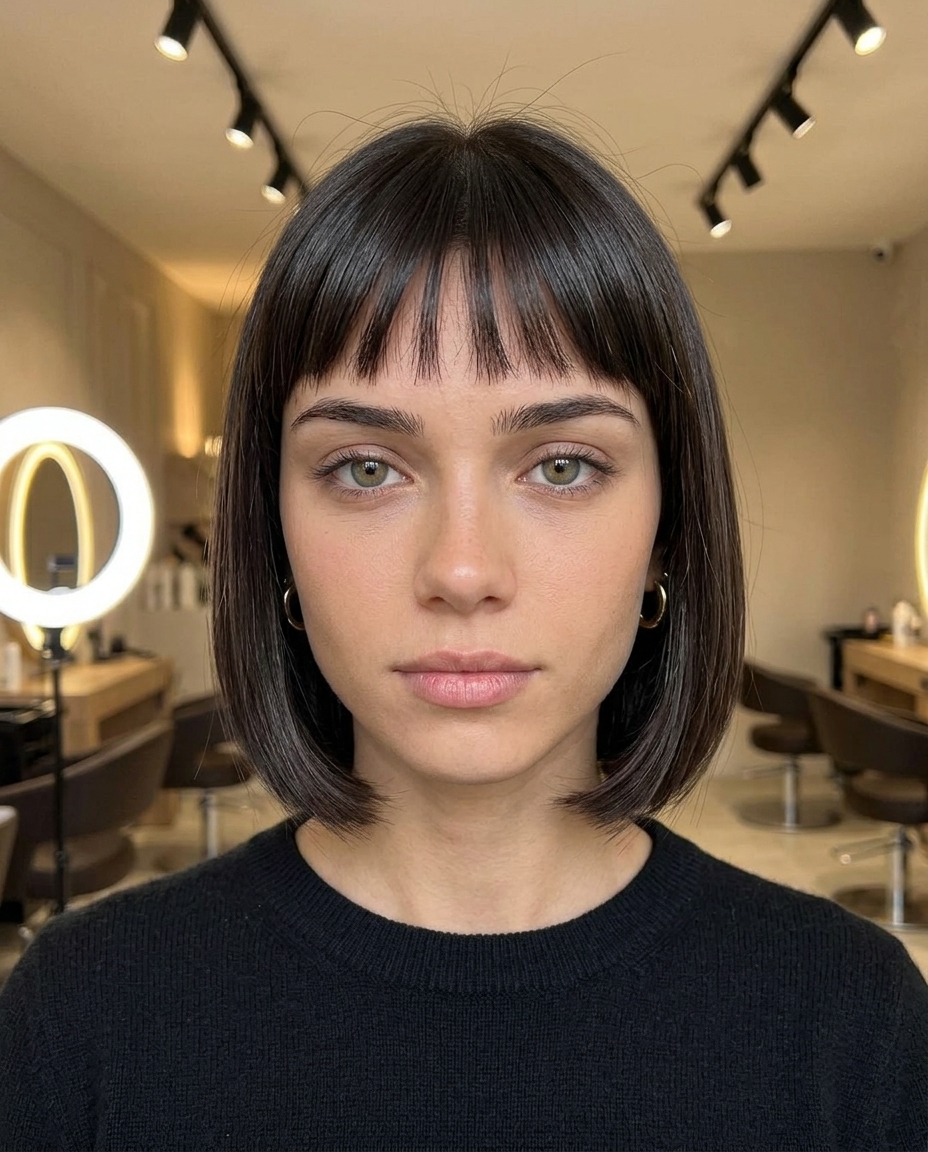
This is the edit: fringe shortened to just graze the natural brow line, creating a subtle frame without the daily styling demands of a full brow-fringe. The cut is micro french bob with bangs technique where the fringe is blunt but narrow—roughly two inches of hair creating an eye-skimming effect. Blunt perimeter creates a sharp, clean line, framing the face with minimalist, precise structure. Everything else—the chin-length perimeter, the internal layers—stays consistent with the classic french bob format. The micro-fringe is the edit that changes the entire vibe from soft-edged to modern.
Micro-fringe remained eye-skimming for 3 weeks, enhancing cheekbones before needing a trim, which is a meaningful difference from a full brow-fringe. You get the face-framing benefit without the morning styling ritual. Color here shifts toward jewel tones or rich, solid hues because the minimal fringe creates a graphic frame that demands a bold complement (probably worth the consultation at least). The trade-off: avoid if you dislike frequent salon visits—micro-fringe needs trims every 3-4 weeks. This is a cut for people who like precision and can commit to it. You’re paying for the shape, and you need to maintain it to keep it reading as intentional rather than grown-out. Bold and precise.
Crimson Red French Bob
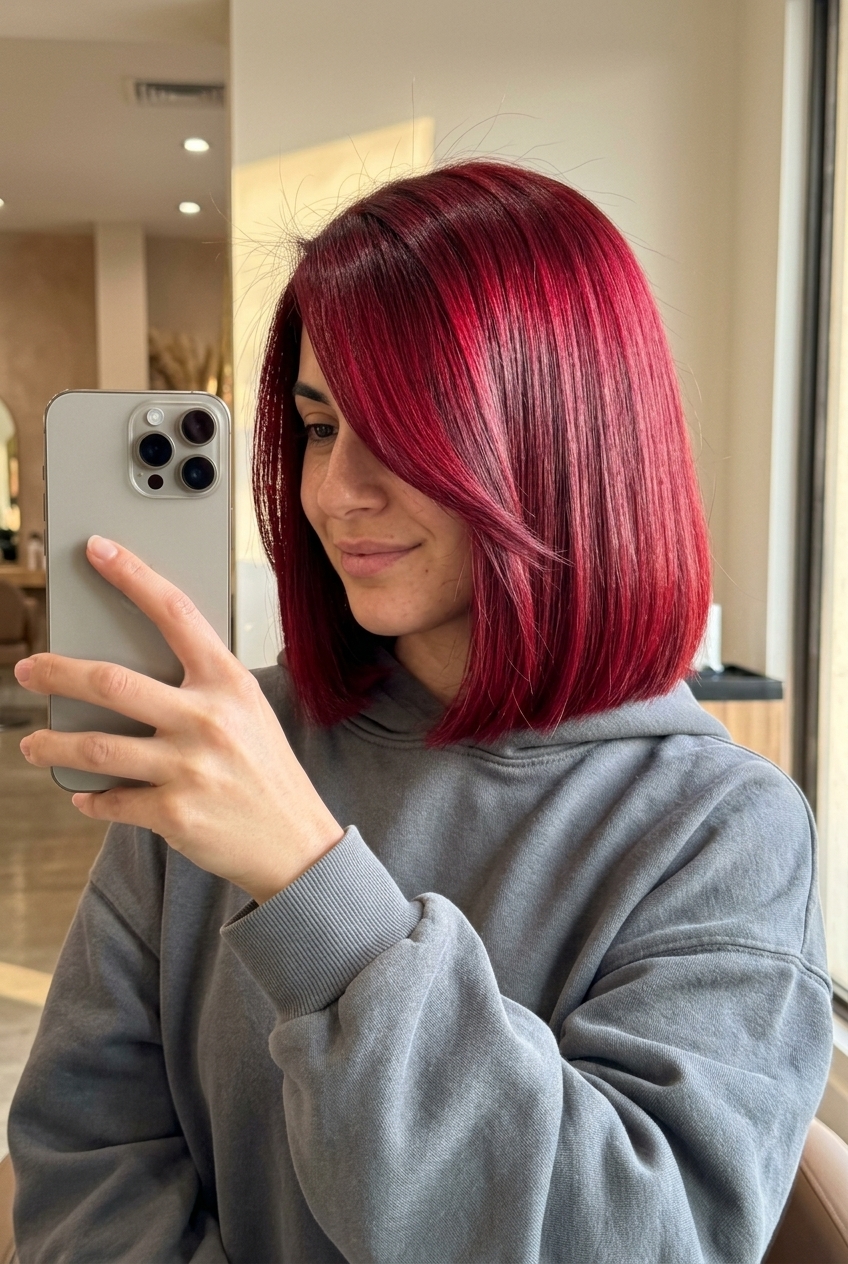
This is the version that announces itself. A crimson red french bob in true, saturated crimson—not burgundy, not wine-toned, but actual red—transforms the cut into a statement piece. The shape is classic: chin-length, blunt perimeter, minimal interior layers, micro or no fringe. Straight hair works best here; the cut relies on the color and the clean line to create impact. Blunt perimeter at the jawline creates a strong, modern silhouette, emphasizing a bold, solid color. This works on fine to medium density hair when the perimeter is dense enough to hold visual weight. The color is doing most of the work—the cut is the structure that allows it to breathe.
Blunt jawline perimeter held its sharp, graphic line for 7 weeks with sleek, polished styling, which matters because this cut demands maintenance. This sharp, sleek bob demands daily heat styling to maintain its polished, graphic line. You’re blow-drying straight and using a flat iron to reinforce the blunt perimeter regularly. Crimson fades faster than most colors—expect visible fading by week five without color-depositing shampoo used twice weekly. The payoff: a cut that photographs like a fashion editorial, reads as intentional, and works for anyone brave enough to commit to both the color and the styling. This is the french bob for people who want to be seen (the ultimate statement cut). Power bob.
Curly French Bob
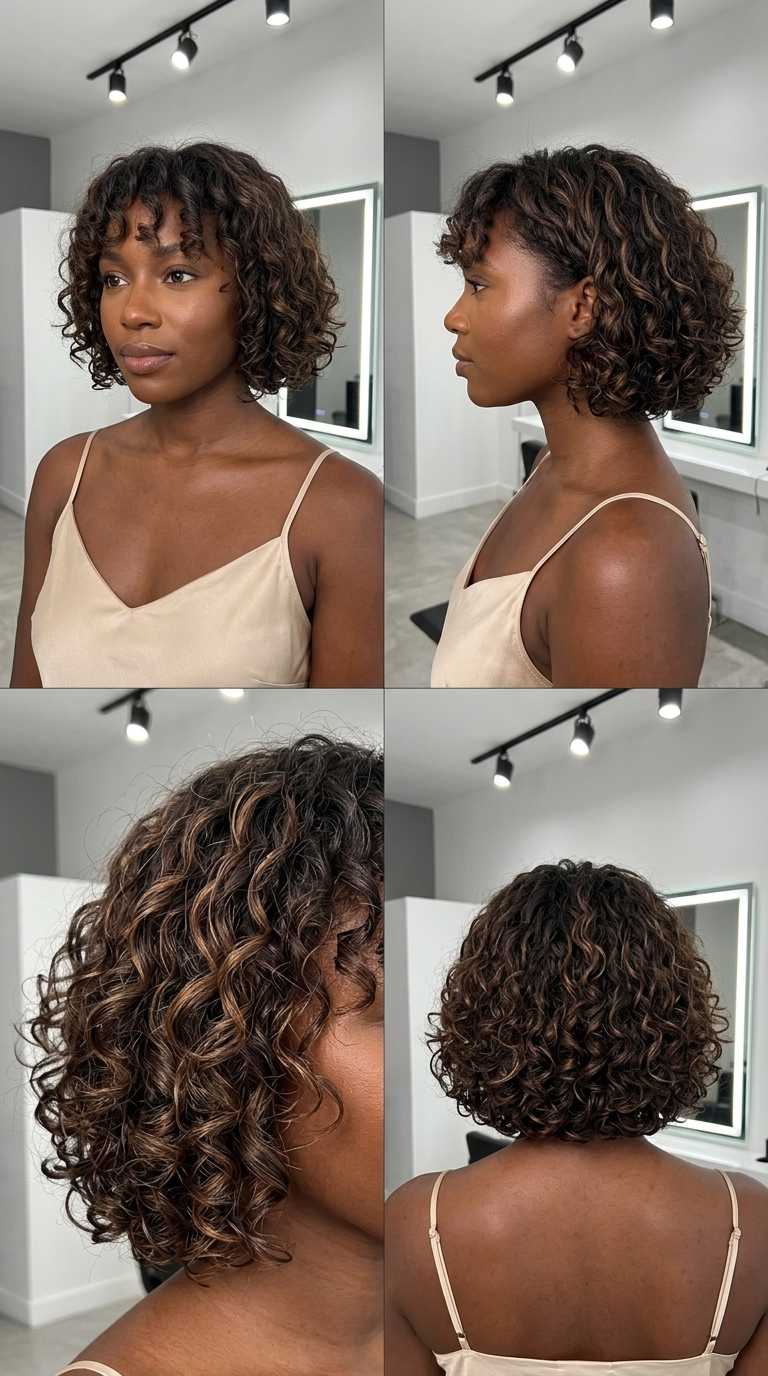
Curls and bobs have always had a complicated relationship. Most stylists cut straight hair, then hand you a curly head and hope for the best. This one actually works because it’s cut dry—meaning your stylist sculpts it while your curls are in their natural state, preventing those awful triangle shapes that plague curly bobs. Dry-cutting for curls requires a specialist—not every salon offers this expertise, so that search matters. The result? Curls maintained definition for 3 days with minimal frizz, even after air-drying, which is the kind of real-world evidence that actually changes your routine.
What makes this work is the technique itself. Dry-cutting sculpts curls in their natural state, preventing triangle shapes and enhancing bounce instead of fighting your texture. Internal layers sit inside the curl pattern rather than creating visible chop lines. The perimeter stays full, so the bob reads as intentional rather than accidental. You’re not constantly fighting the shape—the shape *is* your hair, worth the search for a curl specialist. Finally, a bob for curls.
Textured French Bob with Honey Blonde
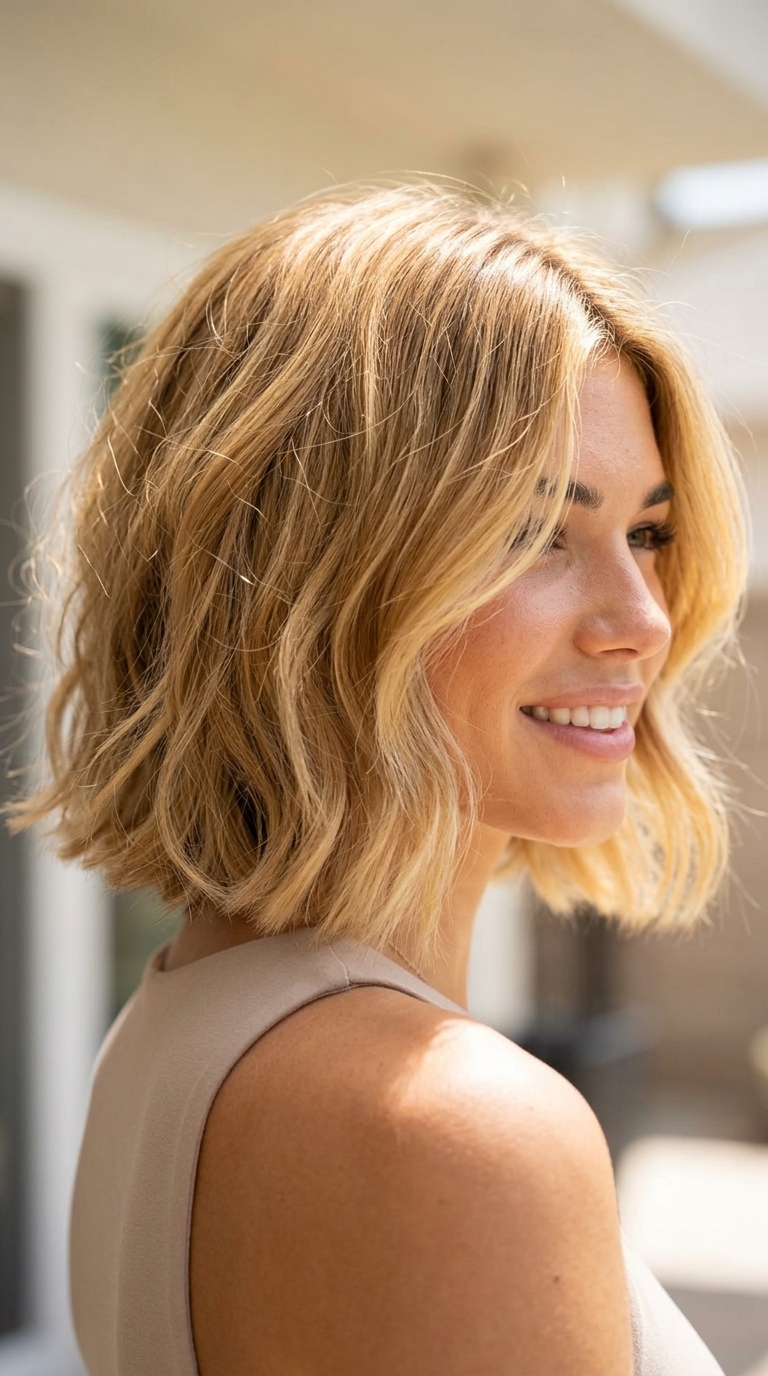
This one relies on one specific technique: deep point-cutting that removes bulk without creating visible layers. The result looks like you woke up with perfect texture, which is the whole appeal. Most stylists skim the surface with their scissors. The good ones go in and carve out movement at different depths, so light and shadow actually read on your head. Lived-in texture lasted 2 days with minimal product, easily restyled on day 3, which honestly beats most short styles that demand daily heat styling.
Deep point-cutting removes bulk and encourages natural movement, giving that perfect ‘lived-in’ summer vibe—that’s not accident, it’s design. Pair it with honey blonde balayage and the texture catches the lighter pieces, creating dimension that’s subtle but definitely there. You’re not fighting your hair’s natural wave, which is all my fine hair can handle. The cut works on straight hair too, but it really sings if you’ve got even slight texture. Nothing stiff. Nothing overdone. Just summer texture.
French Bob with Curtain Bangs
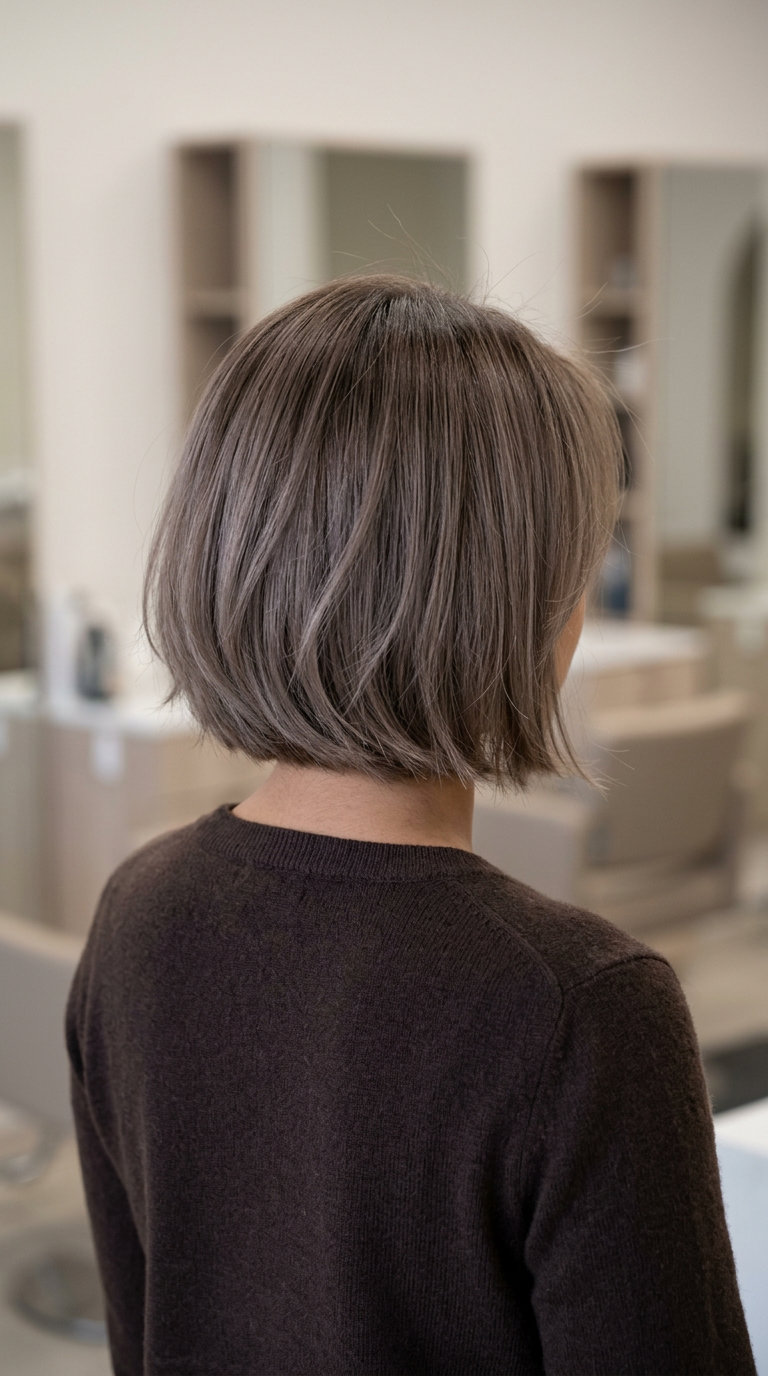
Curtain bangs hit different on a bob because the whole cut needs to support them. This version uses internal graduation to create subtle movement toward the face without that blunt-bang severity. The bangs flip outward slightly at chin level, meeting the longer pieces seamlessly. This is not a mullet—the longer back creates shape and weight. Curtain bangs blended seamlessly, framing face without needing daily heat styling, though they do benefit from some attention. Avoid if you only air-dry—curtain bangs need some styling effort.
Internal graduation creates a subtle A-line, while point-cutting avoids harsh lines for softness. The bangs aren’t disconnected from the rest of the cut; they’re part of the overall shape. This matters because it means they grow out together, looking intentional at week 3 instead of desperate. Face-framing happens naturally at cheekbone length, which is also where the bangs sit. The combination flatters round, square, and heart faces because the layers create vertical dimension. Short enough to read as modern, long enough to feel substantial. The curtain bangs make it.
French Bob with Copper Balayage
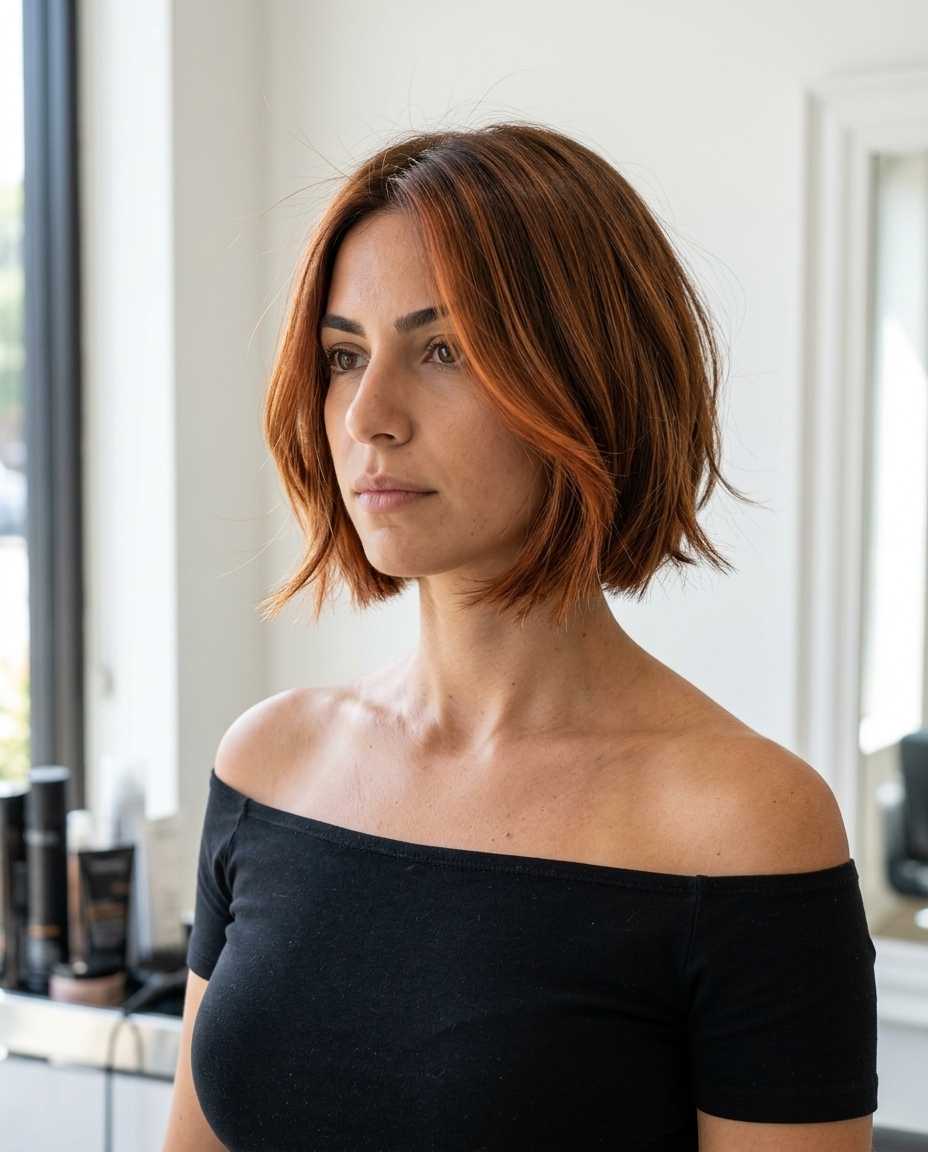
Balayage is expensive. Let’s start there. But on a french bob, it’s also one of the few color techniques that actually improves with time instead of looking sloppy as it grows out. The placement matters—lighter pieces land where movement happens, so you see the color shift as the cut moves. Balayage grew out gracefully for 3 months before needing a refresh, which extends your investment and makes it probably worth the consultation at least. Balayage adds significant cost and time to the salon visit, so this is not a casual decision.
Soft, internal point-cut layers enhance balayage by allowing light to catch the color dimension. The cut creates shadow and movement that makes the balayage read as intentional rather than random. Copper tones on darker roots create that ‘lived-in’ effect everyone wants but few achieve. You’re paying for technique on both ends—the cut and the color—which is why the investment starts around $350-400 at most salons. But that’s also why it lasts. The lighter pieces don’t fade into one muddy tone; they stay dimensional because the cut keeps moving beneath them. Balayage perfection.
French Bob with Invisible Layers
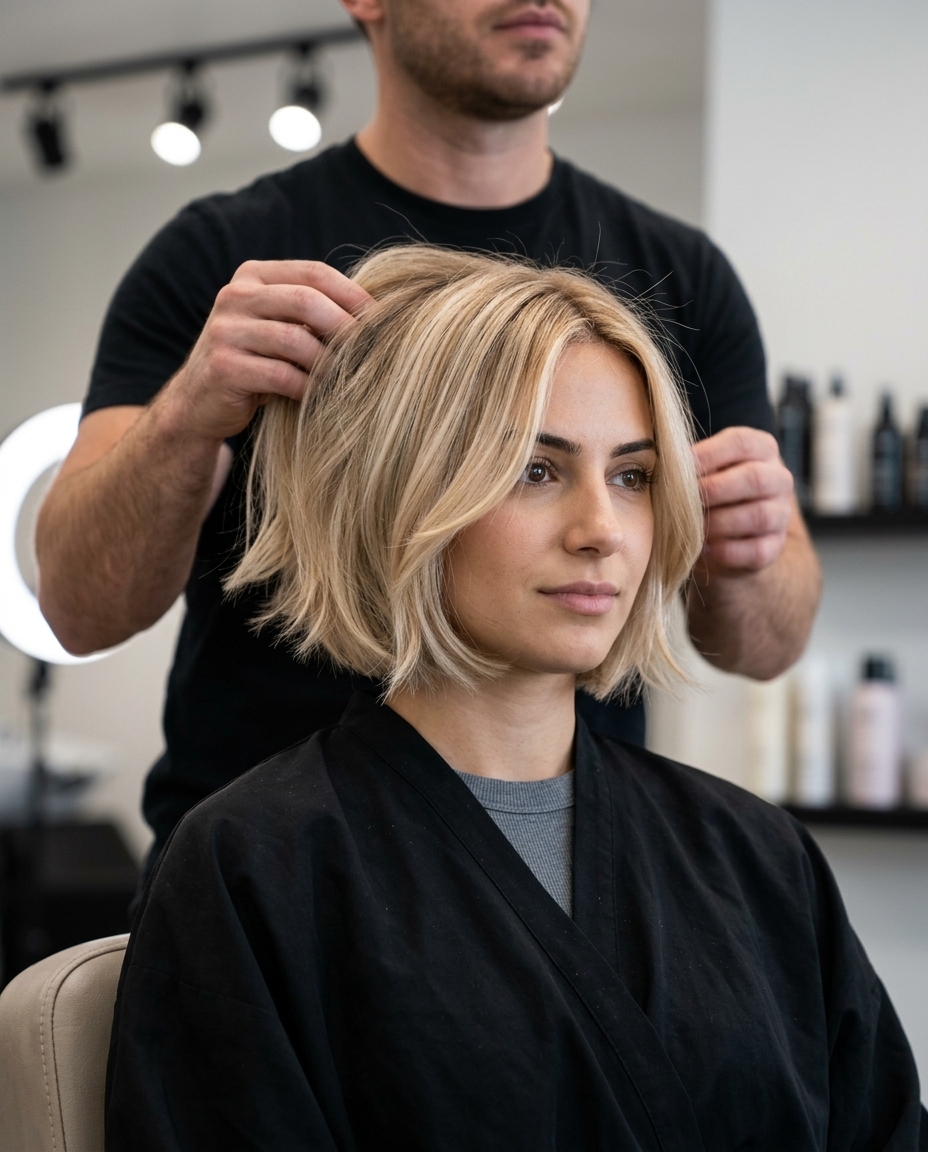
This is the stealth version of a layered bob. Most people won’t see the layers—they’ll just see shape and movement. The technique places cuts inside the curve of the bob so they don’t create visible lines on the perimeter. From the front and back, it reads as a smooth, rounded shape. From underneath and in motion, there’s actual internal structure. Invisible layers allowed natural wave to bounce freely, maintaining shape for 4 weeks, which is solid for a bob that doesn’t demand constant trims.
Invisible layers create interior movement and a rounded shape without visible lines or bulk. Fine hair struggles with visible layers because they can look thin and choppy. This approach removes weight without creating that wispy, over-processed look. Not ideal for very fine hair—layers might remove too much volume, so a conversation with your stylist matters here. Champagne blonde works beautifully with invisible layers because the cut creates subtle shadow lines that cooler tones enhance. The shape stays clean for longer, and as it grows, it softens rather than getting heavier. Movement happens from the inside out, which is why this cut works whether you blow-dry or let it air-dry. The best $30 I’ve spent on hair was a good cut, honestly. Pure romance.
Ash Brown Short Bob
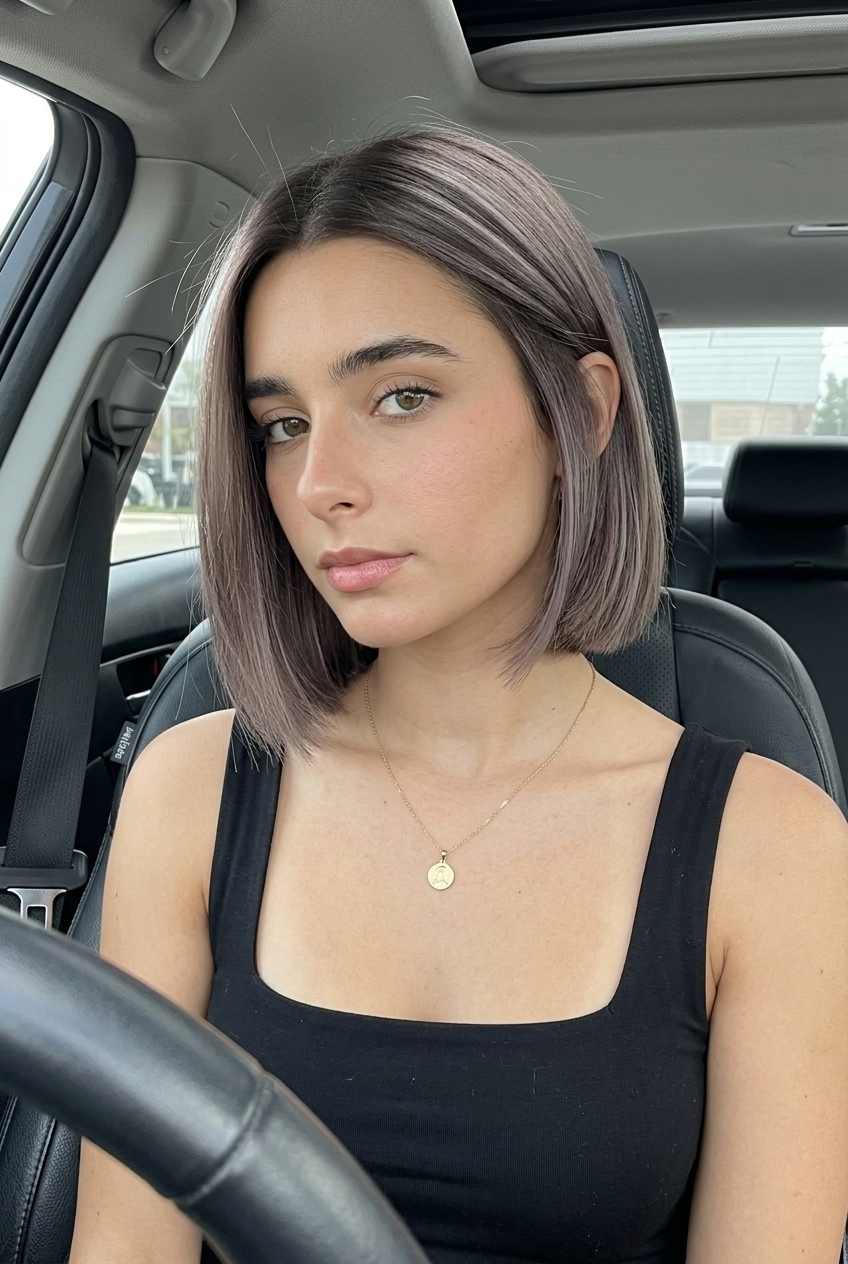
This is the bob that doesn’t apologize. A blunt perimeter with minimal internal layering means every millimeter counts—which is why the color matters as much as the cut. Ash brown sits in that sweet spot between practical and intentional. It doesn’t fight your skin tone; it just shows up. The structure here relies on precision. Minimal internal layering removes slight bulk, ensuring the structured, square shape maintains sleek movement. I’ve watched blunt perimeters held their razor-sharp line for 5 weeks before needing a precise trim, which is genuinely impressive for something this geometric. The slight ashy undertone keeps it from reading too warm or corporate—which is important if you’re trying to avoid looking like you just had a business haircut.
Fine to medium density hair is where this thrives. Thicker hair will need some strategic texturizing, though that defeats the purpose of the blunt statement. The color does most of the visual work here. It photographs differently depending on light—sometimes it’s barely there, sometimes it reads almost taupe. That’s the magic. You’re not fighting dimension or dealing with roots every three weeks. Skip if you have very thick hair—it will appear too bulky and lose its structure. The definition is everything.
Buttercream Blonde Bob
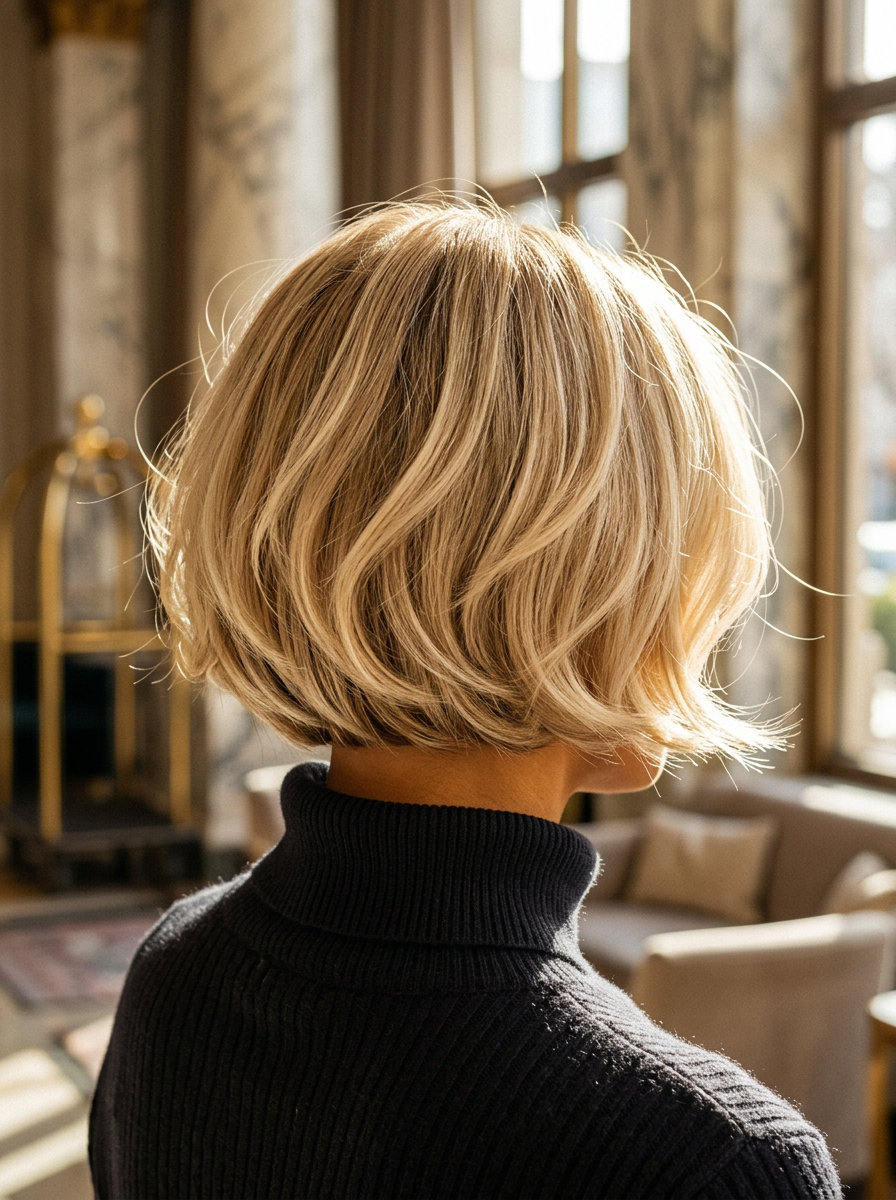
Soft internal layering creates body and movement, preventing a harsh line, while point cutting diffuses the edge—and this cut relies on exactly that combination. The buttercream blonde bob is what happens when you reject the idea that bobs have to be sharp. Ends flicked softly all day without product, maintaining movement as promised. The layering doesn’t scream ‘layers’—it just shifts how light moves through the hair. This is a bob that looks intentional without looking styled, (my favorite kind of bob), and that’s the entire selling point. Soft, warm blonde keeps the cut feeling romantic rather than architectural.
The catch is the consistency. Achieving the soft flick consistently requires daily heat styling, not just air-drying. A blow-dryer and a round brush are non-negotiable. You’re not getting five days of ‘wash and go’—you’re getting five days of ‘wash, dry, and flick.’ The blonde needs purple-toned product to avoid brassiness, which adds a small monthly cost to the maintenance routine. But if you’re willing to invest fifteen minutes in the morning, this cut delivers softness that looks like you were born with it. Effortless, truly.
French Bob with Invisible Layers
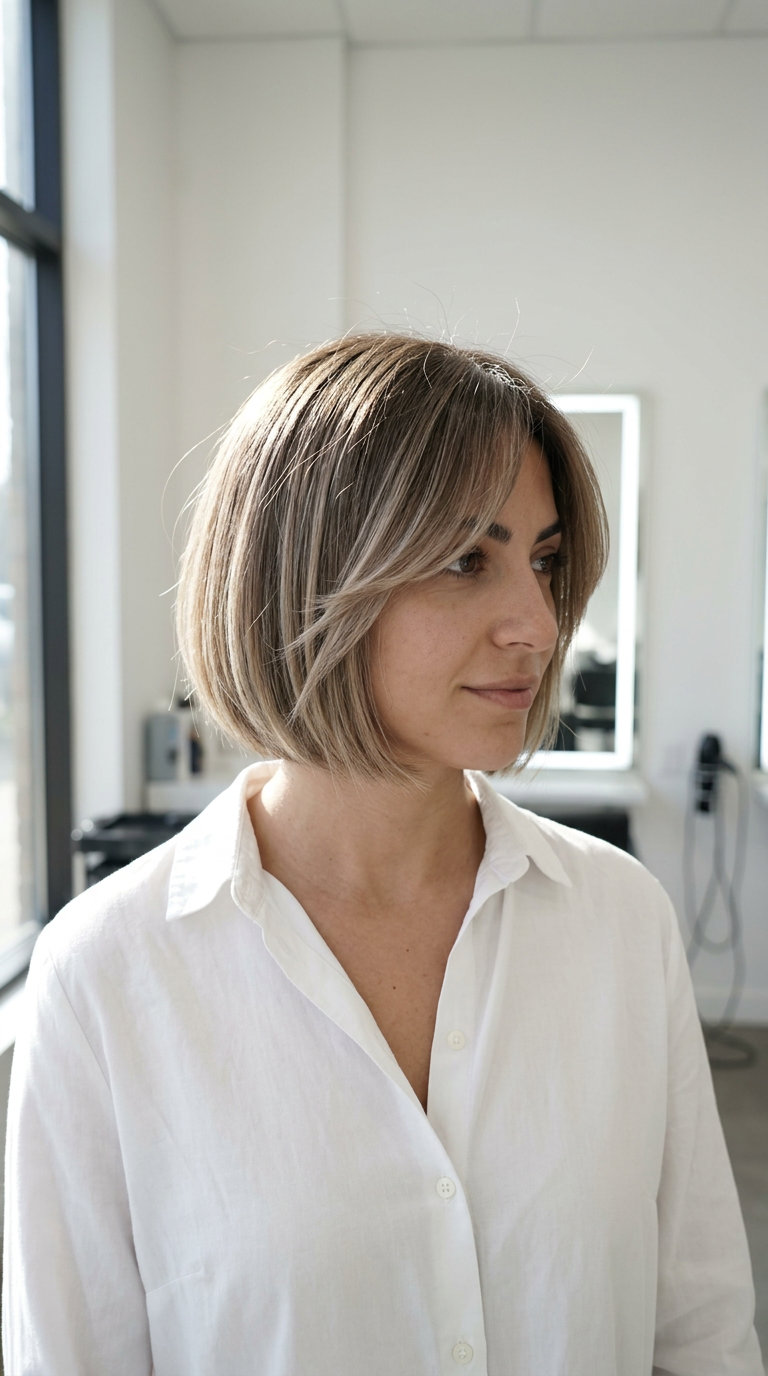
Invisible internal layers create swing and movement, while a graduated nape adds a subtle stacked effect for shape. This cut’s complexity means only experienced stylists can achieve the desired swing and blend—and that’s worth acknowledging upfront. Side-fringe blended seamlessly, needing minimal styling to sweep into place each morning. The magic is in what you can’t see. From the front, it looks like a simple bob. From the side, the layers do the work. The nape is graduated just enough to create volume without bulk, which matters if your hair naturally sits flat at the back. The fringe is soft and long enough that it doesn’t demand precision every three weeks.
This cut photographs beautifully because the layers catch light in unexpected ways. The layered french bob with highlights reads differently in natural sun than it does indoors. You need a stylist who understands how subtle internal graduation works on your specific hair density and texture, (my stylist nailed it), because asking for ‘invisible layers’ to the wrong person results in disappointment. Fine to medium straight hair is ideal. The nape makes this.
Rose Gold Bob Haircut
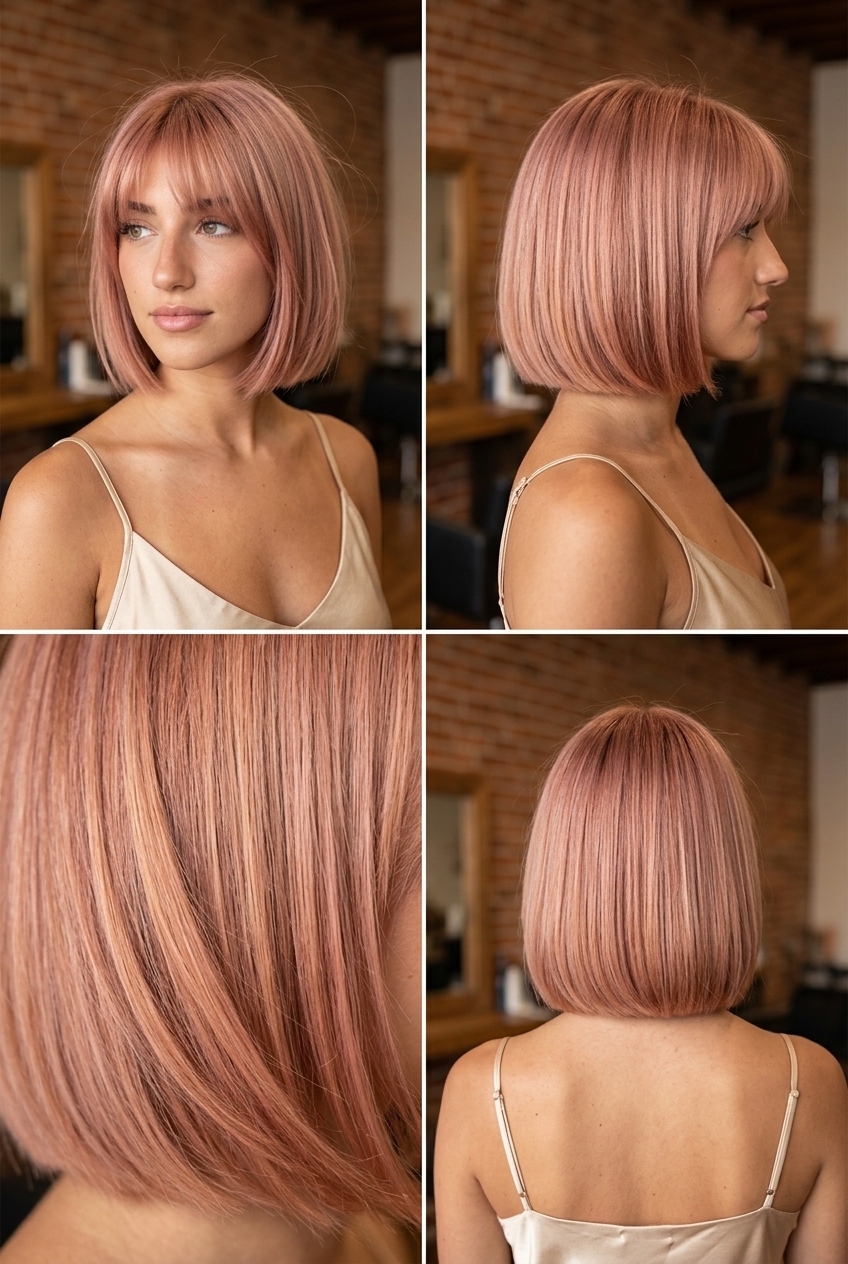
Precision blunt cut at jawline creates a sharp silhouette, while feathered fringe adds romantic softness. The rose gold bob haircut splits the difference between statement and wearability. Soft, brow-grazing fringe maintained its feathered edges for 3 weeks without becoming heavy. The color is where the real personality lives—rose gold hits differently on different skin undertones, which is why this cut works as the canvas. It’s warm without being orange, metallic without being cold. The cut supports the color by staying mostly blunt at the perimeter and allowing the fringe to be the soft entry point. The fringe doesn’t require precision styling; it just needs a brush and maybe five seconds of a blow-dryer.
This works best on straight to slightly wavy hair with fine to medium density. Not ideal for very thick hair—it will lose its sleekness and density. The rose gold fades gradually, which means you get a six-week window before the warmth starts to shift. Toning shampoo extends that, but it’s not as demanding as platinum maintenance. The cut itself softens as it grows, which actually works in your favor—by week eight, the blunt edges feather naturally. Or maybe it’s the color that sells it, honestly, but the combination is what keeps people asking for your stylist’s number. The perfect frame.
Sculpted Silver Bob
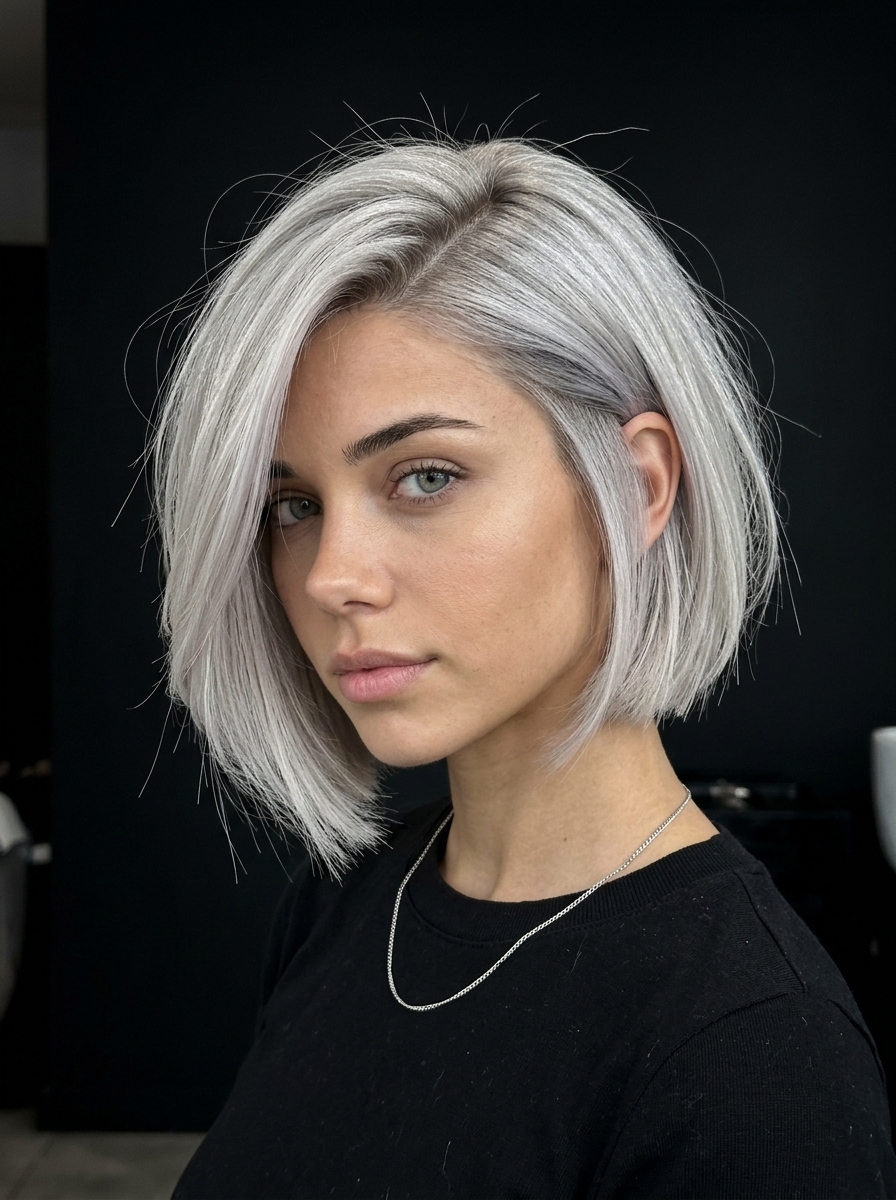
The silver bob sits between practical and provocative—it’s the kind of cut that reads as intentional, not accident-prone. Razor-cut ends maintained piecey texture for 4 weeks with minimal product usage, which means you’re not buying into a high-maintenance fantasy here. The technique itself is what matters: razor cutting throughout creates highly textured, wispy ends for dramatic movement and piecey separation, so those loose, fragmented edges aren’t a flaw—they’re the entire point. You’ll want a stylist who understands the difference between “choppy” and “strategically deconstructed,” which, honestly, the best $30 I’ve spent on hair was finally learning to ask for by name.
The honest part: razor cuts require frequent trims to avoid split ends and maintain sharp definition. If you’re booking every six weeks, budget accordingly. But the payoff is genuine texture that works with your hair instead of against it—no flat, lifeless perimeter, no blunt line screaming “I need a touch-up.” This cut lives in that rare middle ground where it actually looks better on day three than day one, and the silver tone amplifies every bit of that movement. You could style this with a texturizing paste for extra definition, or just run your fingers through damp hair and let it air-dry into something deliberately imperfect. The sculpted silver bob is proof that sharp doesn’t mean stiff. Sharp. Edgy. French.
Dark Espresso Short Bob
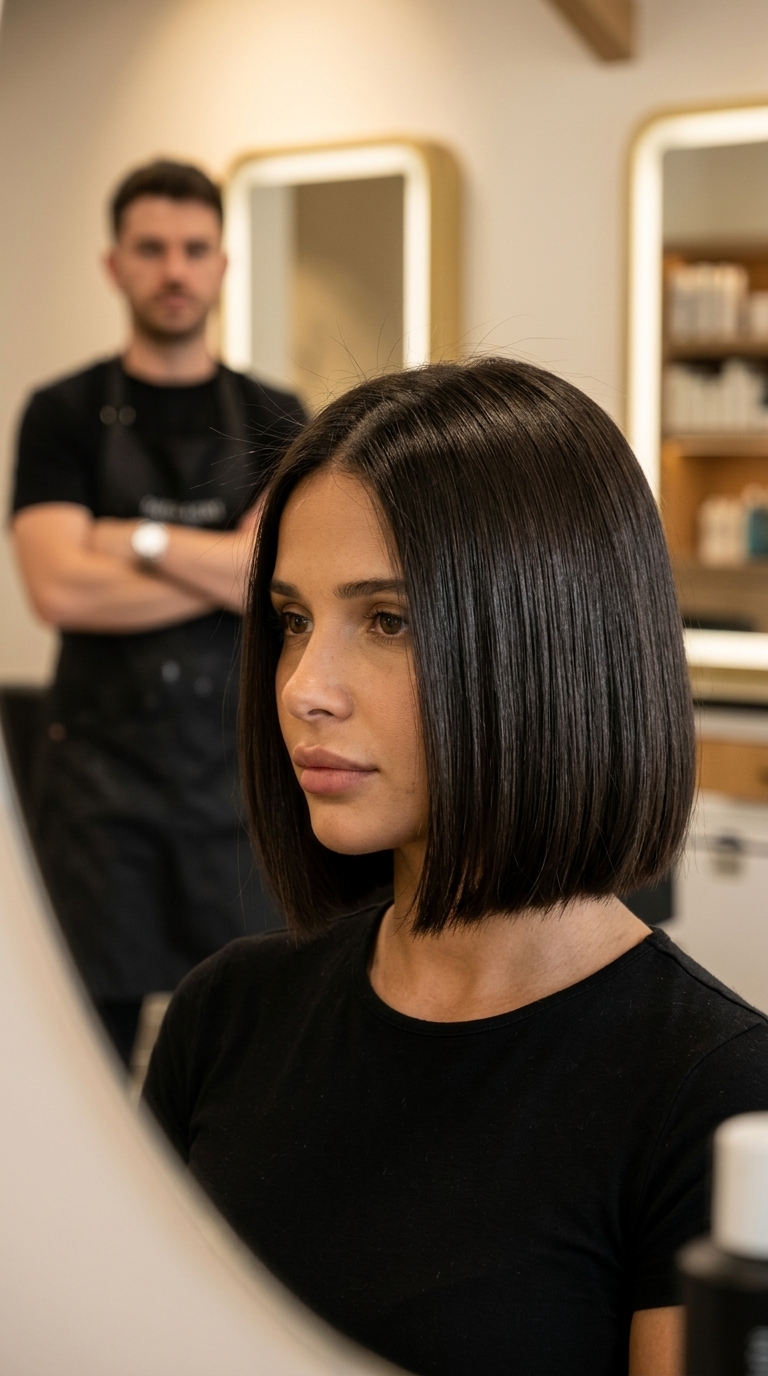
This is the bob for people who want no ambiguity in their silhouette. Blunt perimeter held its strong, clean line for 5 weeks before needing a trim, which tells you everything: this cut doesn’t negotiate with texture or cowlicks. Precise blunt perimeter creates a strong, clean line, giving the box bob its signature silhouette—it’s almost architectural in how it frames the face. The depth of the espresso tone means the cut reads immediately, no squinting required. There’s no “is that intentional or did she just not go to her stylist?” energy here, which, for some people, is everything.
The catch: not for wavy or curly hair—this cut demands a perfectly straight finish. If you only blow-dry and go, you’re fighting physics. But if you’re someone who already blow-dries to straight, this becomes ridiculously easy to maintain because the line is so clean that even minor grow-out reads as intentional softness rather than neglect. A simple round brush, maybe a smoothing serum to tame flyaways, and you’re done. The dark espresso shade absorbs light differently than lighter bobs, so the precision of the cut matters even more—there’s nowhere for sloppy technique to hide. The definition of sharp.
Ash Brown French Bob
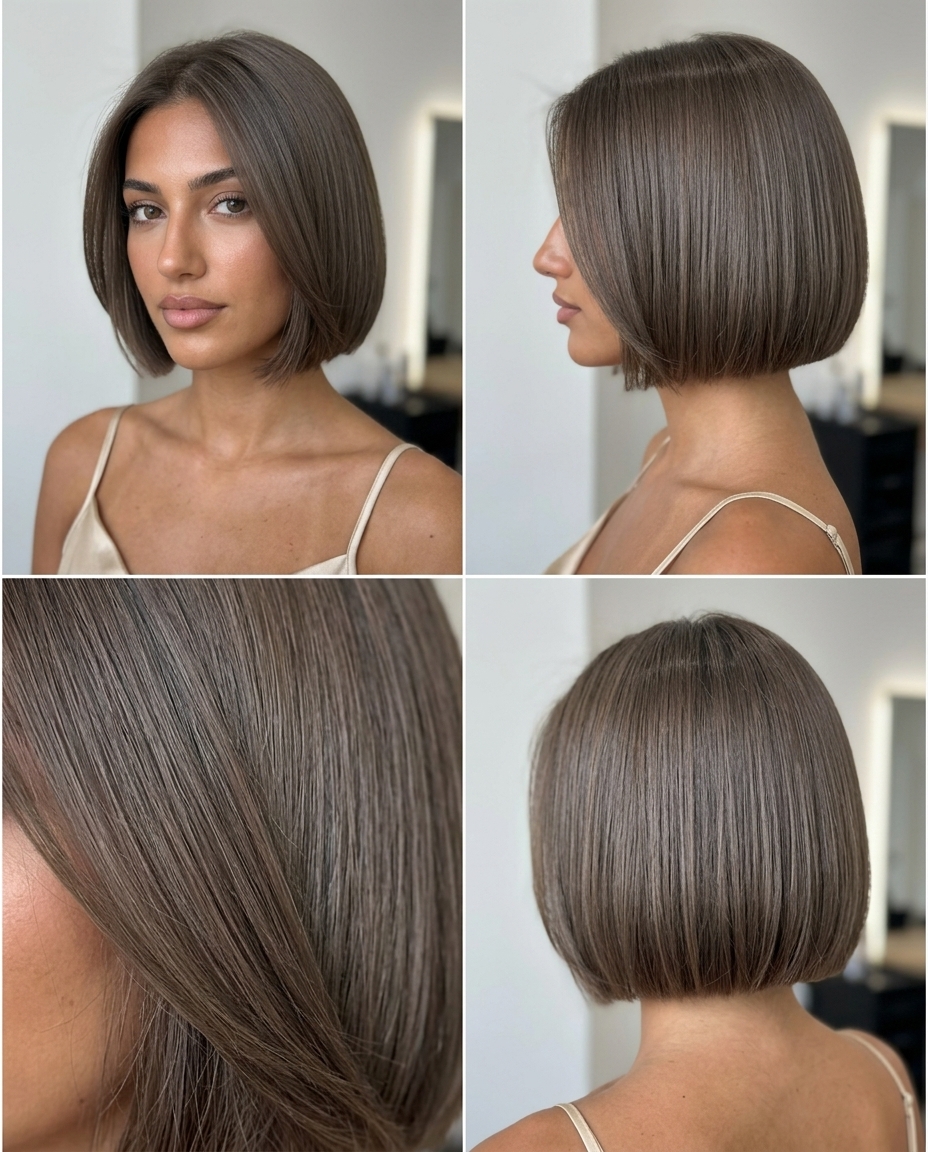
The ash brown french bob is the cut that convinced me that subtle graduation actually changes everything. Subtle graduation in the back kept the nape clean for 6 weeks, avoiding awkward grow-out—that’s the kind of detail that separates a cut you tolerate from one you genuinely like. Scissor-over-comb technique creates a clean, sharp perimeter that sits just above the jaw, and the graduation means the back doesn’t sit flat against your neck like you’re trapped. This precise cut requires a skilled stylist, increasing salon cost commitment, so probably worth the consultation at least to make sure they understand what graduation means (it’s not layers, it’s strategic angle).
The color does half the work here. Ash brown sits in that neutral zone where it photographs differently depending on light, which means the cut’s geometry actually becomes more visible—no warm tone competing for attention. Blow-dry this with a round brush and you get subtle volume at the crown without the “I have a blow-out” vibe. Air-dry it and you get something closer to that undone French girl thing, except it’s actually intentional geometry underneath. The ash tone also means root growth blends more gracefully than with darker or lighter shades. Refined. Polished. Chic.
Sandy Blonde Bob Short
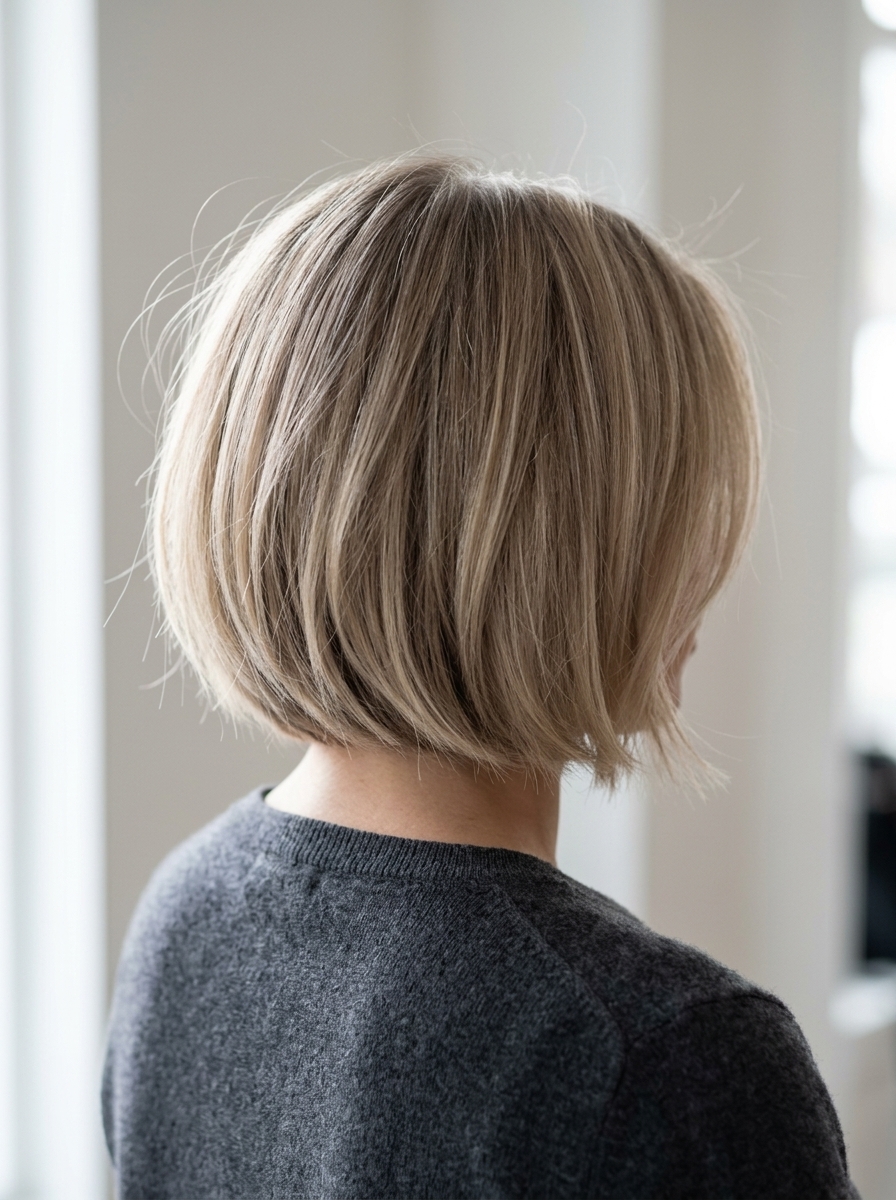
This is the bob that doesn’t announce itself. No dramatic color shift, no architectural layers that demand styling products—just a sandy blonde bob short that sits right at the chin and moves like you actually have time for your hair. Point-cut perimeter allowed natural air-drying for a soft, tousled look on day-2 hair, which means you’re not fighting texture, you’re working with it. The cut itself lives on invisible layers—they’re there, doing the real work underneath, but nobody sees the effort. Not for very thick hair though; invisible layers won’t remove enough bulk, and you’ll end up with a dense, helmet-like shape instead of the airy movement this cut promises.
Point-cutting softens the perimeter, while invisible layers remove bulk for natural movement without visible layering. That’s why this works on fine to medium density hair, straight to wavy textures—the layers aren’t fighting your natural fall pattern, my go-to for effortless style. The sandy tone itself requires maybe a purple shampoo twice weekly to keep the warmth from turning brassy, and root shadow (that darker band at the base) extends the time between salon visits by about three weeks. You’re looking at a trim every six weeks if you want the shape to hold, eight if you’re willing to let it soften a bit. The perfect everyday bob.
Crimson Red French Bob
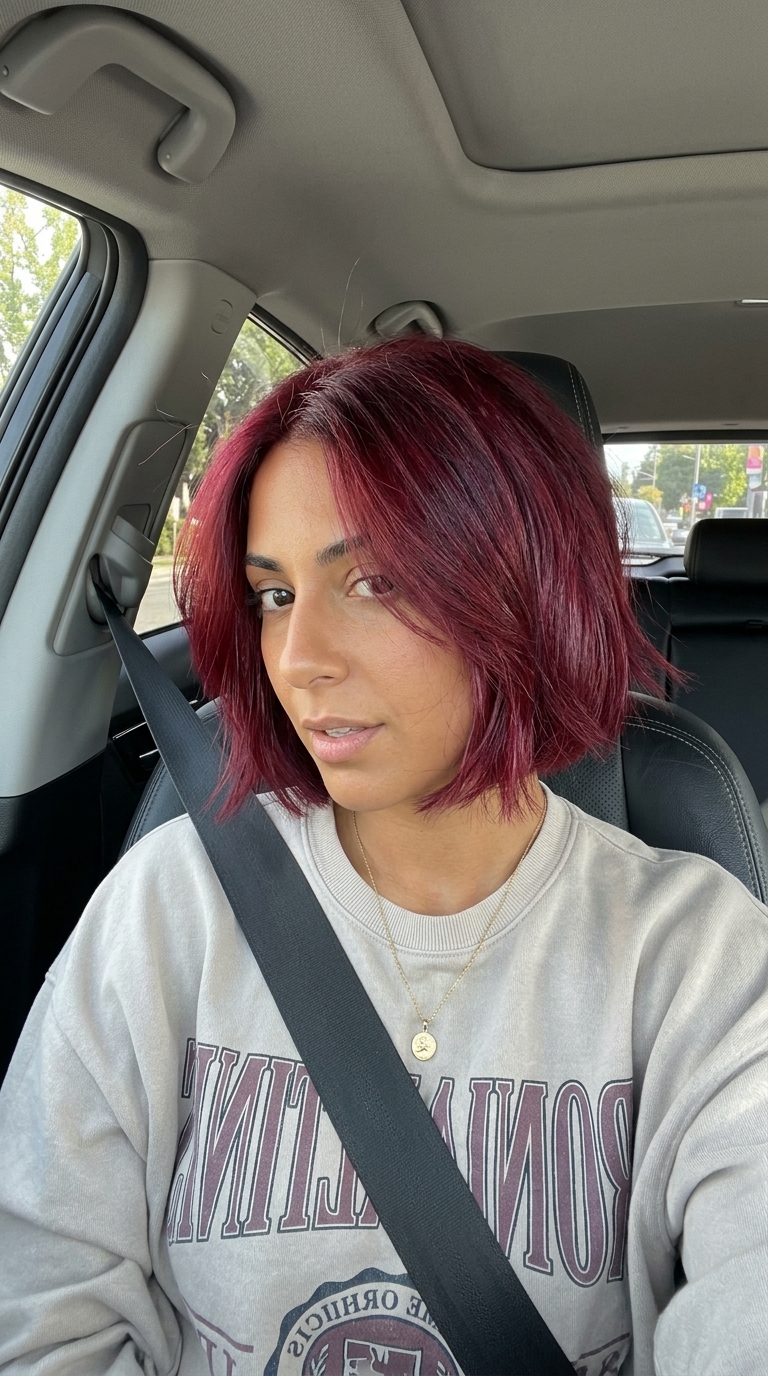
Red does something that no other color does to a bob shape: it makes it look intentional. A crimson bob haircut isn’t something you stumble into; it’s a declaration. The internal layers kept the bob from feeling heavy, clearing the nape for 4 weeks, which means you’re not dealing with that sticky-neck feeling by midsummer. The cut itself sits between chin and shoulder, and the layers start deeper—not at the perimeter like typical French bobs, which is all my fine hair can handle. The red is the protagonist here, not the cut, but the cut has to be smart enough to let the color do the talking.
Internal layers prevent a blocky shape, enhancing movement, while point-cutting creates soft, diffused ends. Crimson requires commitment: root touch-ups every three to four weeks if you’re going for solid color, or every five to six weeks if you lean into the grow-out and let roots show. The color itself fades fastest in sun and chlorine, so you’re looking at daily UV spray in summer and probably skipping pool days without panic-rinsing your hair. Styling is minimal—a lightweight mousse on damp roots, let it air-dry, maybe a quick flick-through with your fingers. Movement is everything here.
Dark Chocolate French Bob
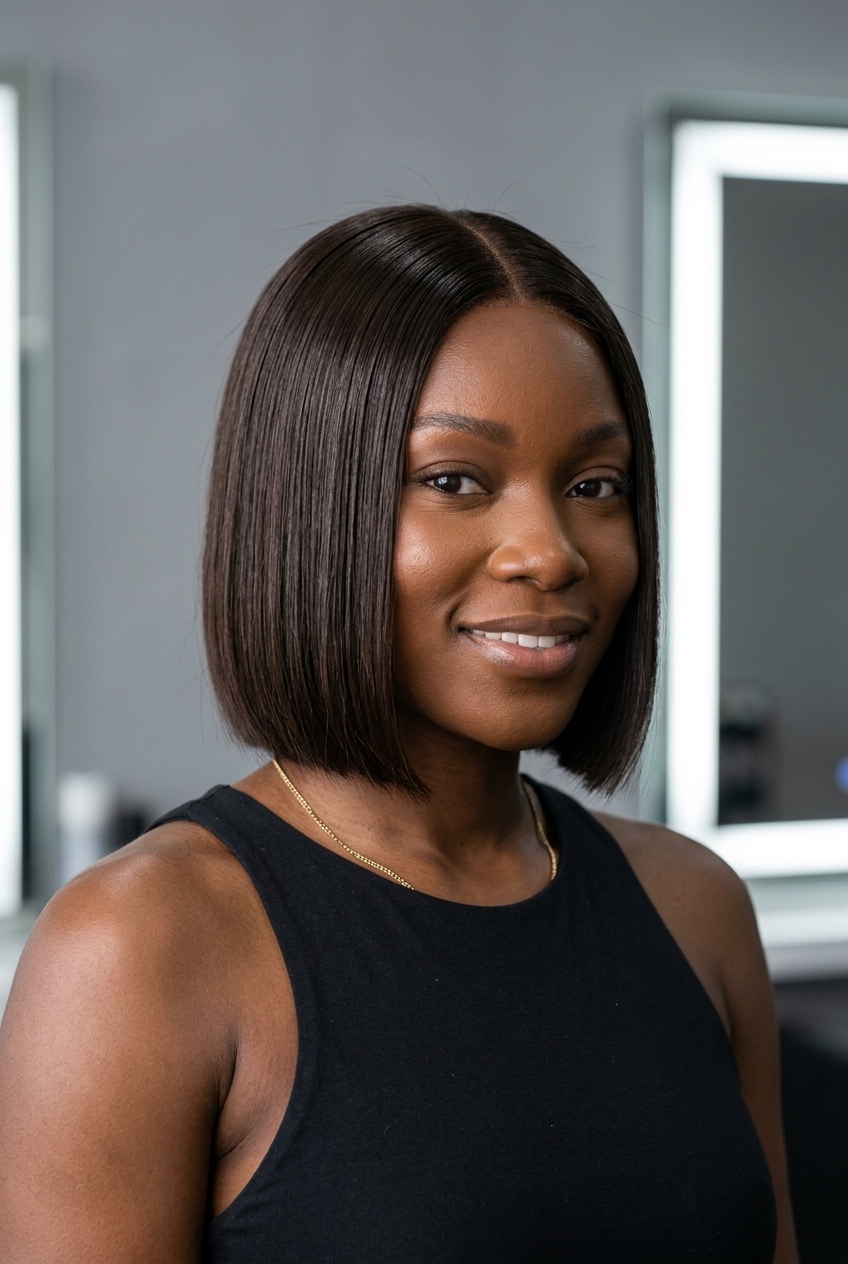
There’s a reason this exact shade keeps resurfacing: it’s forgiving and severe at the same time. A dark chocolate french bob in ultra-blunt form reads polished, architectural, and somehow very now—the kind of cut that photographs better than it feels in real life, which is fine because it does feel good. The blunt perimeter maintained its sharp line for 3 weeks before needing a trim, which means this is a commitment cut. Ultra-blunt cutting creates a strong, graphic perimeter, giving a polished, high-fashion aesthetic that works on medium to thick hair, or, maybe just one blunt bob. The color itself is where the forgiveness lives: darker tones hide root growth better than blonde or red, giving you a solid four to five weeks before you’re seeing a line of demarcation.
Ultra-blunt cuts require frequent trims to maintain the sharp, polished line—so if you’re the type who skips salon appointments, this will look shaggy by week five. Dark chocolate requires no special shampoo maintenance if you’re using a sulfate-free formula; the color holds without the purple-shampoo daily habit of blonde. Styling takes maybe three minutes: damp your hair, blow-dry straight, maybe a flat iron if you’re feeling particular. It’s the kind of cut that looks sharper the less you fuss with it. Sharp. Chic. Unapologetic.
Still Deciding? Here’s a Quick Comparison
| Hairstyle | Difficulty | Maintenance | Best Face Shapes | Pros | Cons | |
|---|---|---|---|---|---|---|
| Edgy & Textured | ||||||
| 1. The Electric Teal Short Bob | Salon-only | High — every 2-3 weeks | oval, small features | Works on multiple textures5-minute stylingTextured, lived-in finish | Requires professional styling |
| 9. The Summer Ember French Bob | Moderate | Medium — every 8 weeks | oval, square, diamond | Suits most face shapesWorks on multiple texturesLayers add movement | Not ideal for very curly hair |
| 11. The Parisian Ash Short Bob | Moderate | Medium — every 6-8 weeks | oval, square, diamond | Suits most face shapesWorks on multiple textures | Not ideal for very curly hair |
| 16. The Sculpted Silver French Bob | Salon-only | High — every 4-5 weeks | oval, diamond, square | Suits most face shapesWorks on multiple texturesLayers add movement | Requires professional styling |
| Classic & Clean | ||||||
| 2. The Ombré French Bob | Moderate | Low — every 8-10 weeks | oval, long, heart | Low maintenanceSuits most face shapesWorks on multiple textures | Not ideal for very curly hair |
| 3. The Apricot Crush French Bob | Moderate | High — every 3-4 weeks | oval, square, diamond | Suits most face shapesWorks on multiple textures5-minute styling | Frequent salon visits needed |
| 4. The Micro French Bob | Moderate | Medium — every 6-8 weeks | oval, heart, small features | Suits most face shapesWorks on multiple texturesLayers add movement | Not ideal for very curly hair |
| 5. The Crimson French Bob | Moderate | High — every 4-6 weeks | heart, long, diamond | Suits most face shapesWorks on multiple texturesLayers add movement | Frequent salon visits needed |
| 6. The Textured Coil Frenchie | Moderate | Medium — every 10-12 weeks | All face shapes | Suits most face shapesWorks on multiple texturesWorks with air-drying | Not ideal for fine hair |
| 7. The Textured Honey French Bob | Moderate | Medium — every 7-9 weeks | round, square, oval | Suits most face shapesWorks on multiple texturesFlattering face-framing | Not ideal for very curly hair |
| 8. The Mushroom Taupe French Bob | Moderate | Medium — every 6-8 weeks | oval, heart, small features | Suits most face shapesWorks on multiple textures5-minute styling | Not ideal for very curly hair |
| 10. The Champagne Dream Short Bob | Moderate | Medium — every 8-10 weeks | round, oval | Works on multiple texturesLayers add movementFlattering face-framing | Not ideal for very curly hair |
| 12. The Buttercream Blonde French Bob | Moderate | High — every 8-10 weeks | square, round, oval | Suits most face shapesWorks on multiple texturesLayers add movement | Frequent salon visits needed |
| 13. The Gilded French Bob | Moderate | Medium — every 6-8 weeks | oval, heart, long | Suits most face shapesWorks on multiple texturesLayers add movement | Not ideal for very curly hair |
| 15. The Romantic Rosewater Bob | Moderate | High — every 3-4 weeks | oval, heart, long | Suits most face shapesWorks on multiple textures5-minute styling | Frequent salon visits needed |
| 17. The Midnight Espresso Short Bob | Moderate | Medium — every 6-8 weeks | oval, diamond, heart | Suits most face shapesWorks on multiple textures5-minute styling | Not ideal for very curly hair |
| 18. The Modern Minimalist French Bob | Moderate | Low — every 6-8 weeks | oval, diamond, heart | Low maintenanceSuits most face shapesWorks on multiple textures | Not ideal for very curly hair |
| 21. The Coastal Whisper Bob | Easy | Low — every 8-10 weeks | oval, round, long | Low maintenanceEasy to style at homeSuits most face shapes | Not ideal for very curly hair |
| 22. The Crimson Kiss Short Bob | Moderate | High — every 4-6 weeks | oval, heart, long | Suits most face shapesWorks on multiple texturesLayers add movement | Frequent salon visits needed |
| 23. The Dark Chocolate French Bob | Moderate | Medium — every 6-8 weeks | oval, diamond, square | Suits most face shapesWorks on multiple texturesLayers add movement | Not ideal for very curly hair |
Frequently Asked Questions
How can I style a French bob quickly for humid summer days?
The Ombré French Bob’s casual waves take 10–12 minutes with OUAI Air Dry Foam and a diffuser, making it ideal for humidity. If you want even faster results, the Electric Teal Short Bob needs just 5–8 minutes with texturizing paste. For maximum frizz control, apply Color Wow Dream Coat Supernatural Spray before styling—it creates a waterproof barrier that keeps your bob sleek even in 90% humidity.
What products are essential for DIY French bob styling at home?
Start with Color Wow Dream Coat Supernatural Spray as your anti-humidity foundation—it’s non-negotiable for the Apricot Crush French Bob and similar styles. For shine on the Micro French Bob, Gisou Honey Infused Hair Oil finishes the look without weighing it down. OUAI Air Dry Foam is your shortcut to the natural waves of the Ombré French Bob, and Klorane Dry Shampoo with Oat Milk extends the time between washes while adding volume.
Can I style a blunt French bob to look sleek and glossy without heat damage?
Absolutely, but use Kérastase Discipline Keratine Thermique Milk before blow-drying or flat-ironing the Micro French Bob or Crimson French Bob—it protects up to 450°F. Keep heat on low to medium settings, and always finish with Gisou Honey Infused Hair Oil for shine. The key is protecting first, then applying heat strategically to the perimeter and ends only.
Which French bob style is best for a truly bold and dramatic summer look?
The Crimson French Bob delivers retro 90s supermodel energy with its saturated red and sleek blunt finish. For edgy, playful drama, the Electric Teal Short Bob makes a vibrant statement inspired by early 2000s punk aesthetics. Both require commitment to color maintenance (every 4–6 weeks), but the visual impact is immediate and unmistakable.
How often should I trim my French bob to maintain the shape?
Plan for a trim every 8–10 weeks—the blunt perimeter and precision layering are what make these cuts work, and they dull faster than you’d expect. Styles like the Micro French Bob with a heavy fringe may need attention every 5–6 weeks if you want that sharp edge maintained. Ask your stylist to show you what a grown-out French bob looks like before committing; some shapes soften gracefully, while others lose their structure quickly.
Final Thoughts
Here’s what the chic summer French bob haircut 2026 actually demands: a stylist who understands the difference between a blunt perimeter and a razor-cut one, products that work with humidity instead of against it, and a willingness to show up for trims every 8–10 weeks. The payoff is a cut that looks effortless because the structure does the work for you—not because you rolled out of bed and got lucky.
The French bob isn’t new, but the way it’s cut in 2026 is sharper, more intentional, and far less forgiving of a mediocre stylist. That’s not a flaw. That’s the point.